ERV vs HRV ventilation in Tucson: which one fits
In a Tucson home an ERV usually fits better than an HRV. Here is why, what dust and monsoon air change, and what to ask a licensed pro before you buy.
Plain-English explainers on heat pumps, SEER2, refrigerants, ducts and TEP time-of-use, so you can ask a licensed contractor better questions.
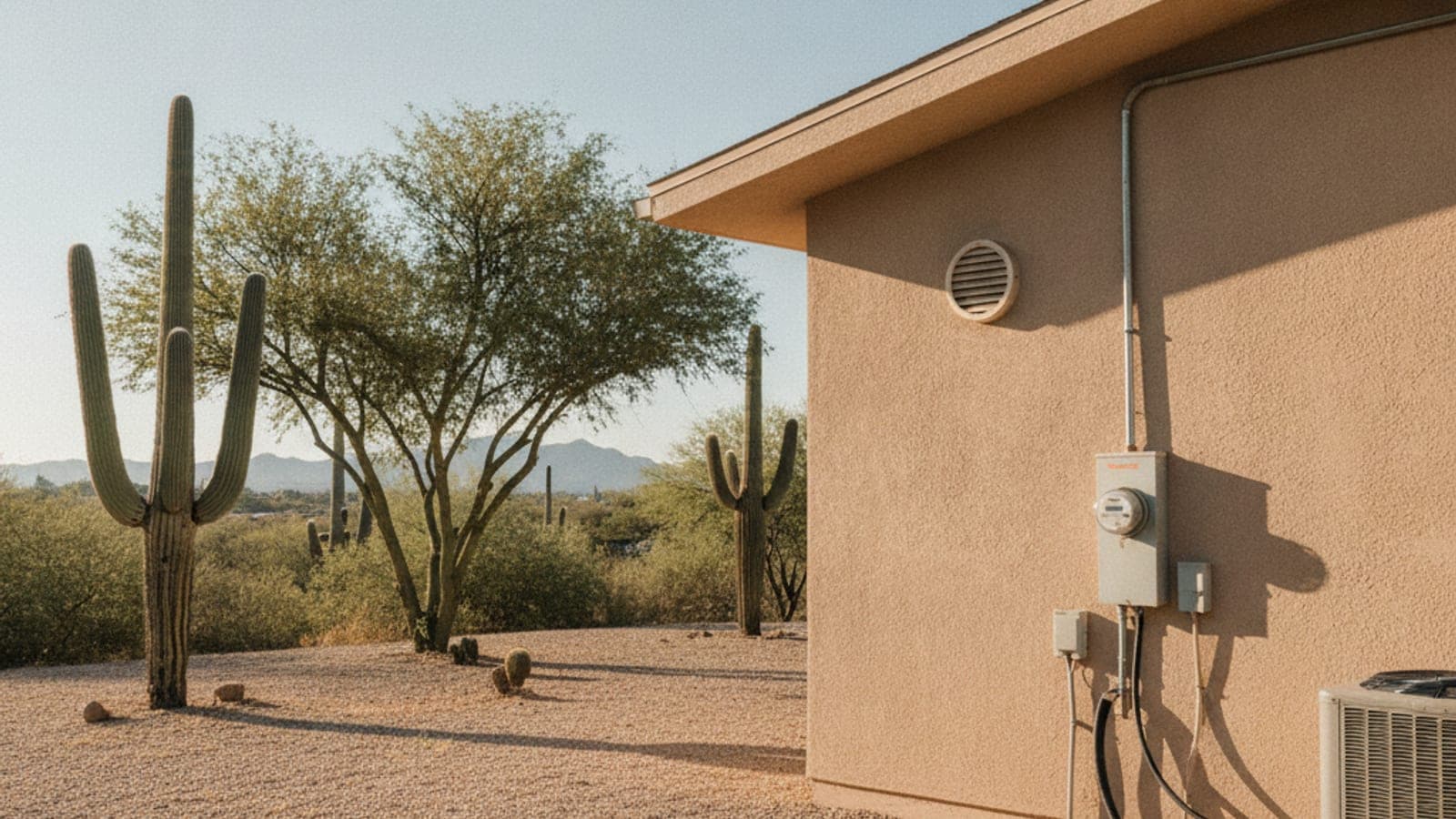
In a Tucson home an ERV usually fits better than an HRV. Here is why, what dust and monsoon air change, and what to ask a licensed pro before you buy.
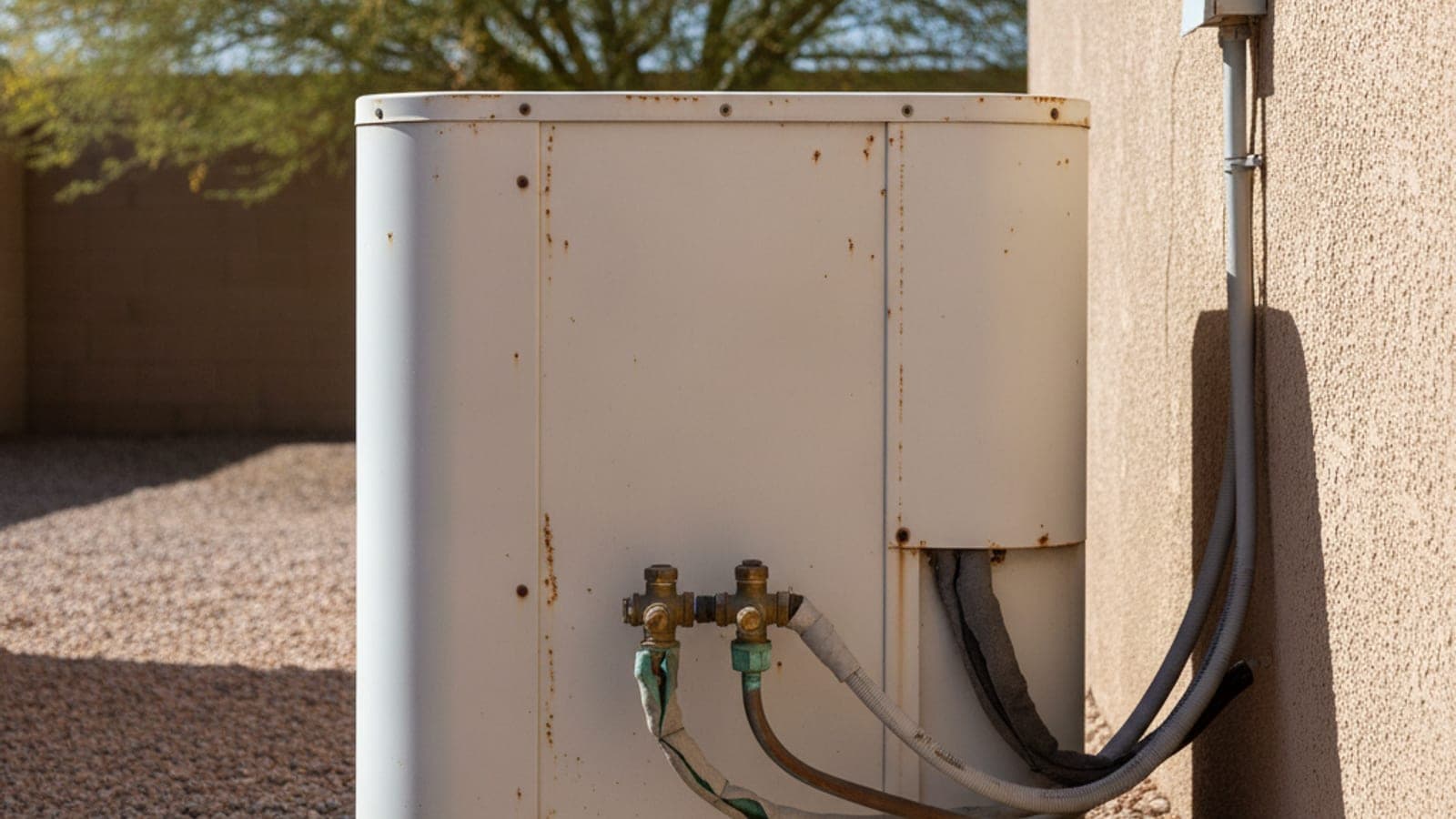
Which refrigerant is in your Tucson AC, what the EPA rules actually say, and how to decide between a top-off, a repair and a replacement.
Mini split or central AC for a Tucson home? Compare block walls, rooftop ducts, add-on rooms and TEP rebates so you can pick the right system.
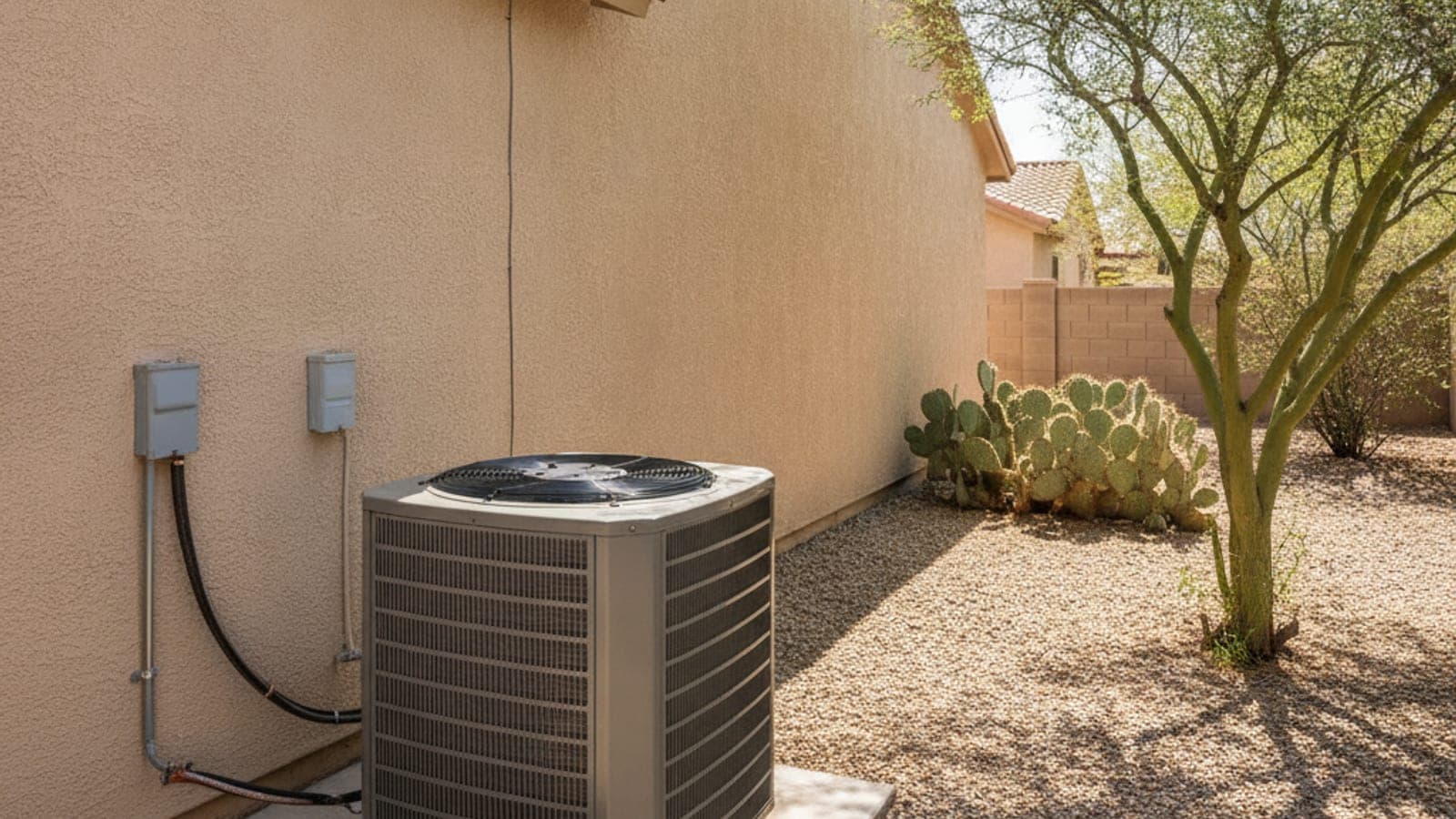
In the City of Tucson, replacing an AC, furnace or heat pump needs a permit. See the listed fee, who pulls it, and what changes outside city limits.
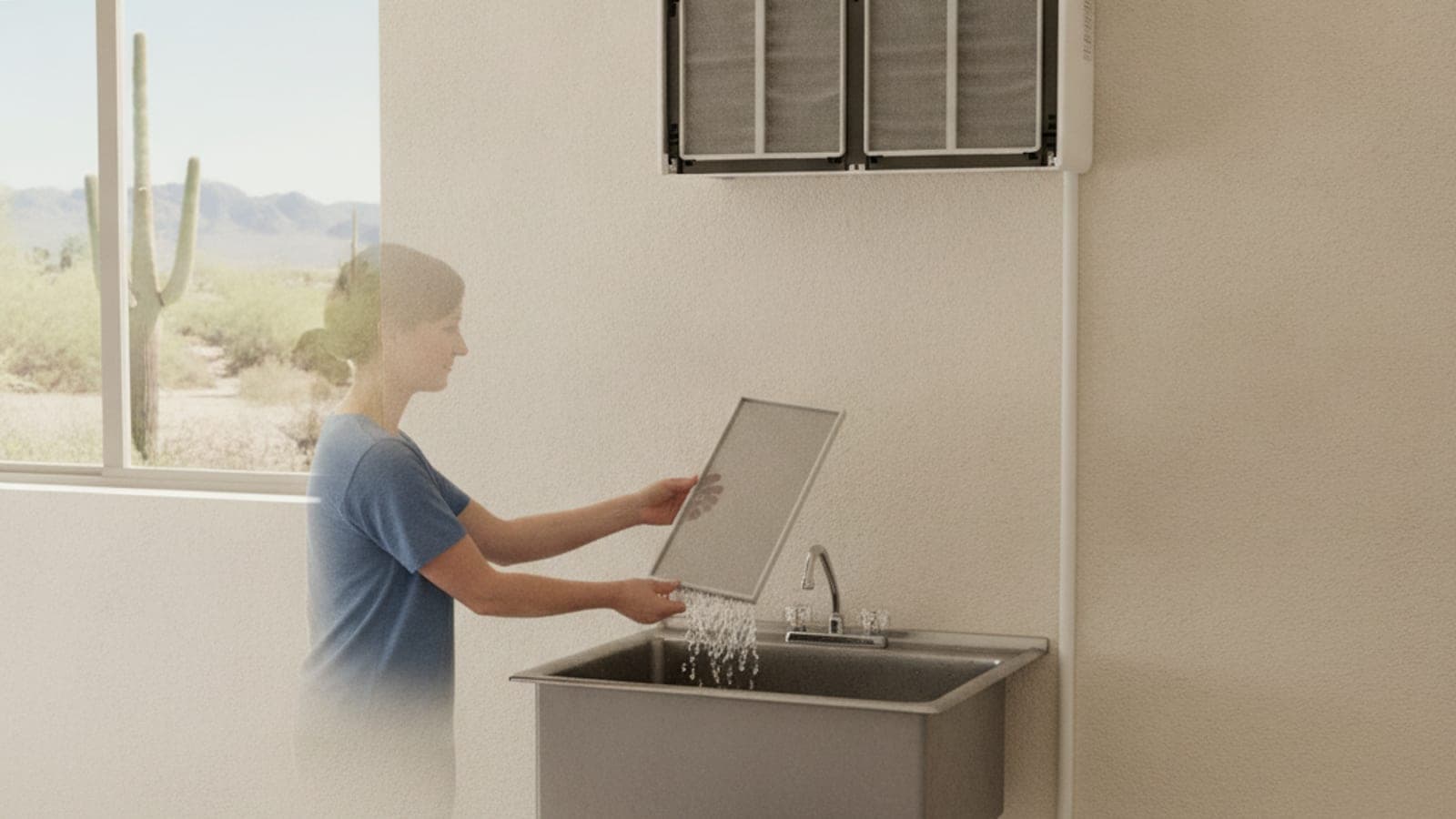
Keep a Tucson mini split working through dust storms and monsoon humidity: filters, outdoor coil, drain line, and which jobs need a licensed pro.
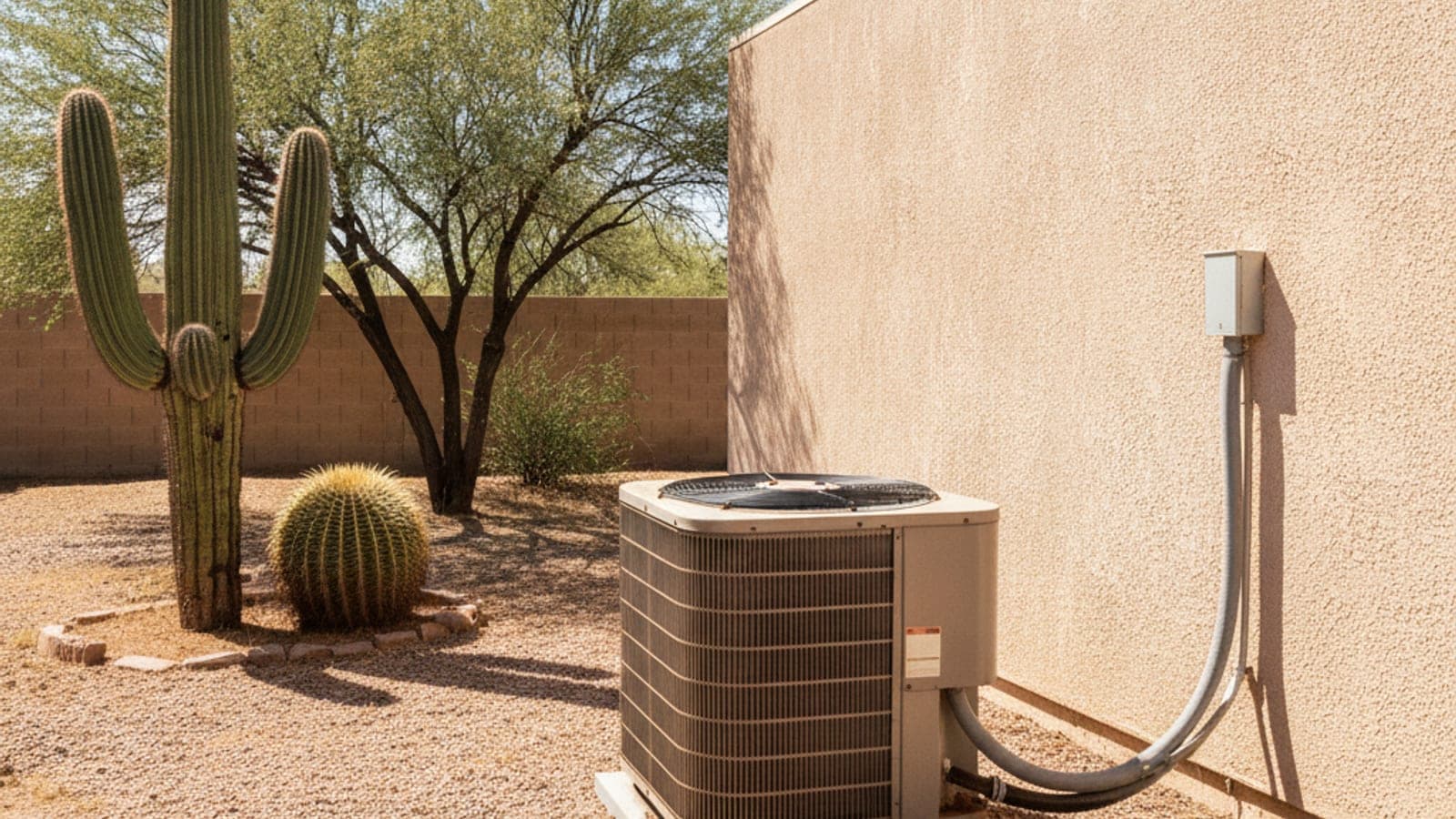
The 5,000 rule multiplies your system's age by the repair quote. See how to use it in Tucson's heat, and where the rule falls short.
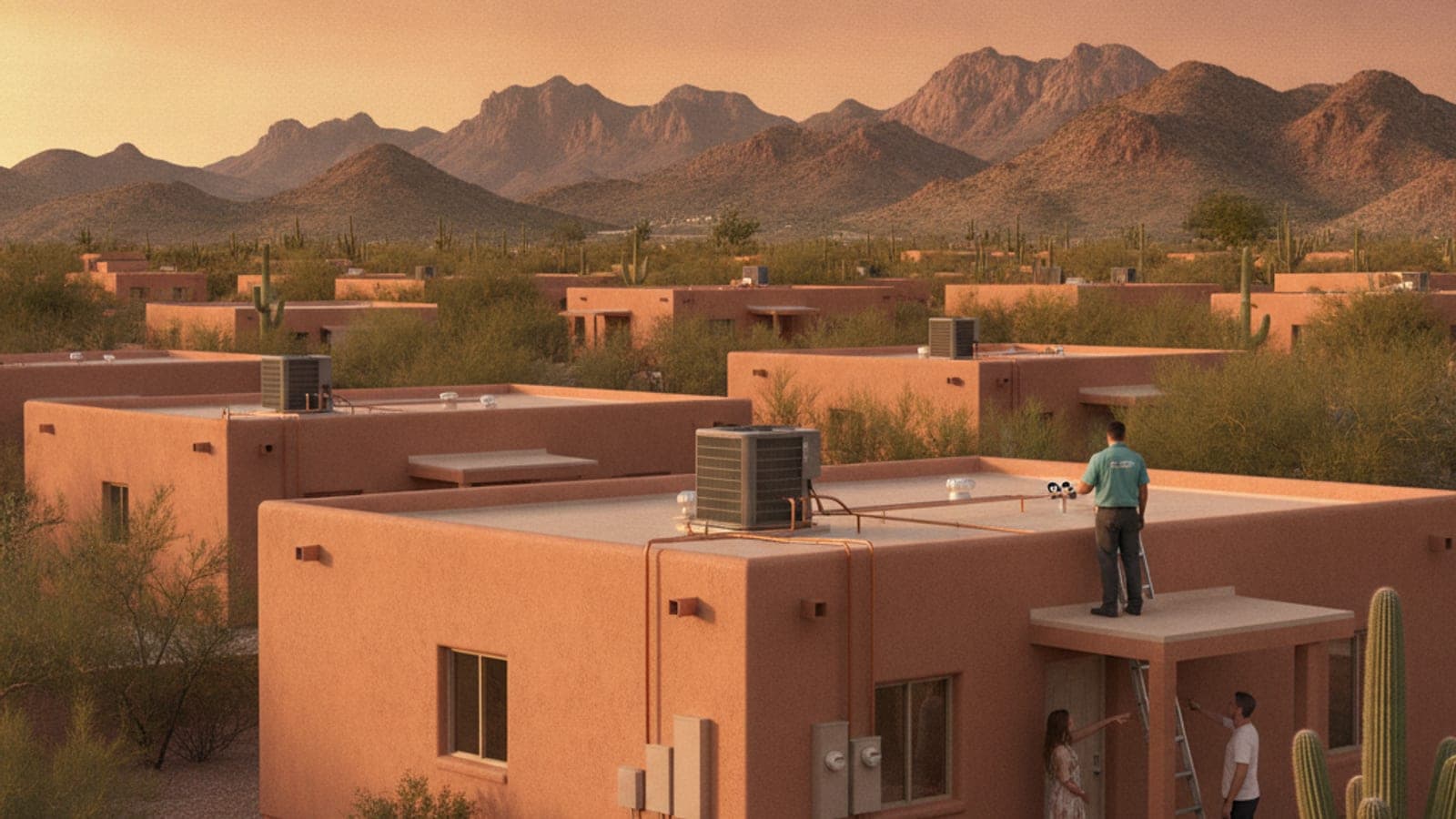
Monsoon dust, wildfire smoke and spring pollen each load a Tucson home differently. See what filters and ventilation can and can't do about each one.
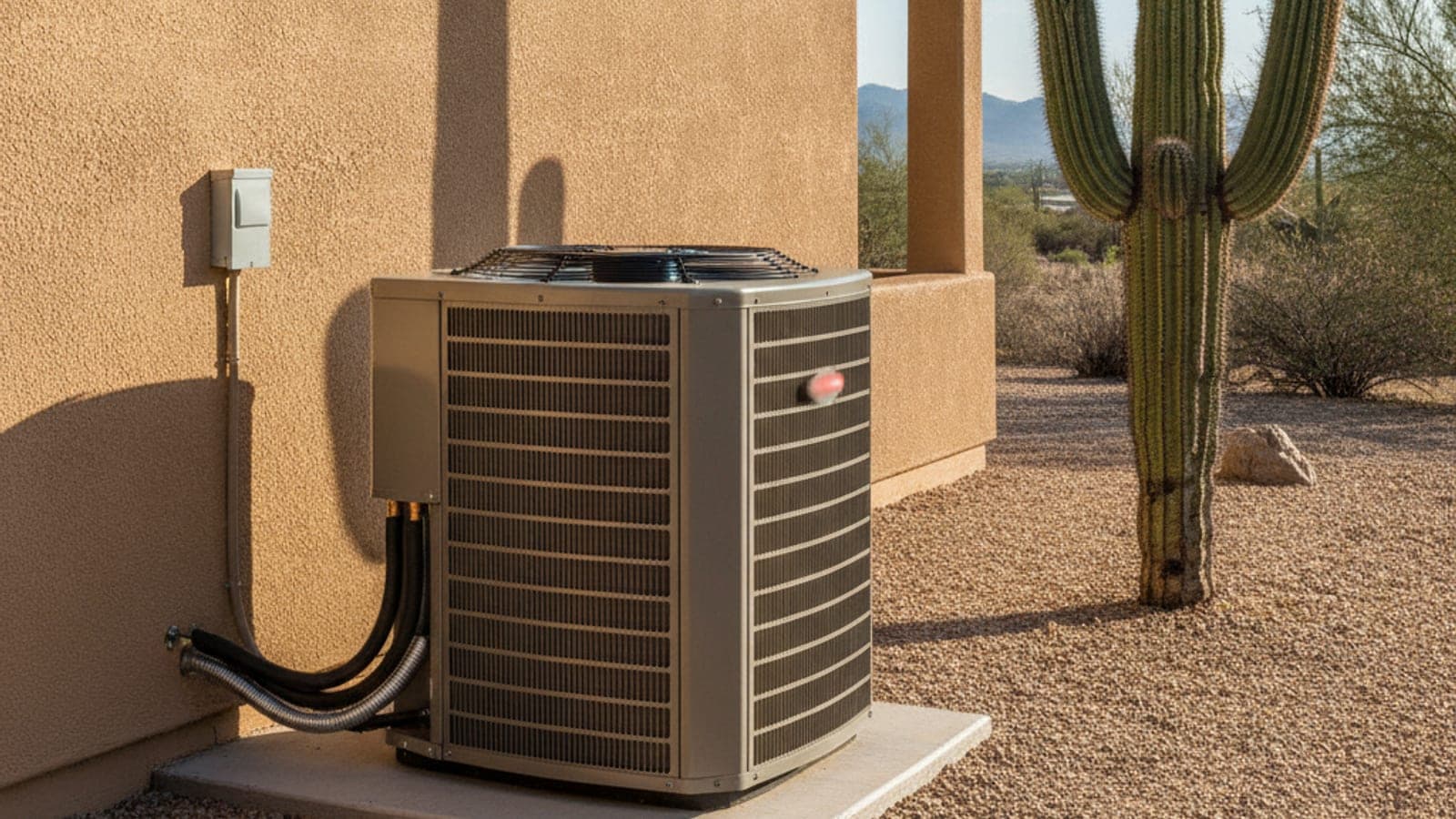
SEER2 rates seasonal AC efficiency, but Tucson's long hot afternoons make EER2 worth a look too. Here is what each means and what to ask a licensed pro.
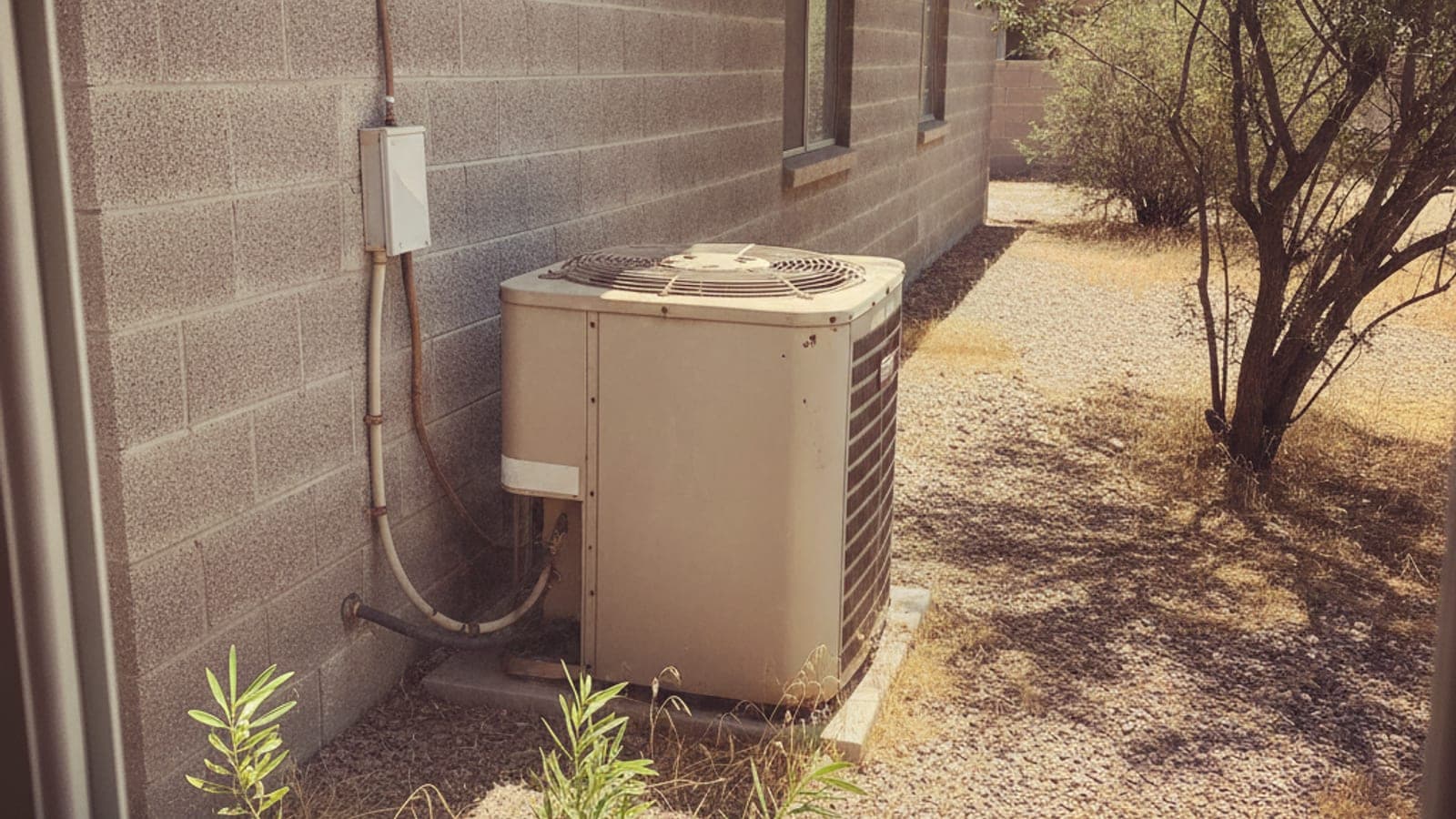
Heat, dust and long run times wear out Tucson AC systems differently. See what shortens life, the signs it's ending and what to ask a pro on a visit.
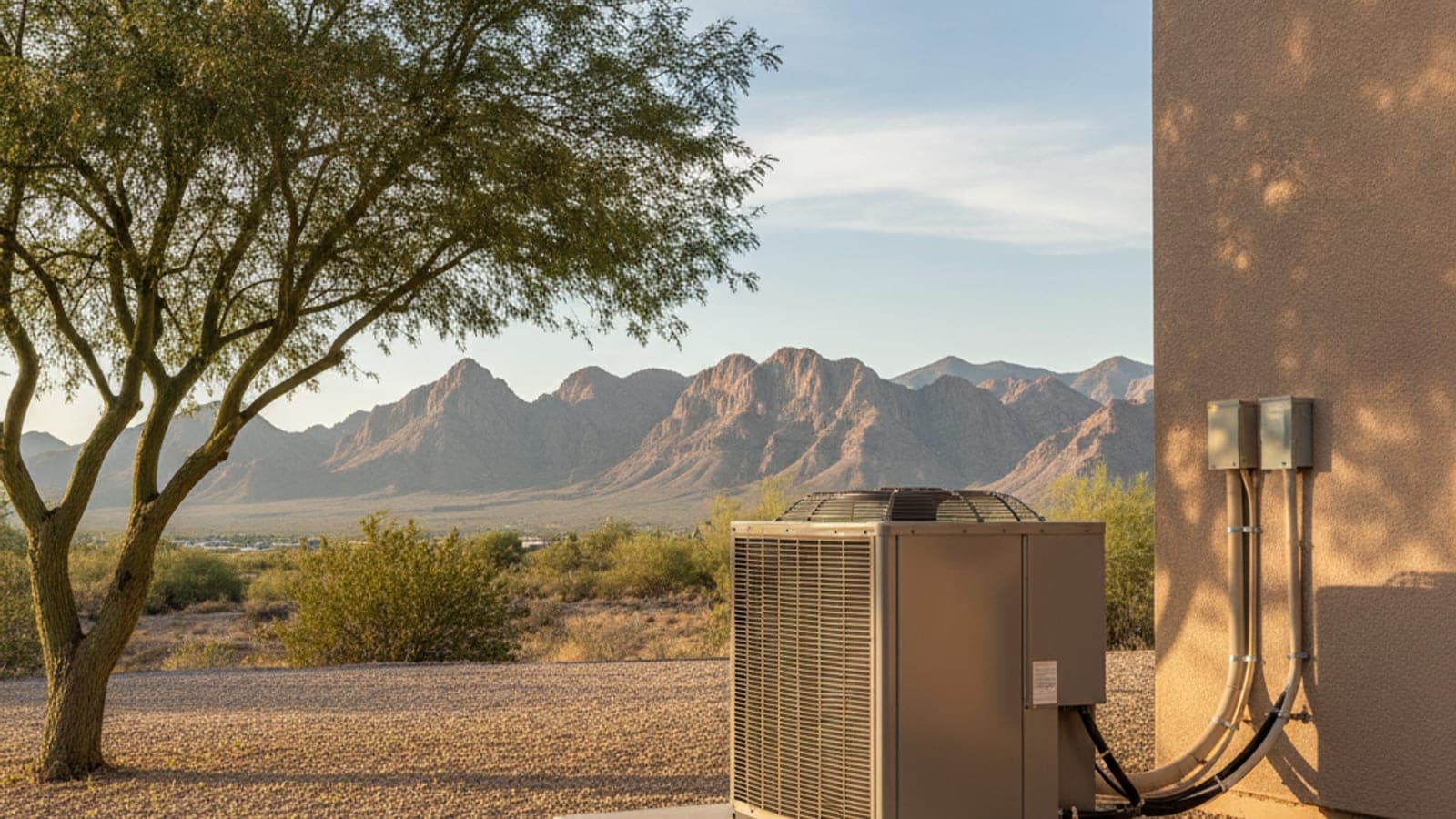
A heat pump is an AC that can run in reverse to heat your home. See how it works, why it suits Tucson and how to tell if your system already is one.
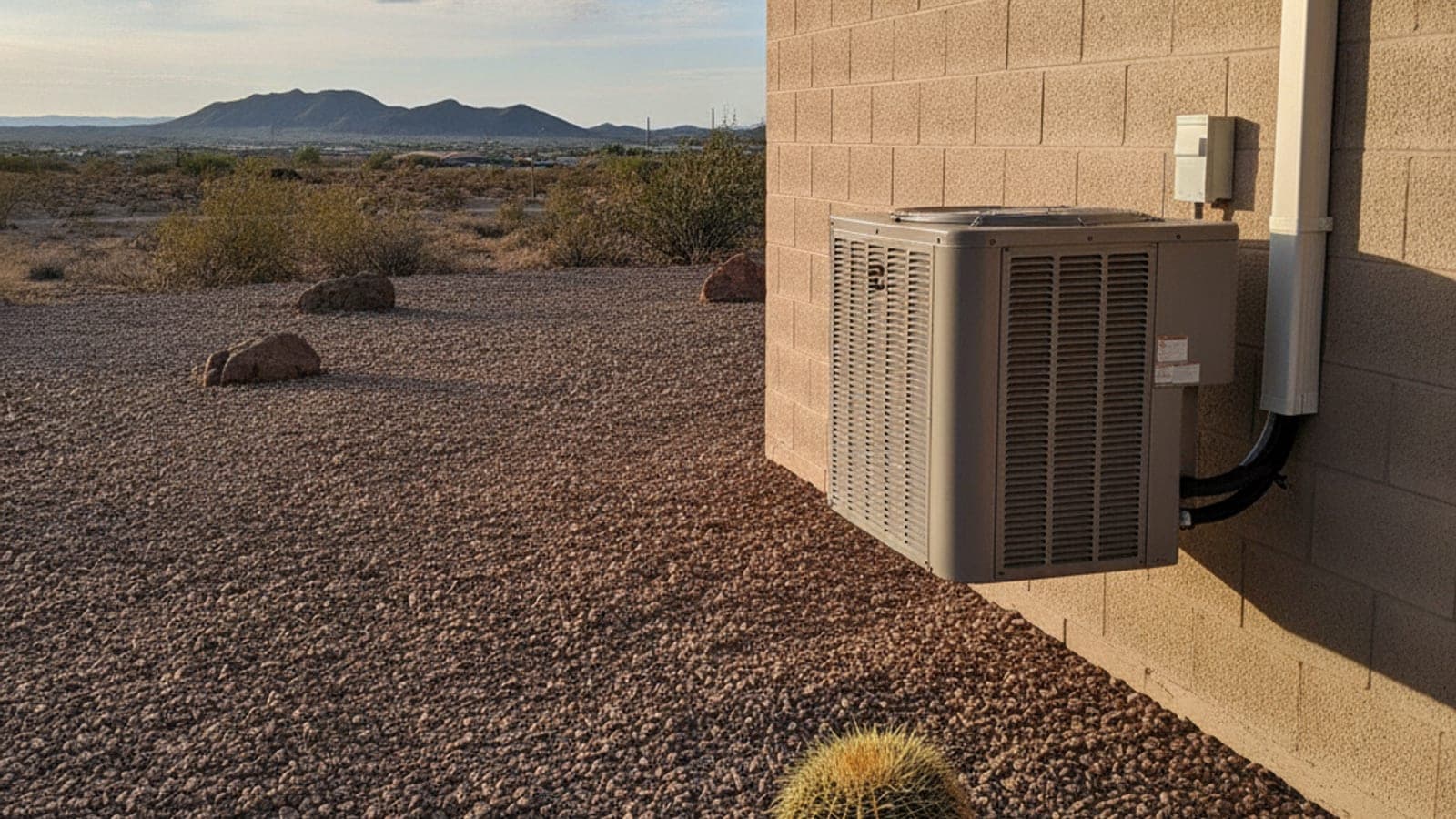
A mini split moves heat with refrigerant between an indoor head and an outdoor unit. See how it cools, heats, zones rooms and fits Tucson homes.
There's no single right setting for a Tucson summer. Pick one you can live with, pre-cool before the TEP peak and set a safe away temperature.
How to choose and change an HVAC filter in Tucson's dusty desert: MERV ratings, airflow limits, dust storm checks and when to ask a pro.
The EPA doesn't recommend routine duct cleaning. See when Tucson dust storms and visible debris justify it, and why duct sealing may matter more.
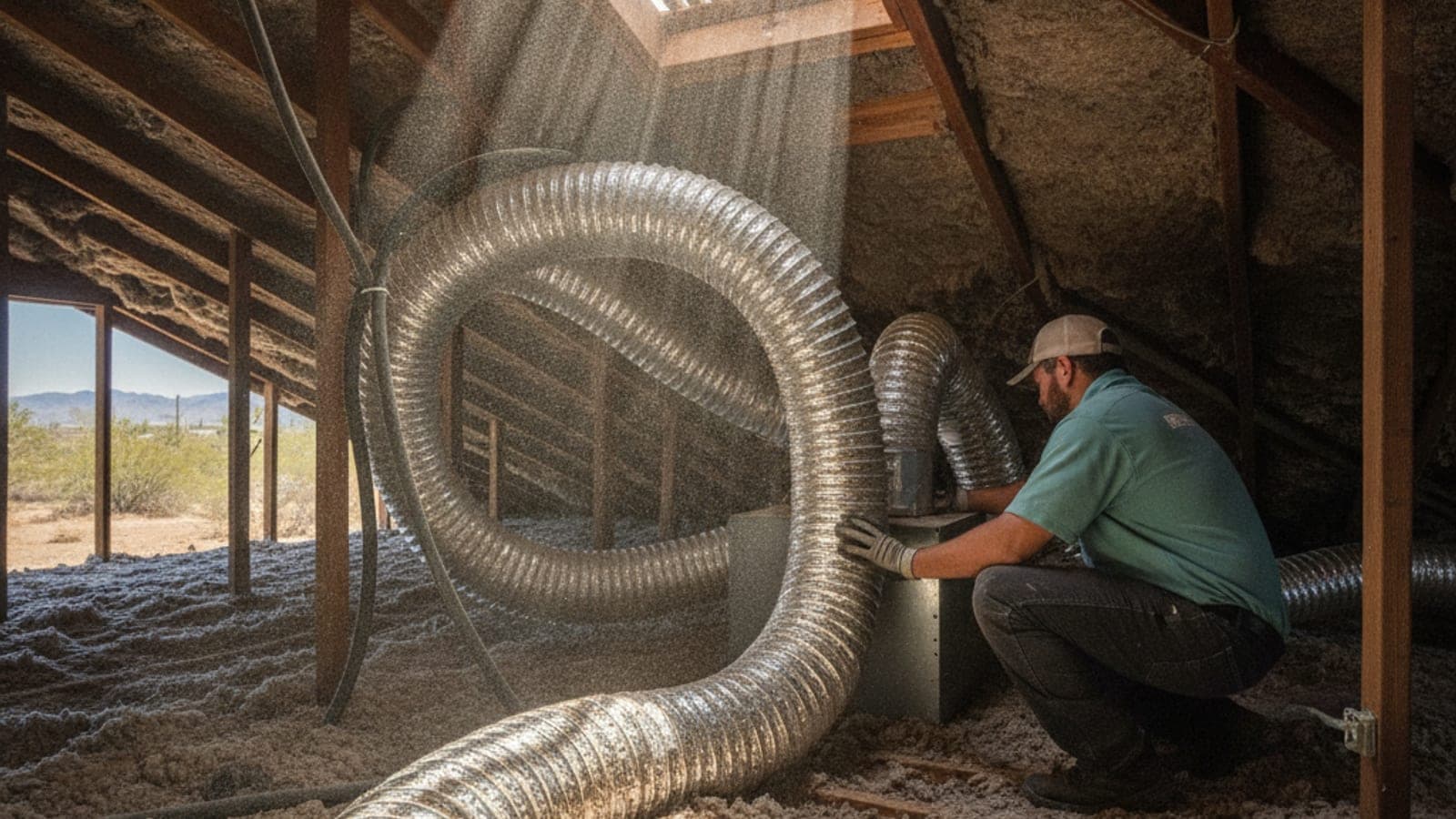
Leaky ducts waste cooled air, especially in hot attics and on flat roofs. See how pros test and seal ducts in Tucson and how the TEP duct sealing rebate works.
An Arizona room is an enclosed patio, and glass makes it hard to cool. Mini split, ducting and evaporative options, plus permit questions to ask in Tucson.
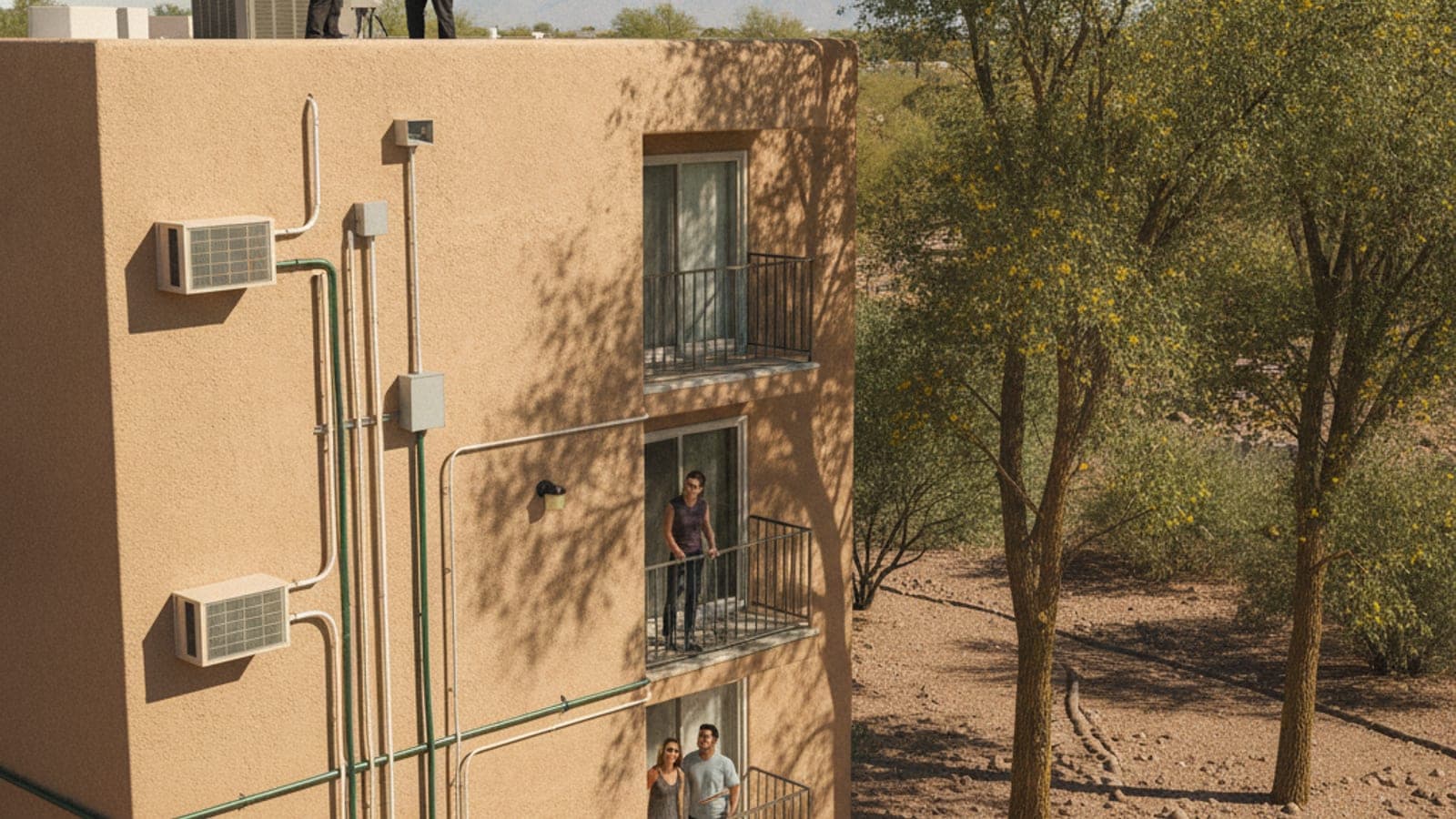
Arizona landlords must keep cooling in good working order where it is installed, and Tucson sets an 82F cap for rentals. Put your request in writing.
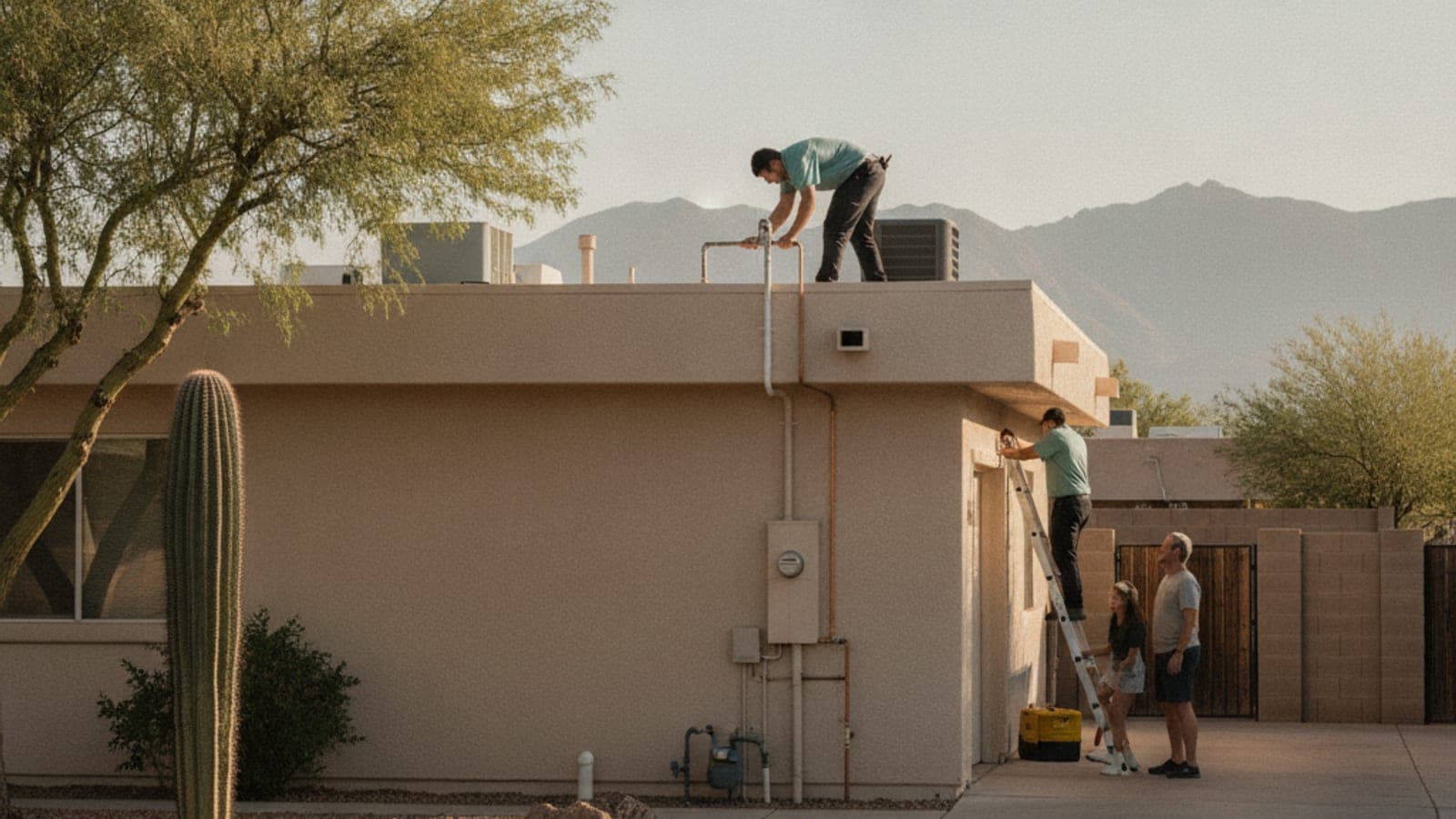
Tucson HVAC in one place: the climate, equipment types, TEP rebates, permits, licensing and a link to every guide you'll need before hiring a pro.
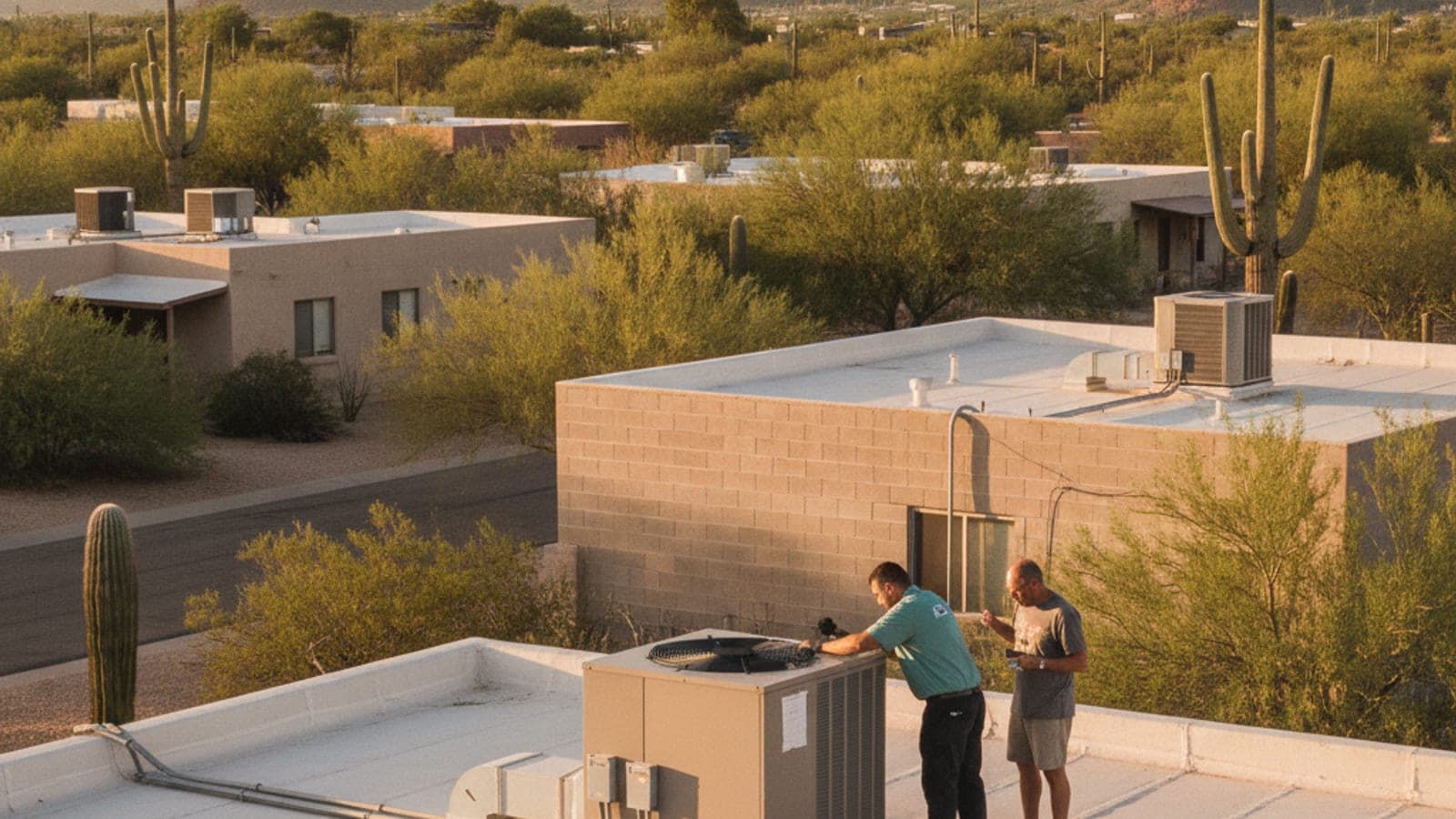
AC problems and equipment differ from central Tucson to Oro Valley, Marana, Sahuarita and the foothills. See what to expect and what to ask a pro.
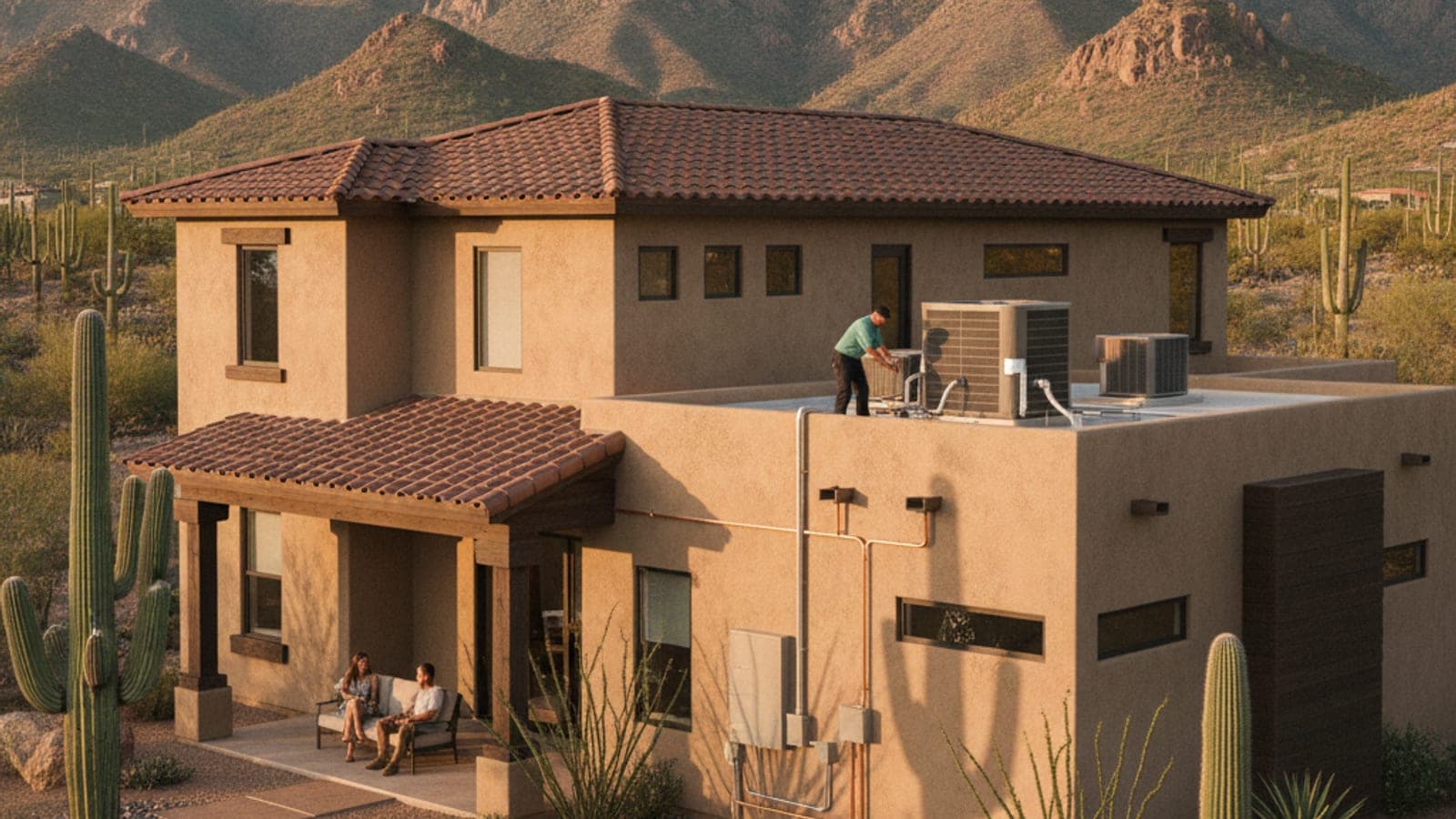
Oro Valley and Marana homes are newer than central Tucson. See how age, two-story layouts, HOA questions and TEP or Trico service shape HVAC decisions.
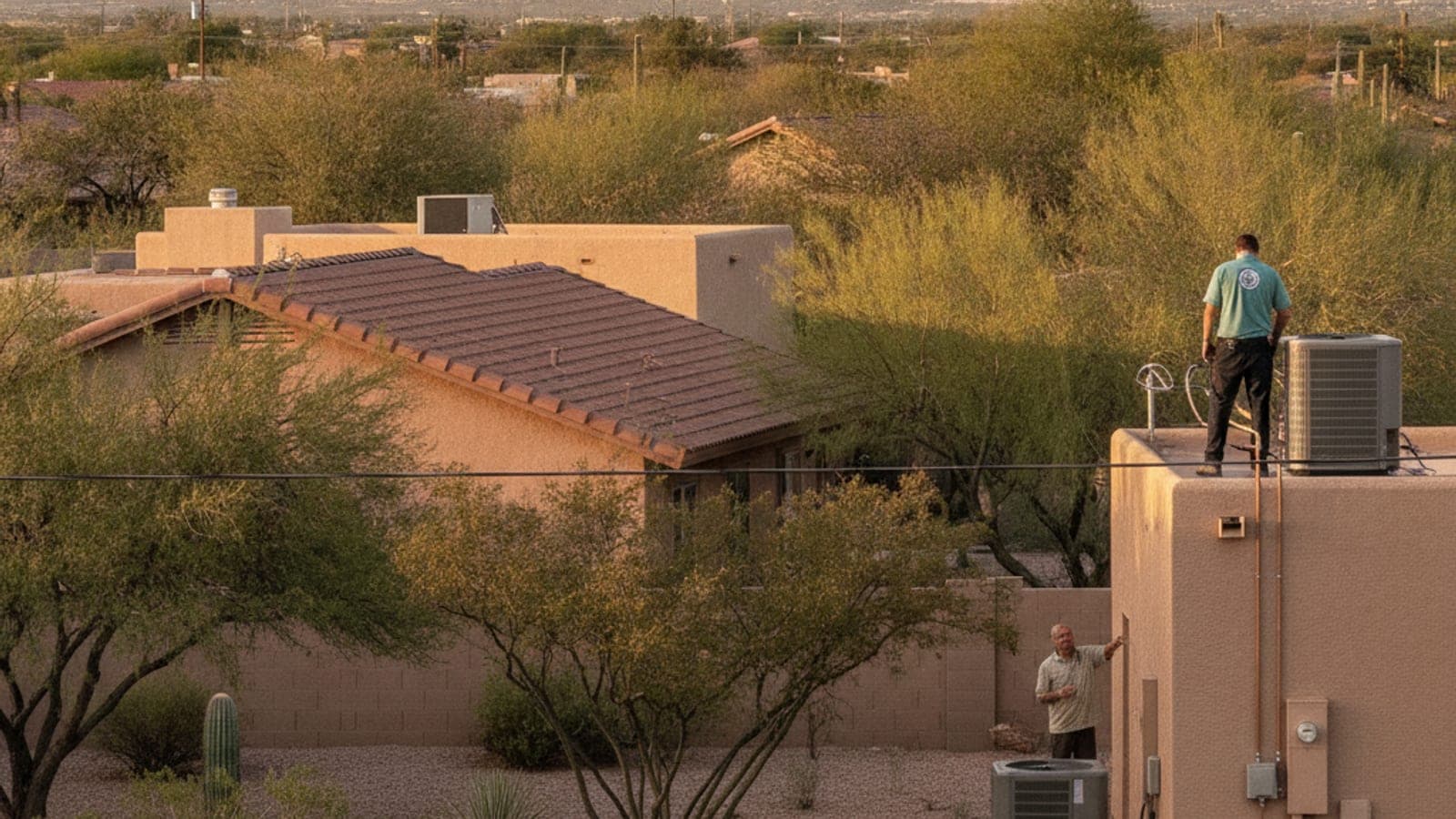
East Tucson tracts, Rita Ranch and Vail have different equipment and ground elevations. Learn what to expect from older and newer HVAC systems.
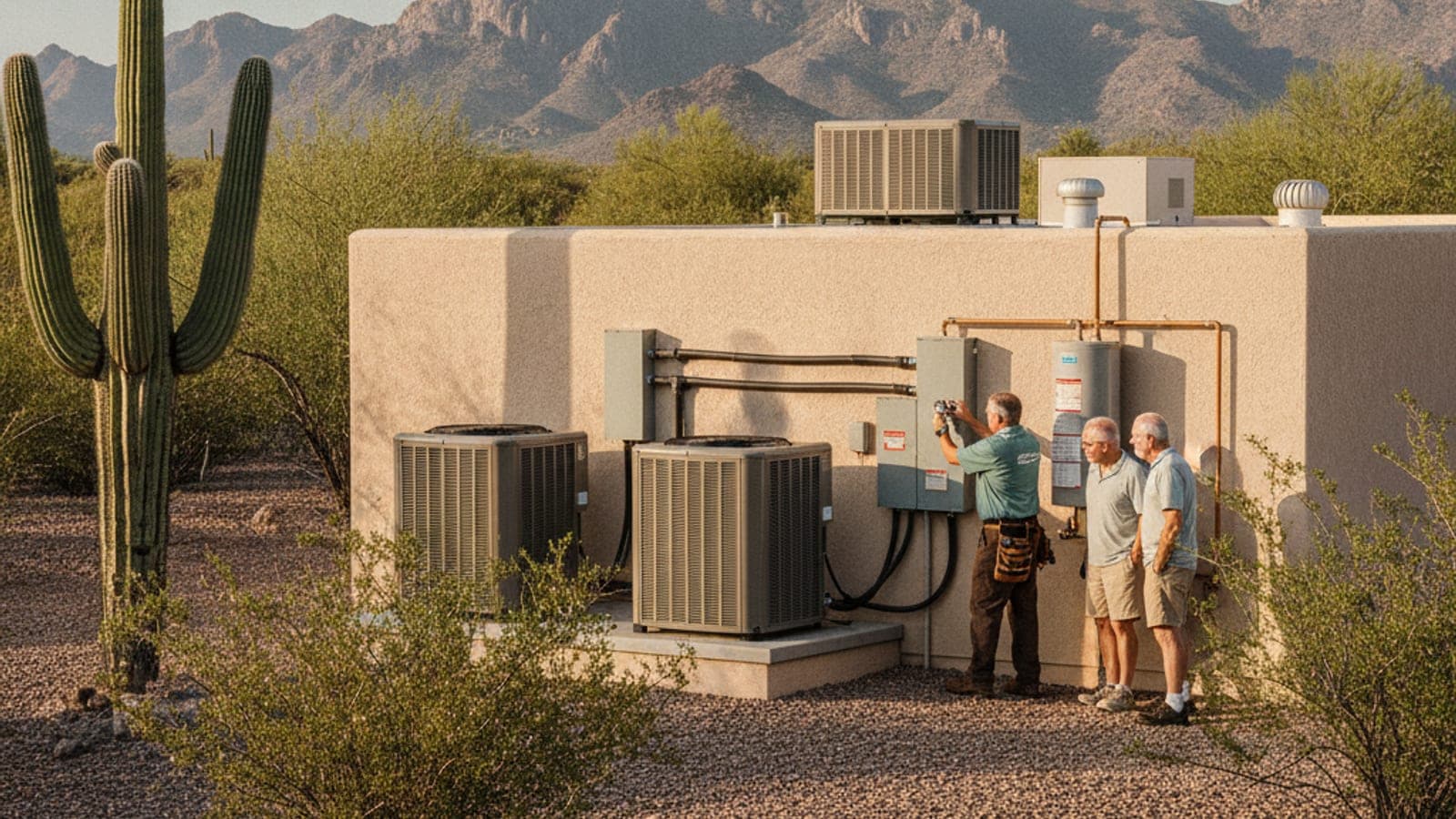
Sahuarita and Green Valley sit south of Tucson along I-19. What to know about home age, seasonal residents, Trico or TEP power, and choosing a pro.
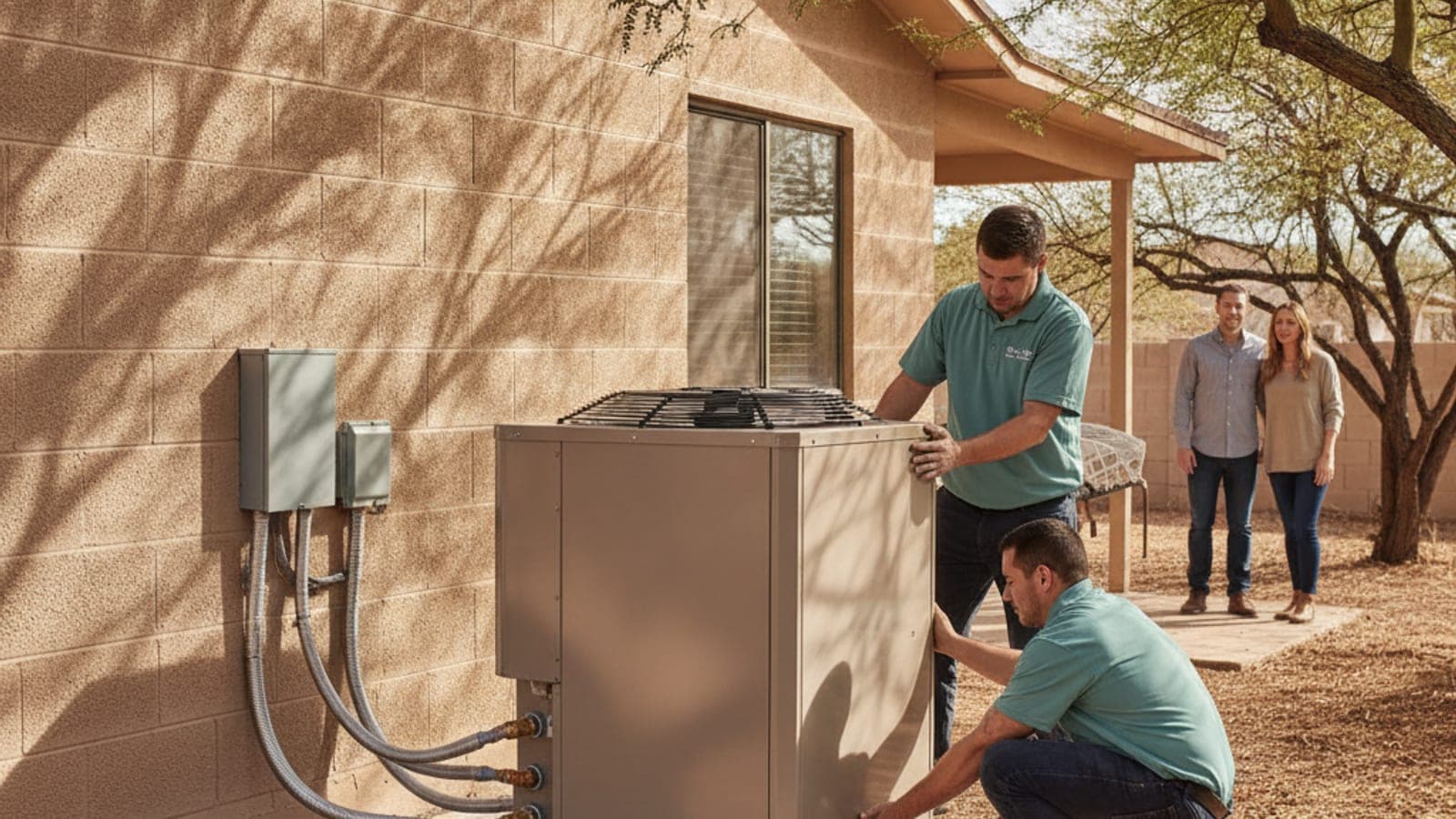
A walkthrough of heat pump installation day in Tucson: permit, sizing, rooftop or ground units, electrical, startup and what to ask the licensed pro.
Can your HVAC help with asthma and allergies in Tucson? Filtration, sealed ducts, dust control and evaporative cooler cautions, with straight answers.
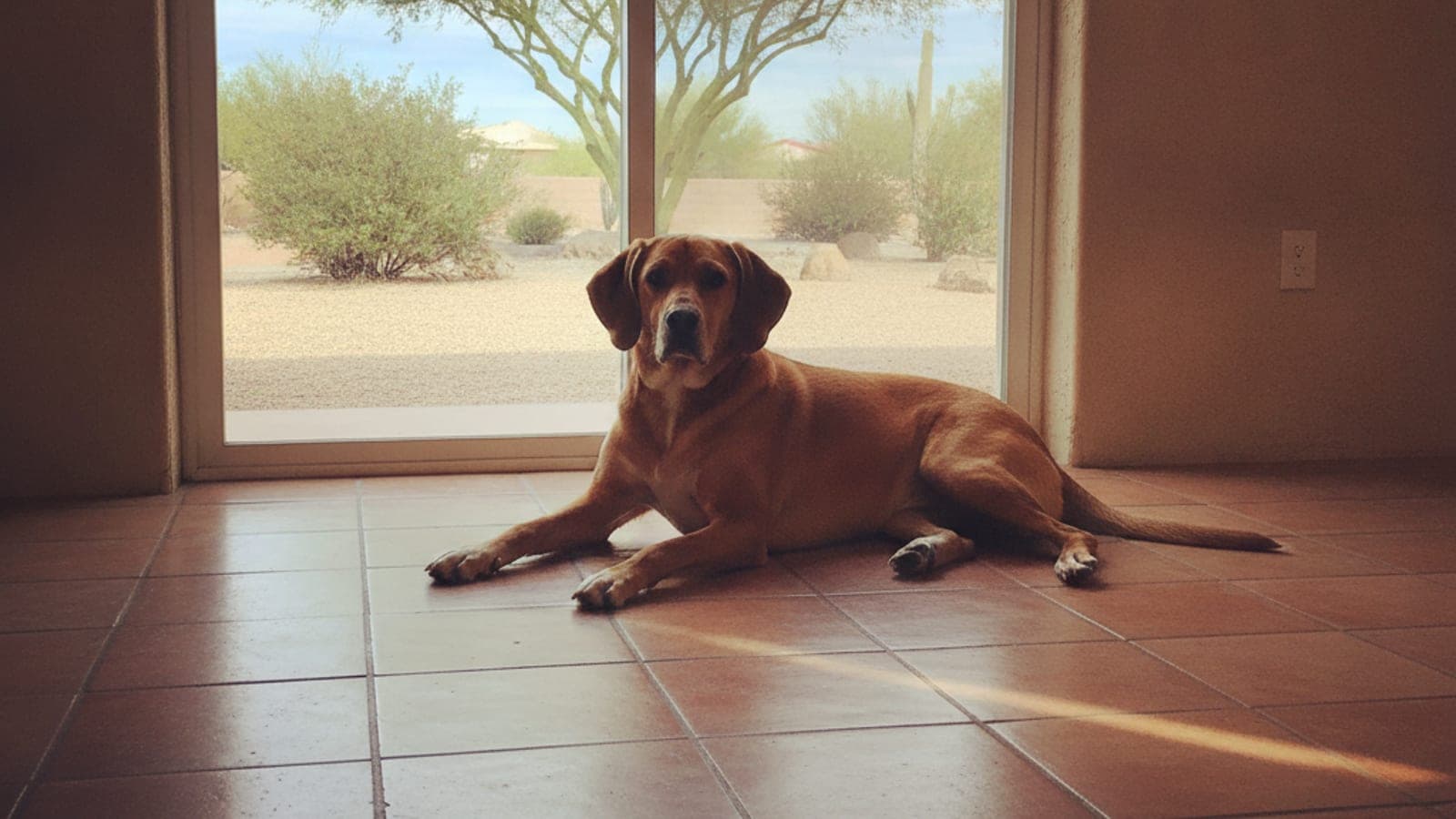
Pets change how you run an AC in Tucson: filters clog with hair, dander builds up, and a failed system on a 100F+ day is a safety issue. Here's the plan.
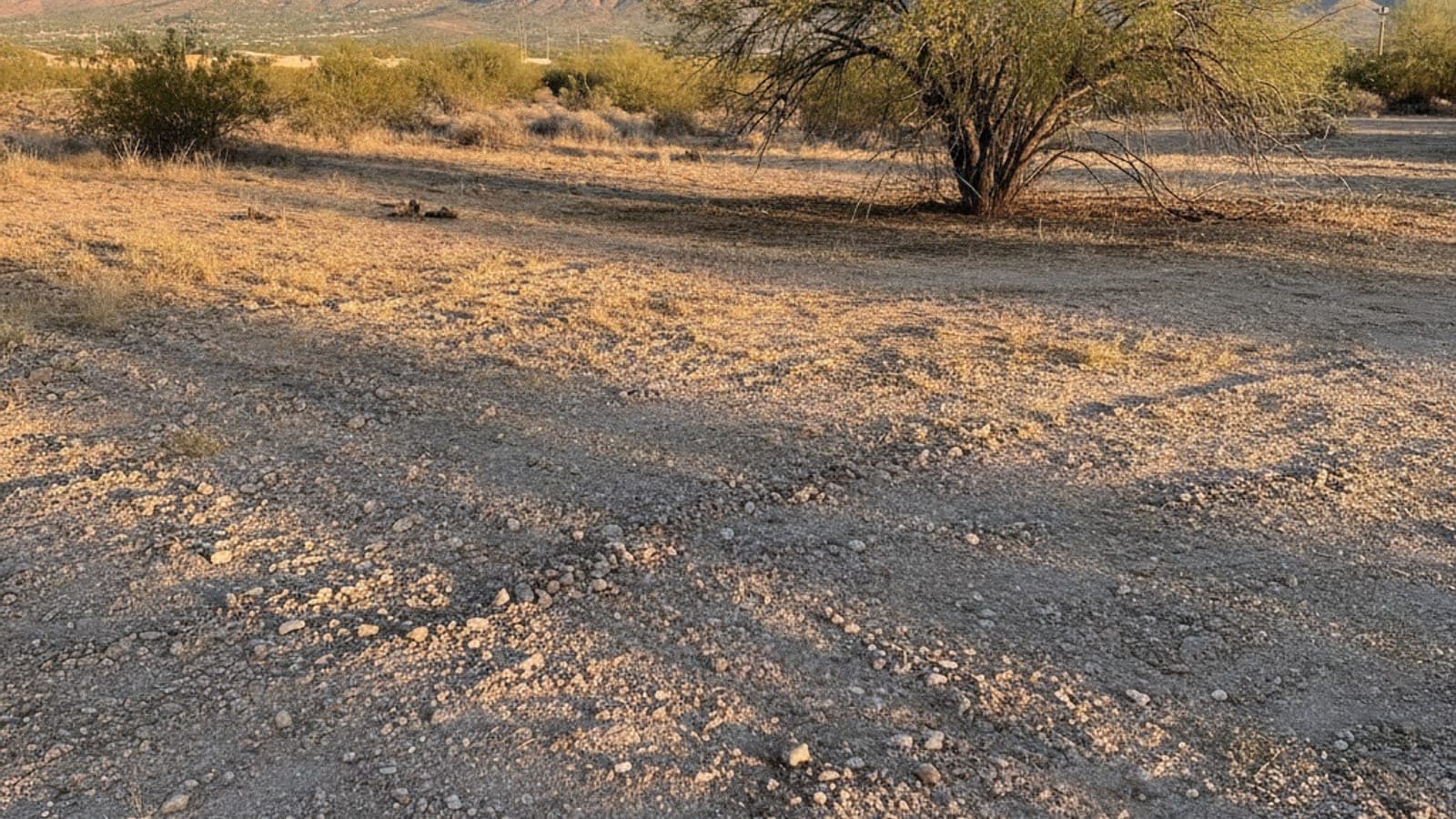
Geothermal heat pumps work in the desert, but drilling and payback are the question. See how they compare with air-source heat pumps in Tucson.
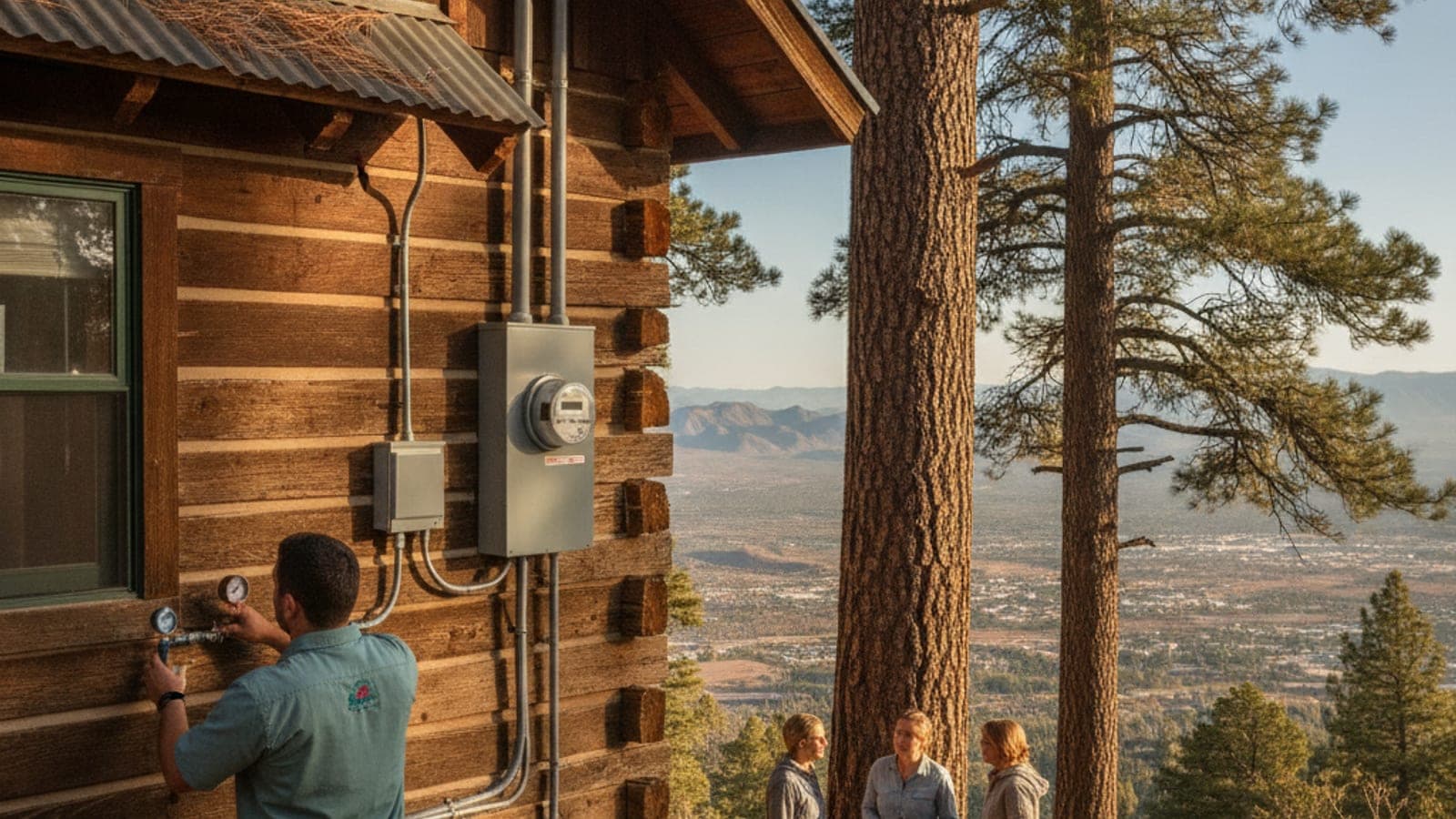
Mount Lemmon winters run far colder than the Tucson basin. See the climate numbers, how a heat pump fits, and what to ask a pro about backup heat.
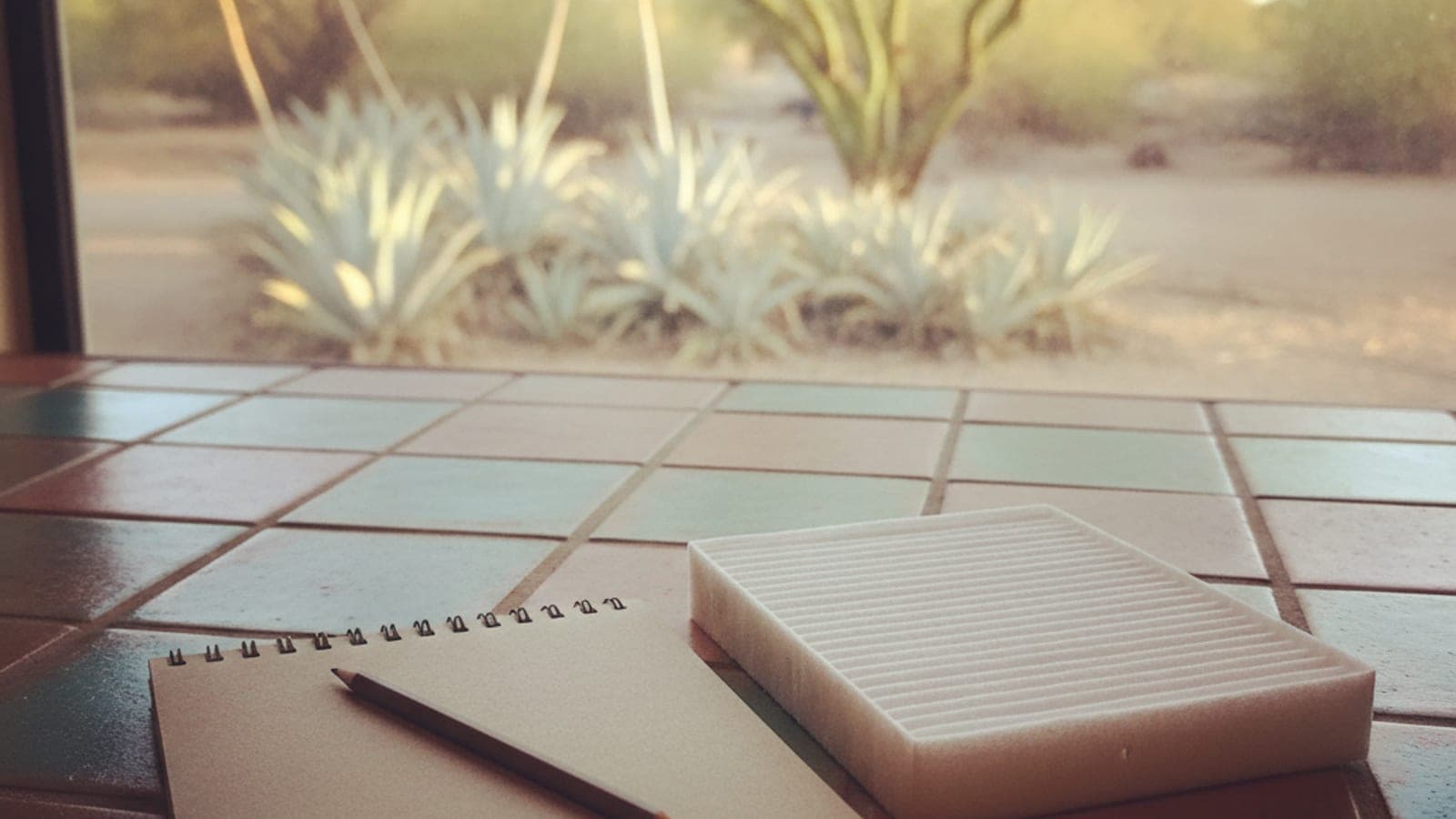
A simple HVAC log saves time at the next repair. Here's what Tucson homeowners should record: models, filters, symptoms, dust and monsoon checks.
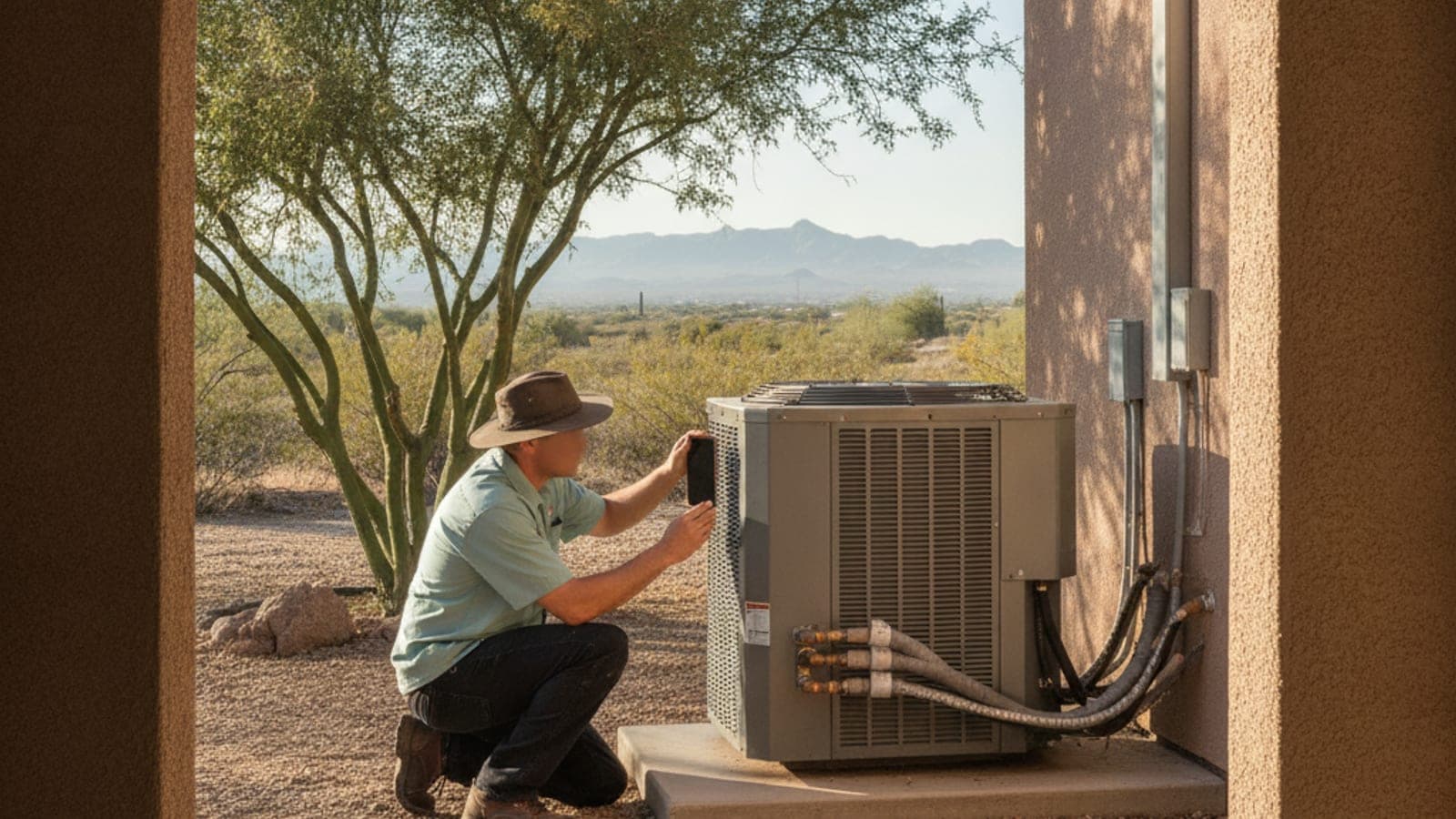
A clear HVAC maintenance request saves time. List the equipment, symptoms, roof or yard access and any rental details so a Tucson pro can prepare.
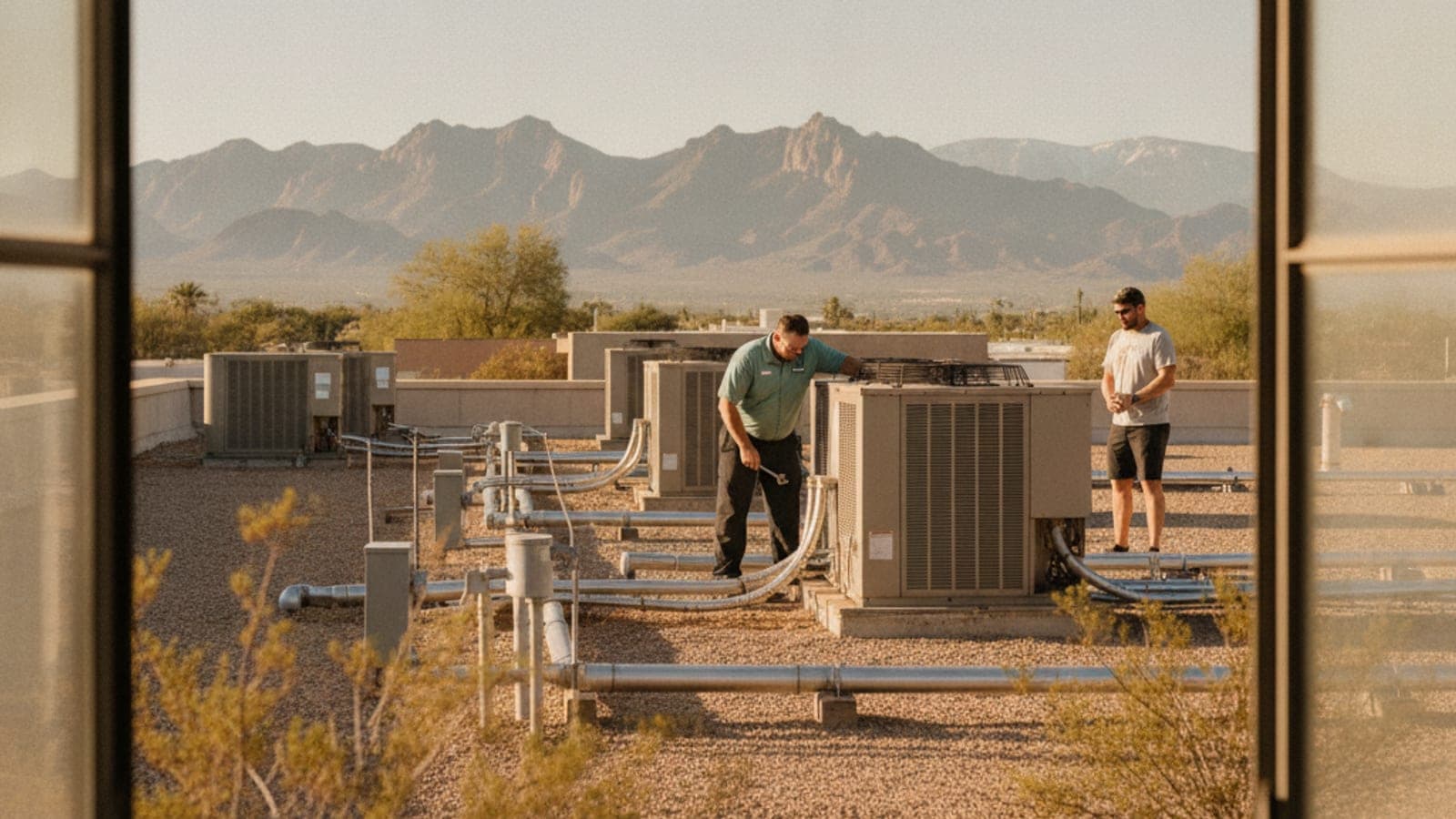
Preventive maintenance follows a schedule. Predictive maintenance acts on condition data. See which fits a Tucson commercial building and its long summer.
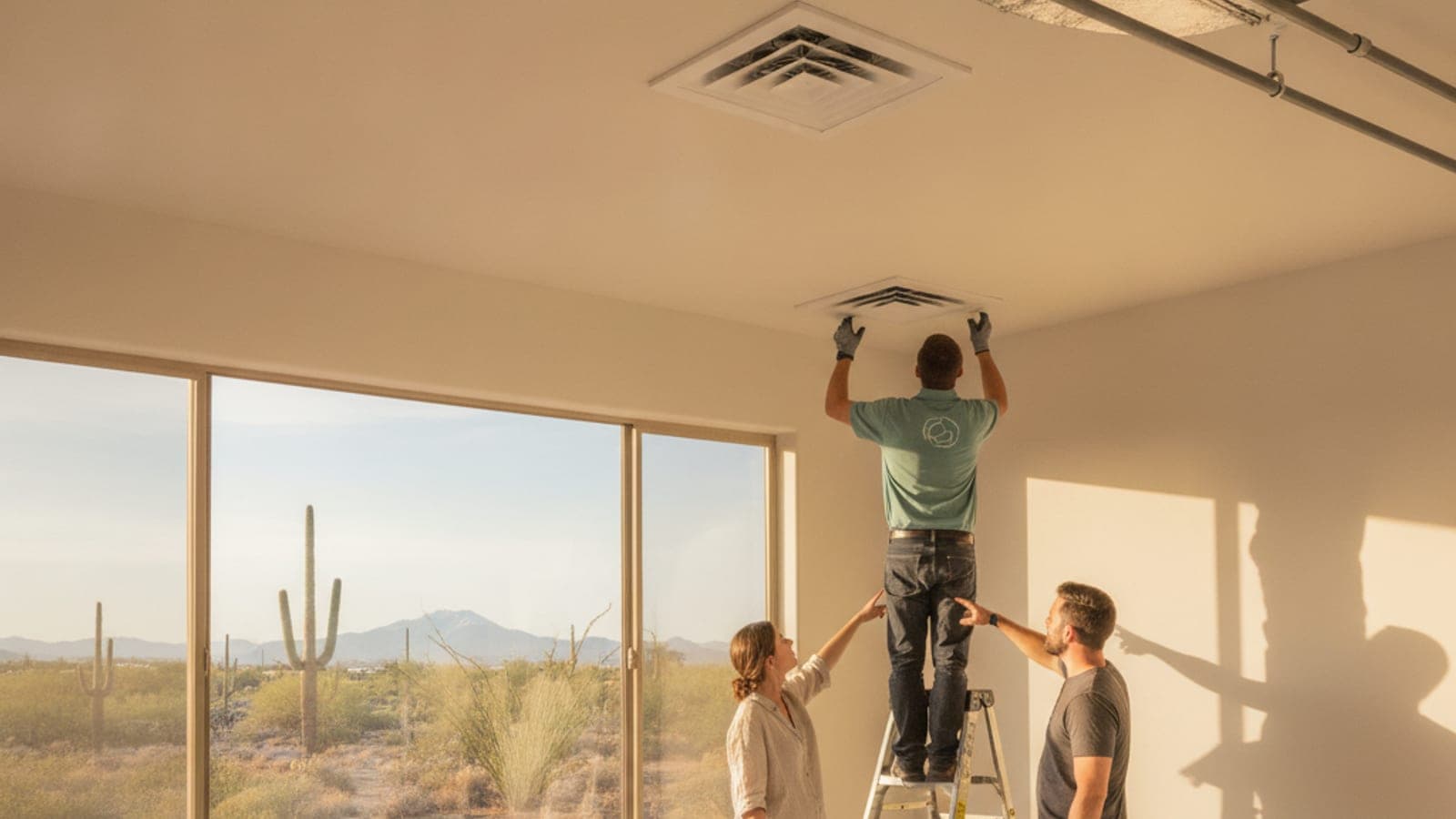
If one Tucson room stays hot while another freezes, air balancing may help. Learn what it covers, what it can't fix, and what to ask a pro to measure.
Closing vents in unused rooms usually does not save energy and can strain your system. Learn why, what to do in a Tucson home and when zoning helps.
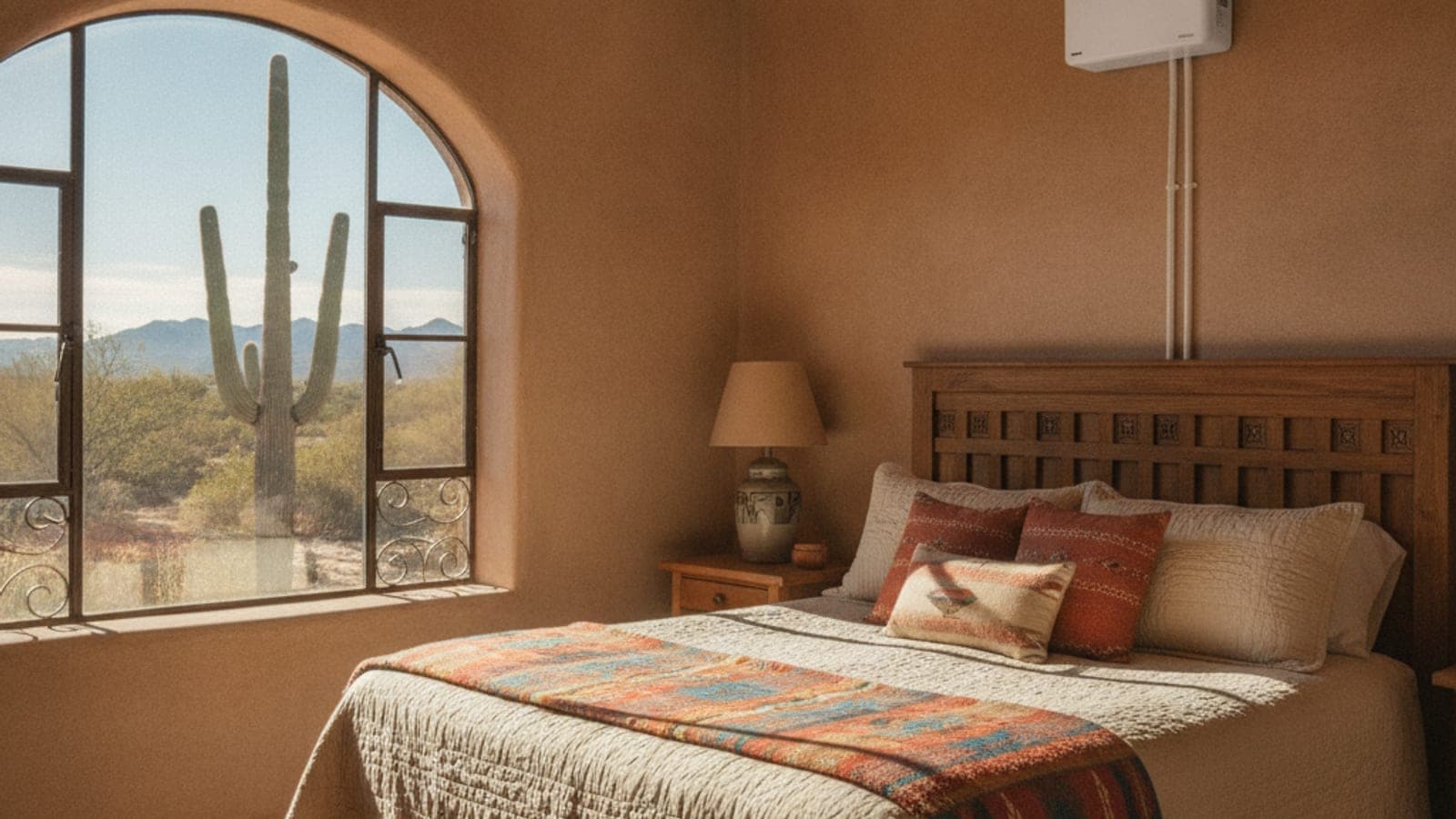
Running a Tucson short-term rental? See how to protect your AC from guest misuse, handle summer complaints, check rules and plan service between stays.
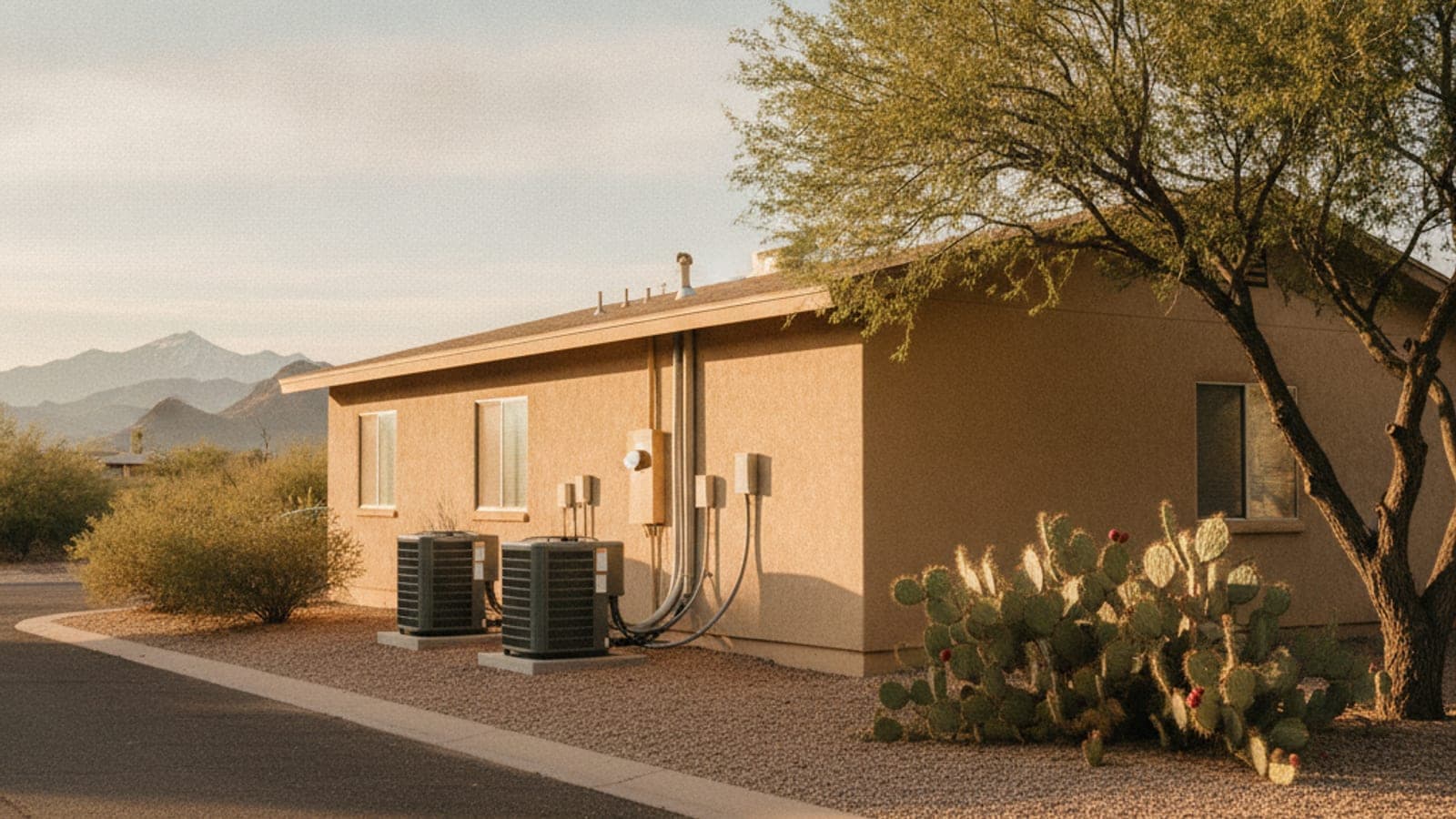
Tucson landlords: a maintenance plan for rental AC and heat, from spring checks and turnover to the 82F cooling standard and when to replace a failing system.
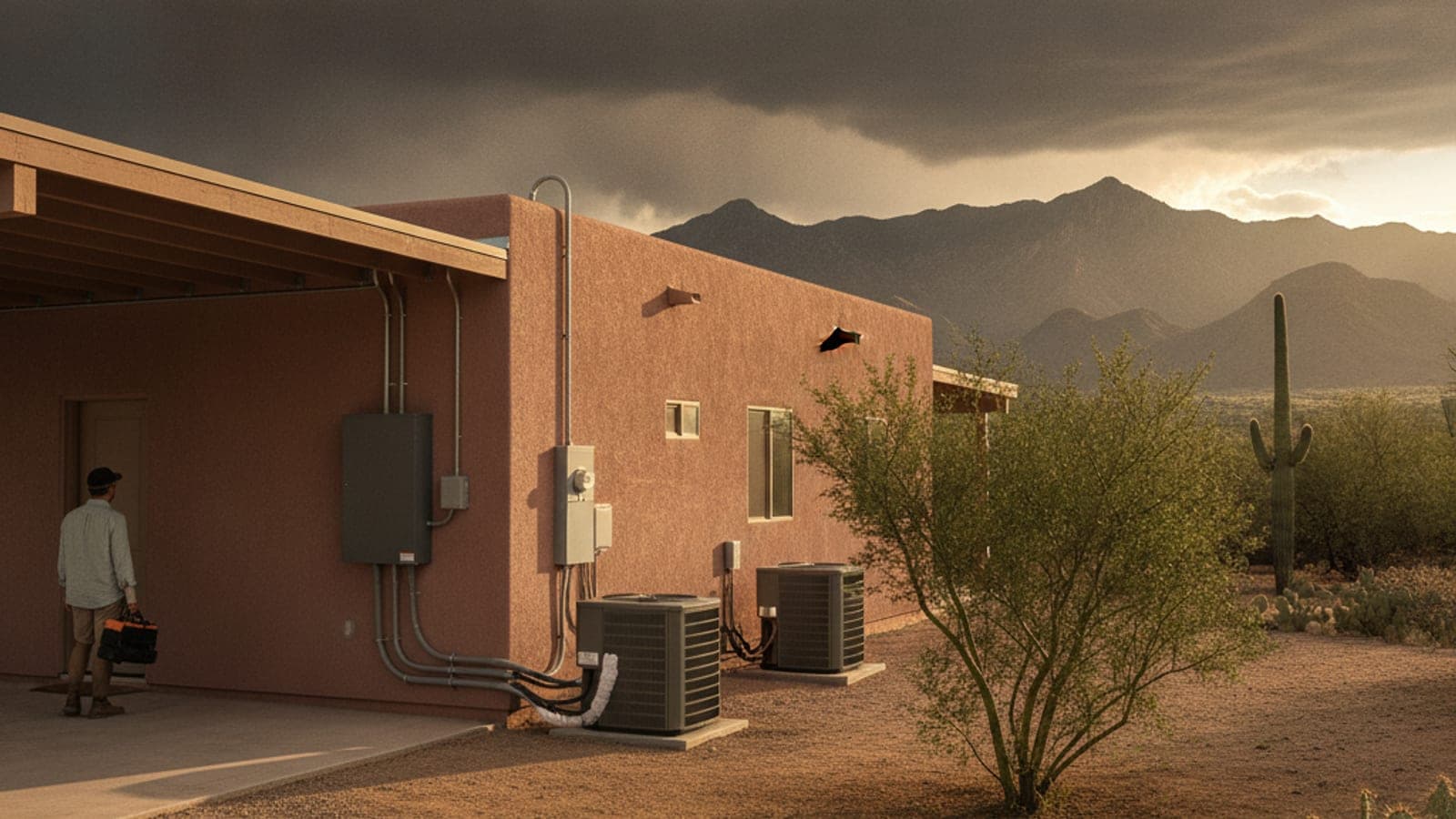
Can a battery run your AC through a monsoon outage? A central AC is a hard load. Here is what batteries, generators and mini splits can and can't do.
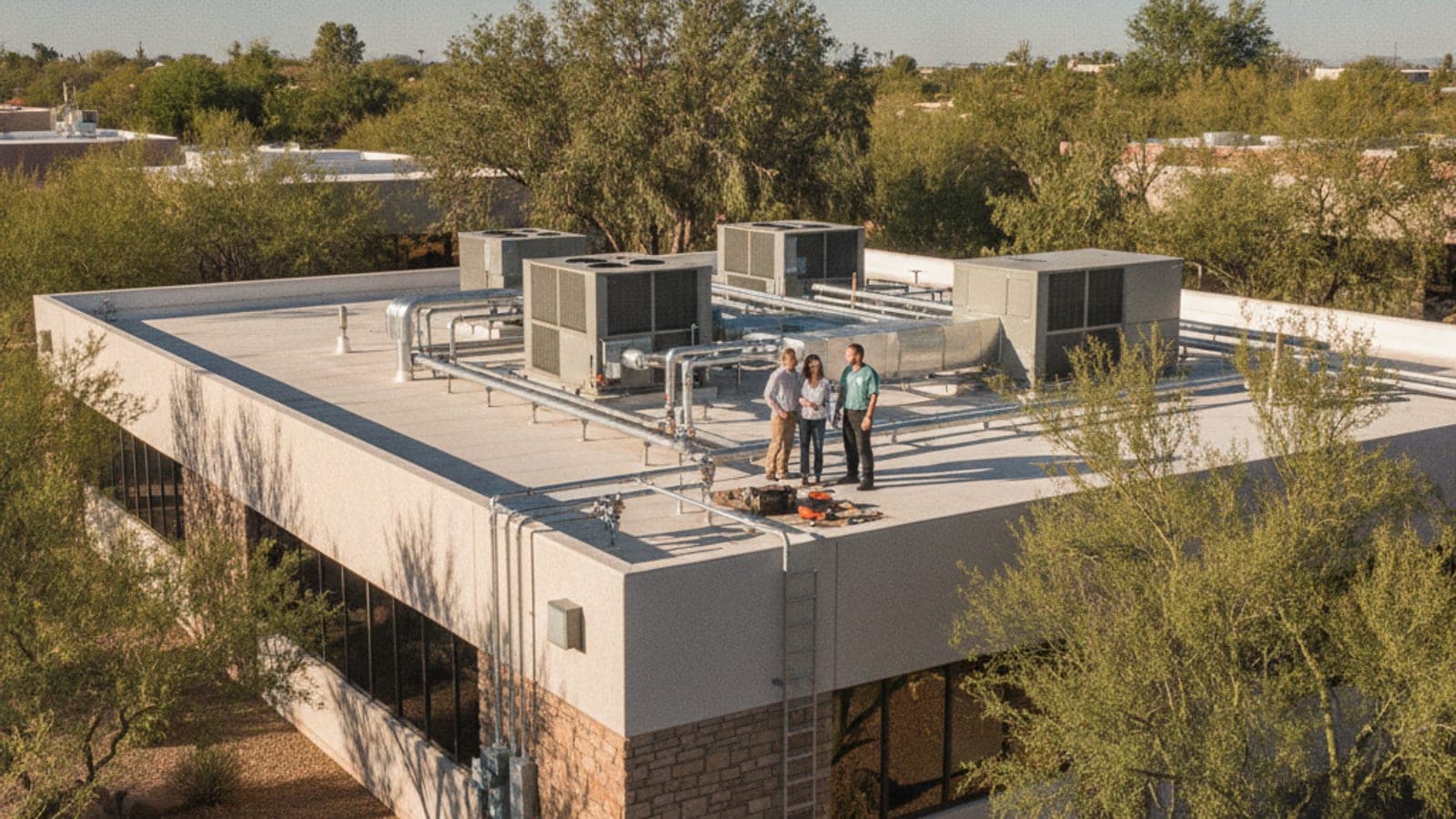
How Tucson office HVAC works: rooftop units, zones, who controls what in a leased suite, and what to ask a licensed pro when a space runs hot or cold.
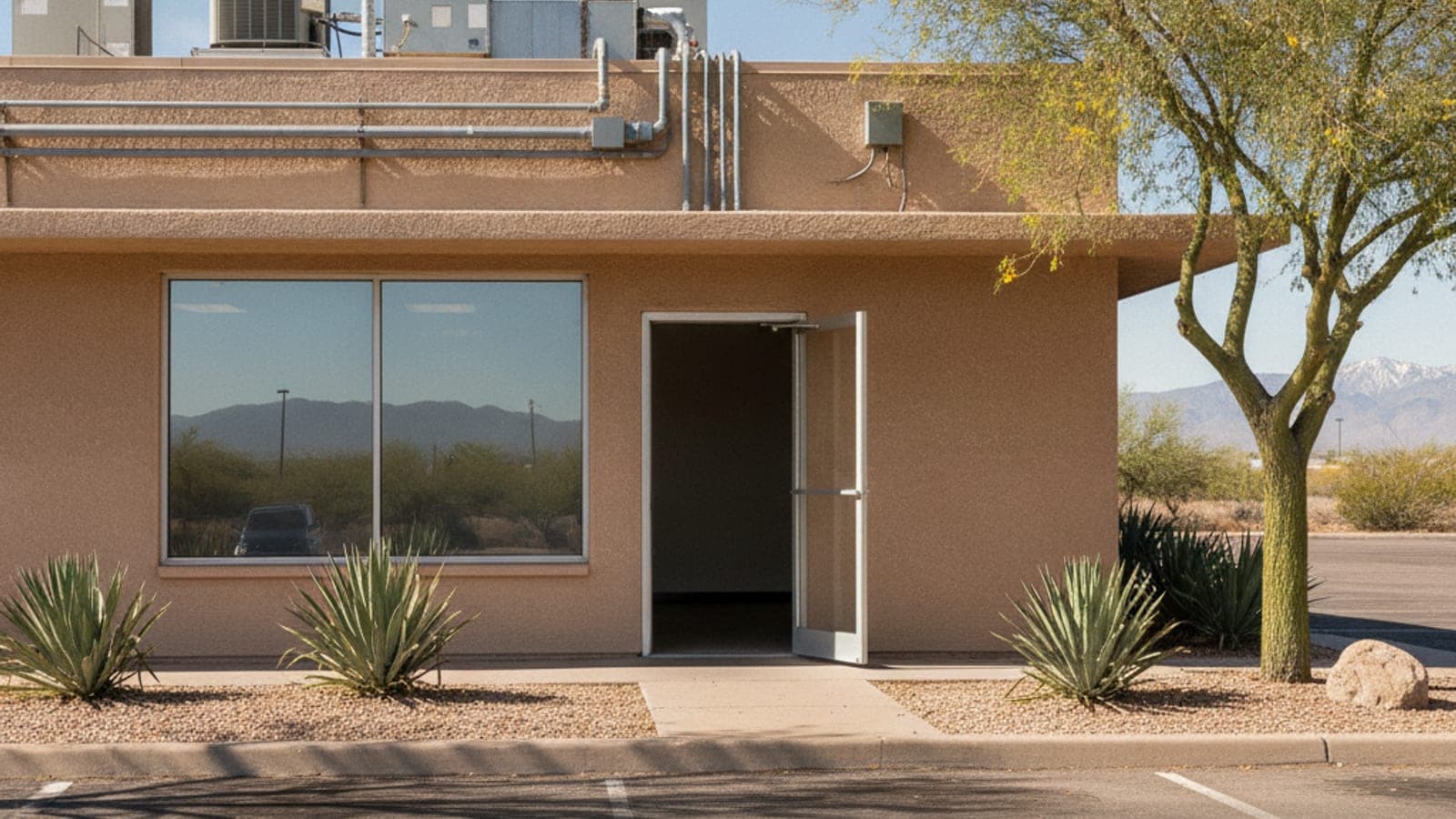
Gyms, salons and spas load an HVAC system with body heat, moisture and odors. Learn what to plan for in Tucson, from ventilation to humidity to leases.
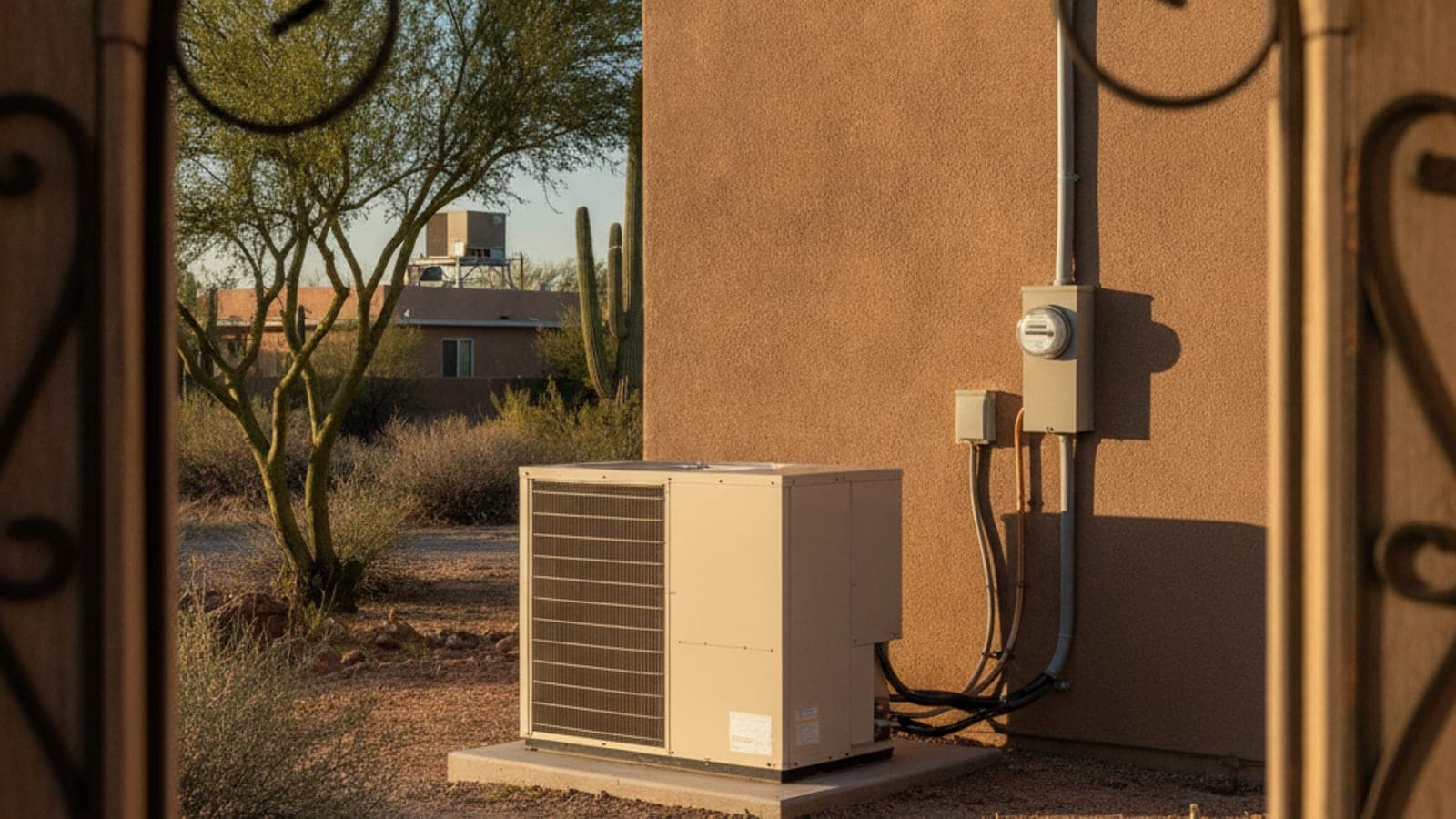
HVAC means heating, ventilation and air conditioning. See the parts of a system, how Tucson's heat and monsoon change what you need, and when to call a pro.
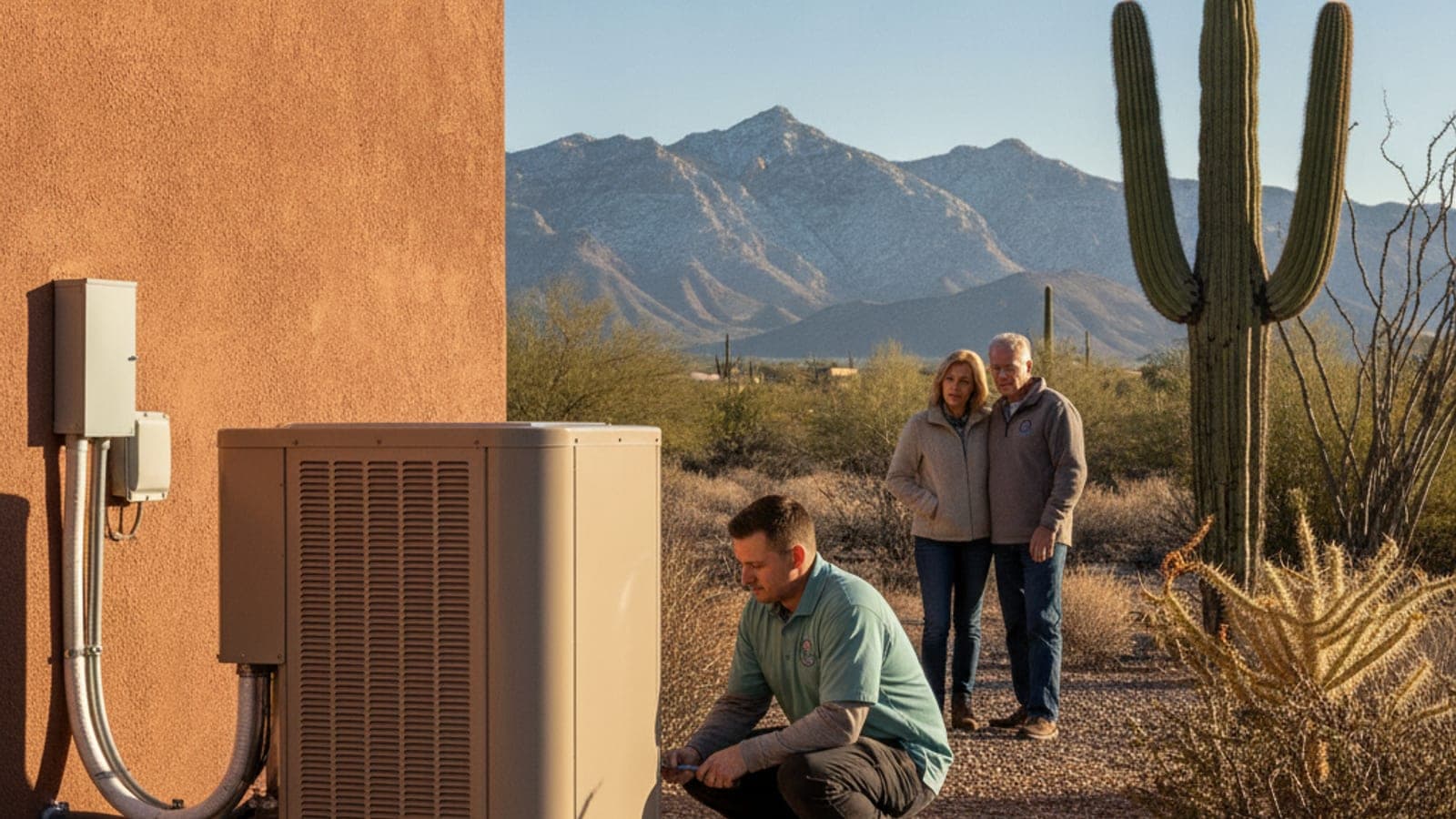
Yes, in the Tucson basin freezing nights are rare, so a heat pump handles winter well. Learn about defrost, backup heat and the exception on Mount Lemmon.
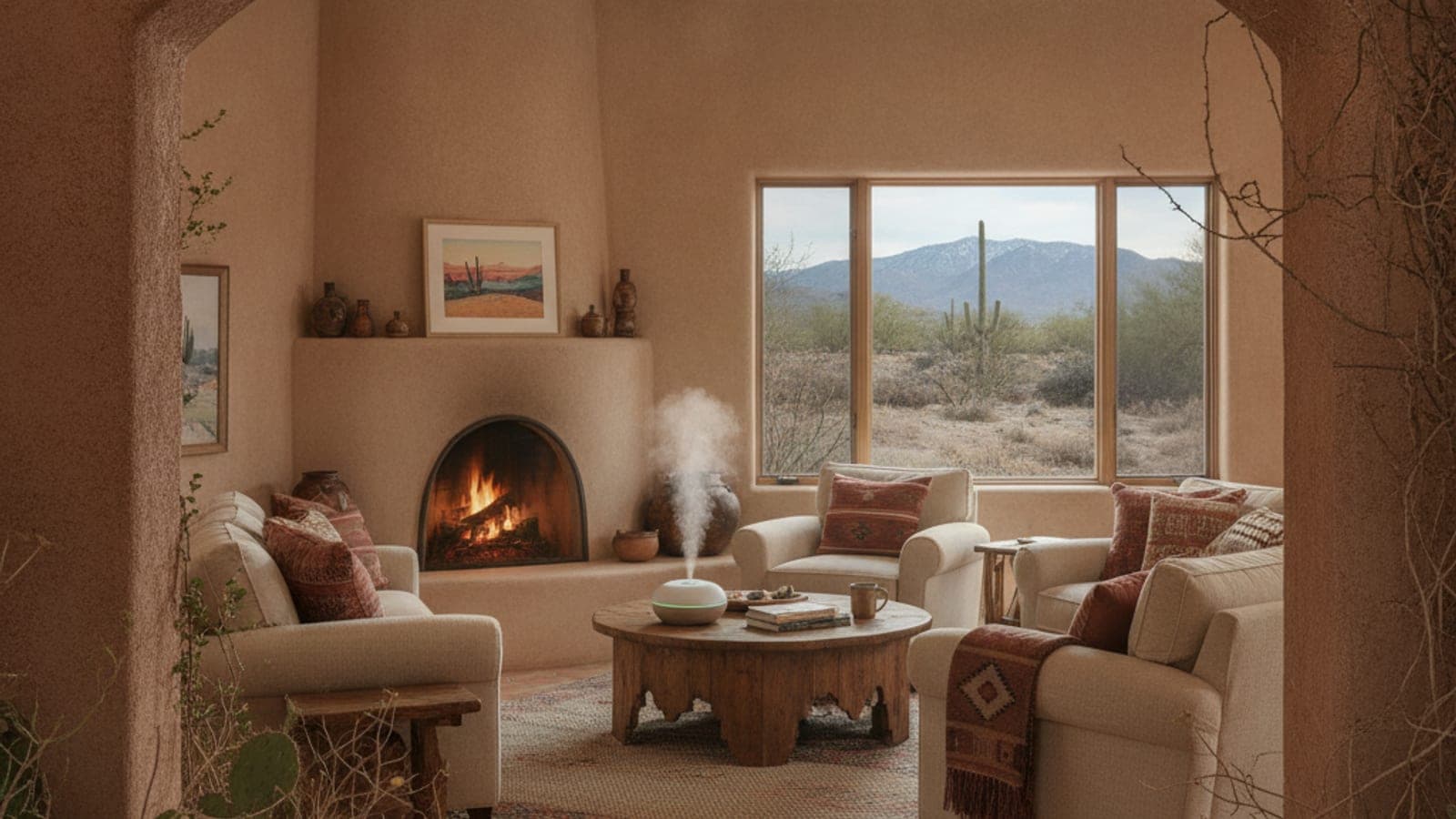
A heat pump doesn't add or remove much moisture in winter. Tucson air is already dry. Here's why it feels dry and which humidifiers to ask about.
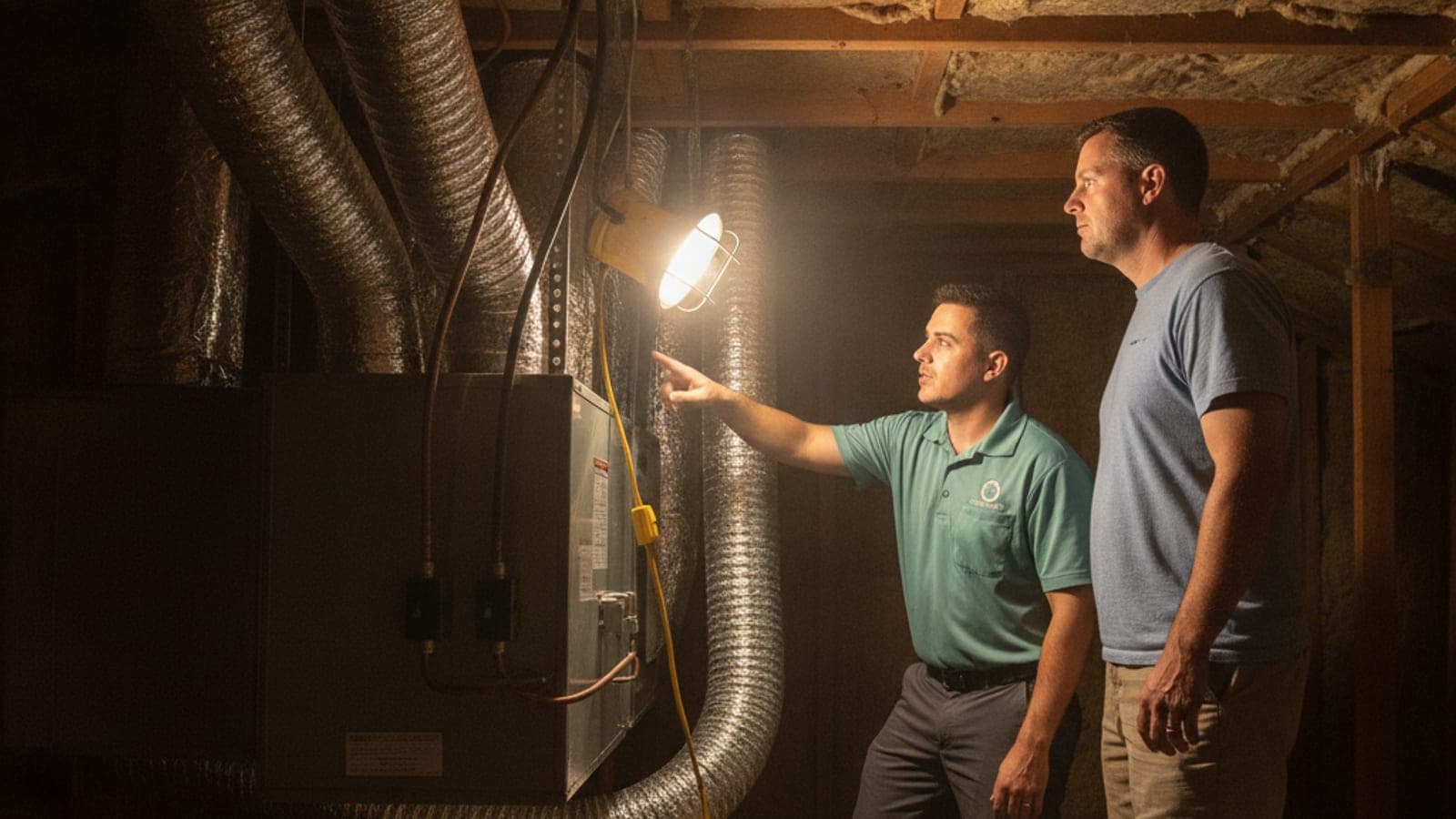
A heat pump needs enough airflow to work. Learn the signs of undersized ducts, how a pro checks them, and your options in a Tucson home.
TEP's summer on-peak runs weekdays 3 to 7 p.m. Here is how to pre-cool, set a thermostat schedule and handle winter peaks on a heat pump in Tucson.
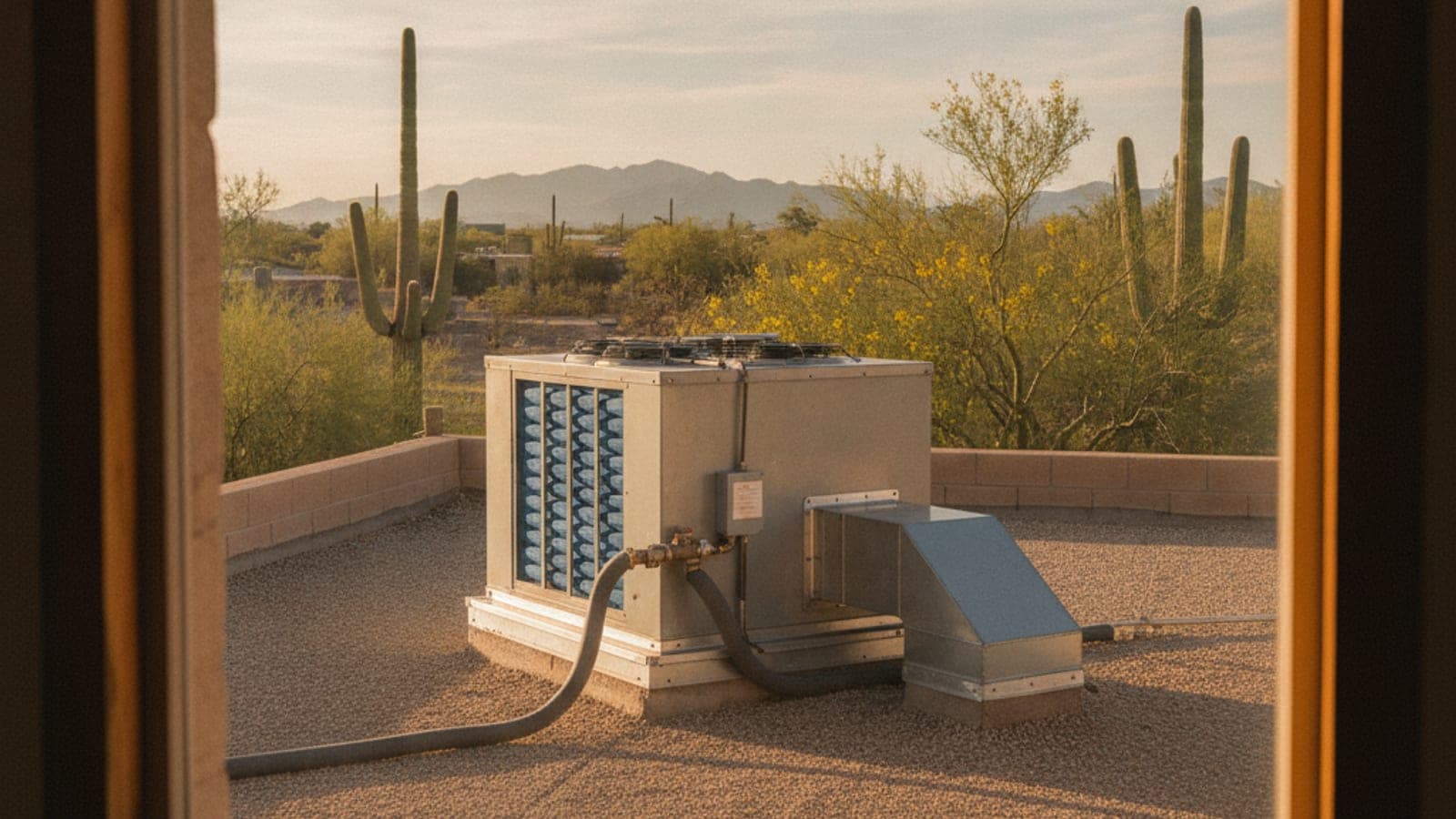
Start your Tucson swamp cooler in spring: reconnect water, check pads, pump, float valve, belt and damper, and know when roof work is a job for a pro.
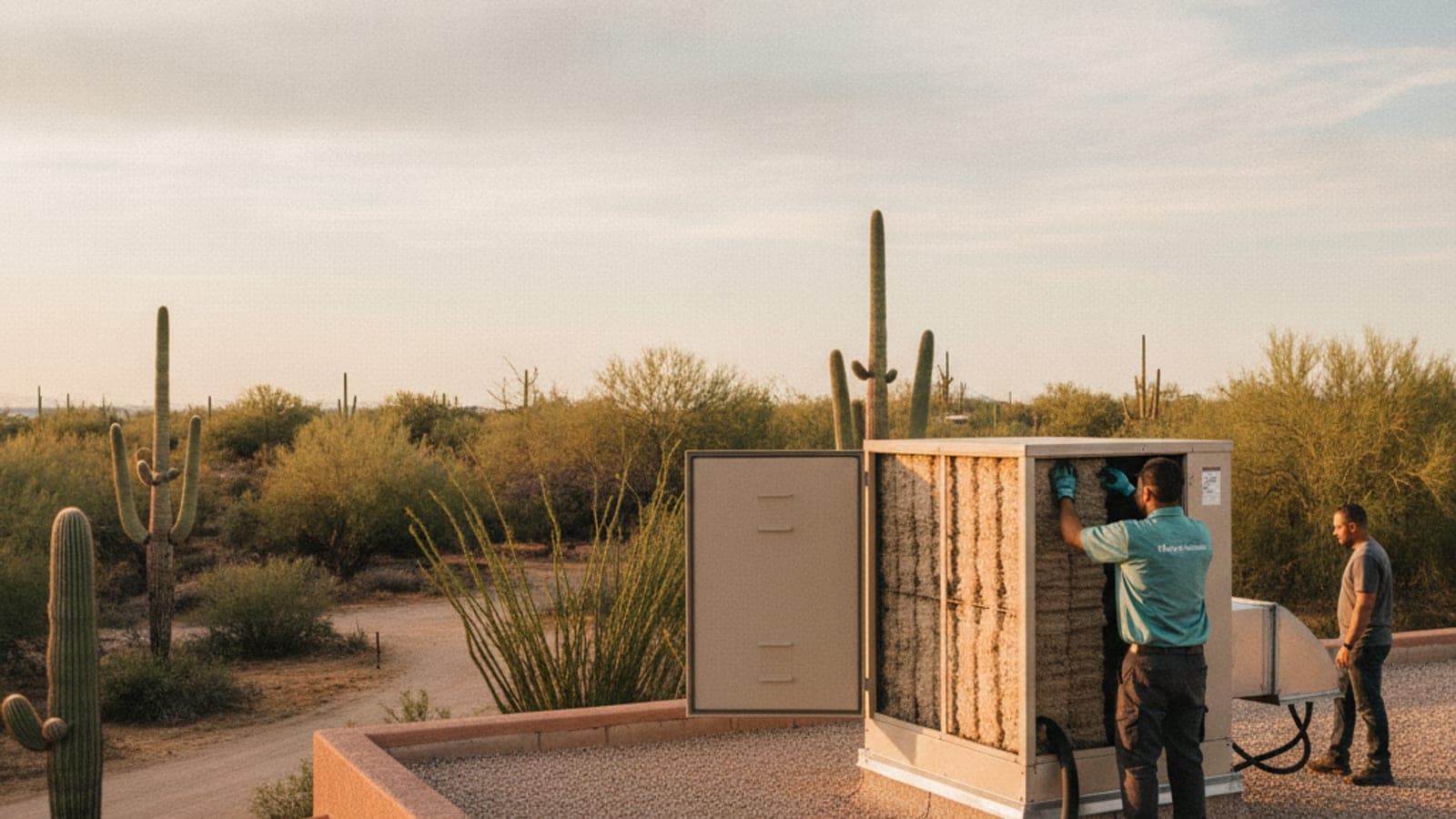
Choosing swamp cooler pads in Tucson: how aspen and rigid media compare, how hard water scales them, and when to change pads mid-summer.
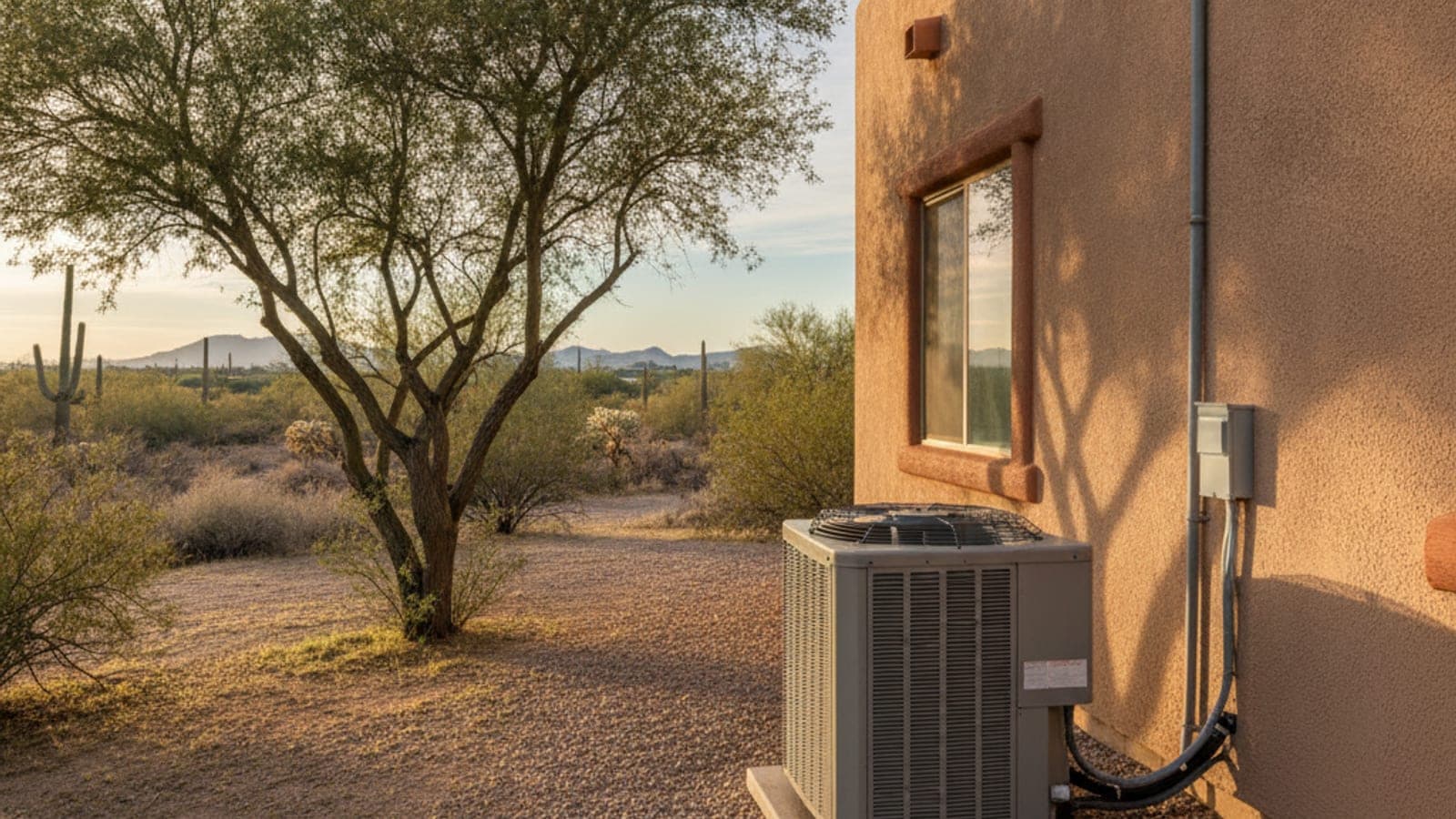
TEP's winter on-peak runs 6 to 9 a.m. on weekdays. Learn how to pre-heat a heat pump home, why backup heat strips cost the most, and where setbacks backfire.
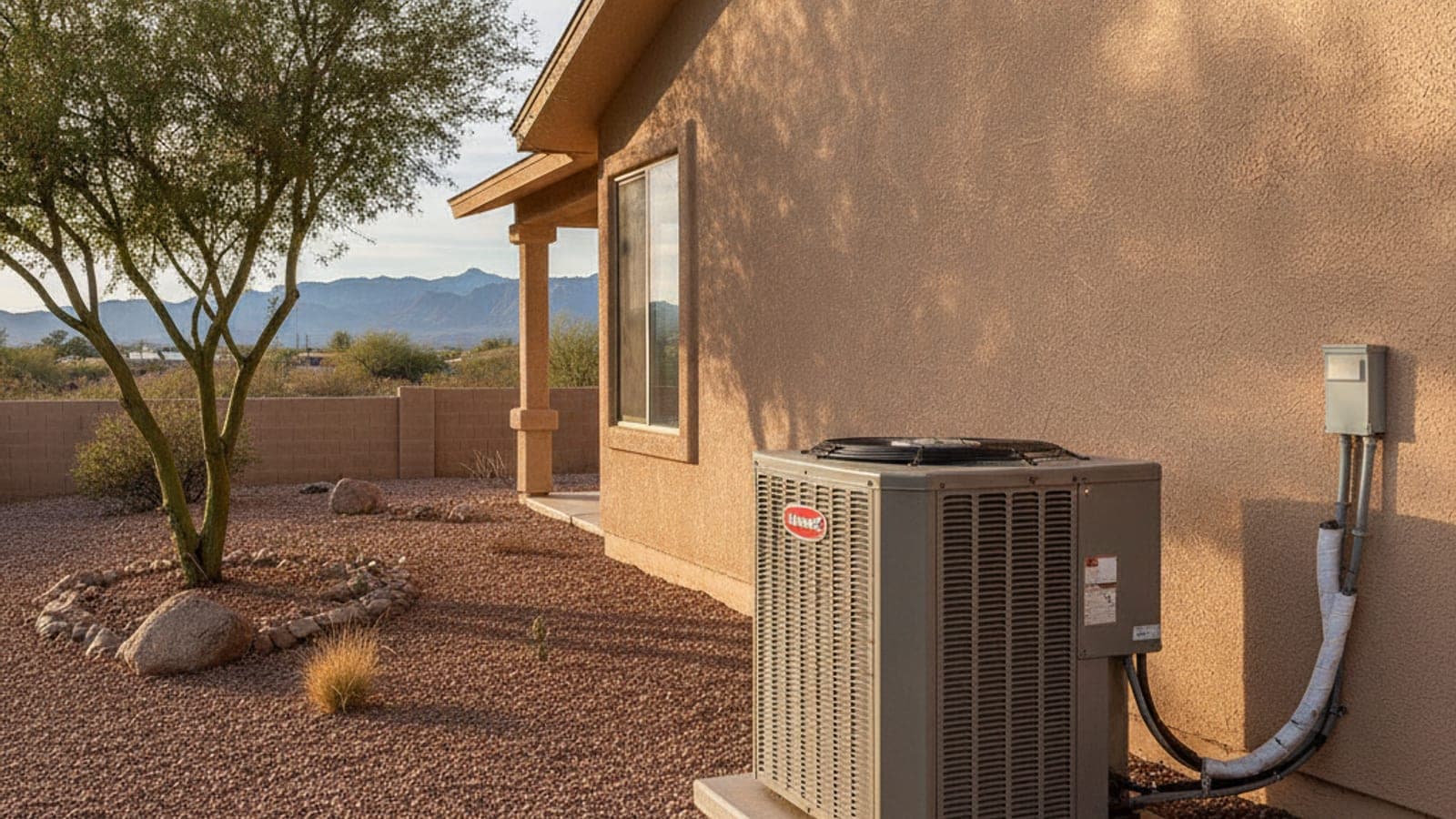
Leaving the AC running all day usually costs more than a modest setback, but TEP's 3 to 7 p.m. peak and block walls change the plan. Here's how to set it.
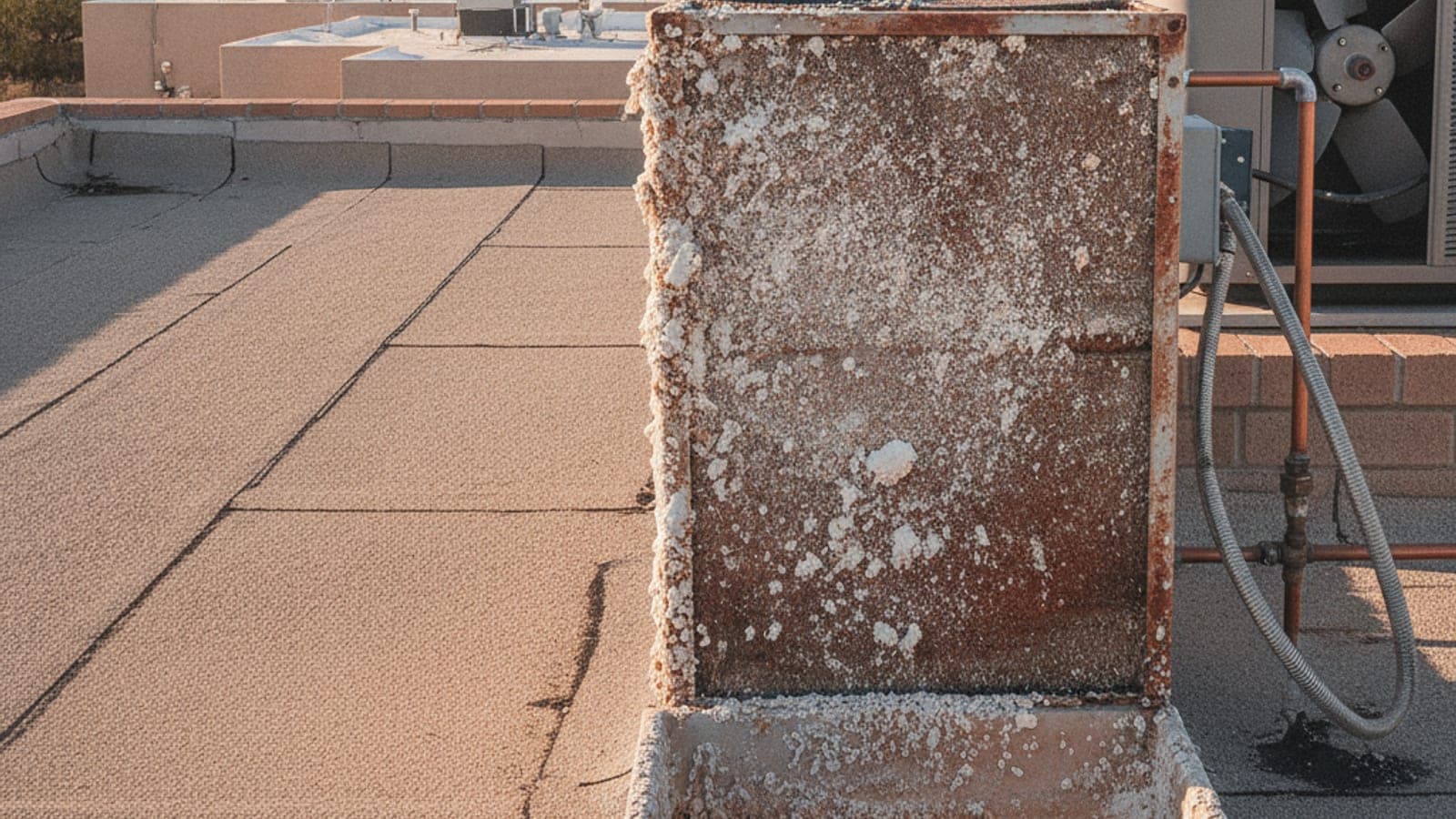
Tucson's hard water leaves scale on swamp cooler pads and pans. How a bleed-off kit works, what it costs in water, and when a pump-down is enough.
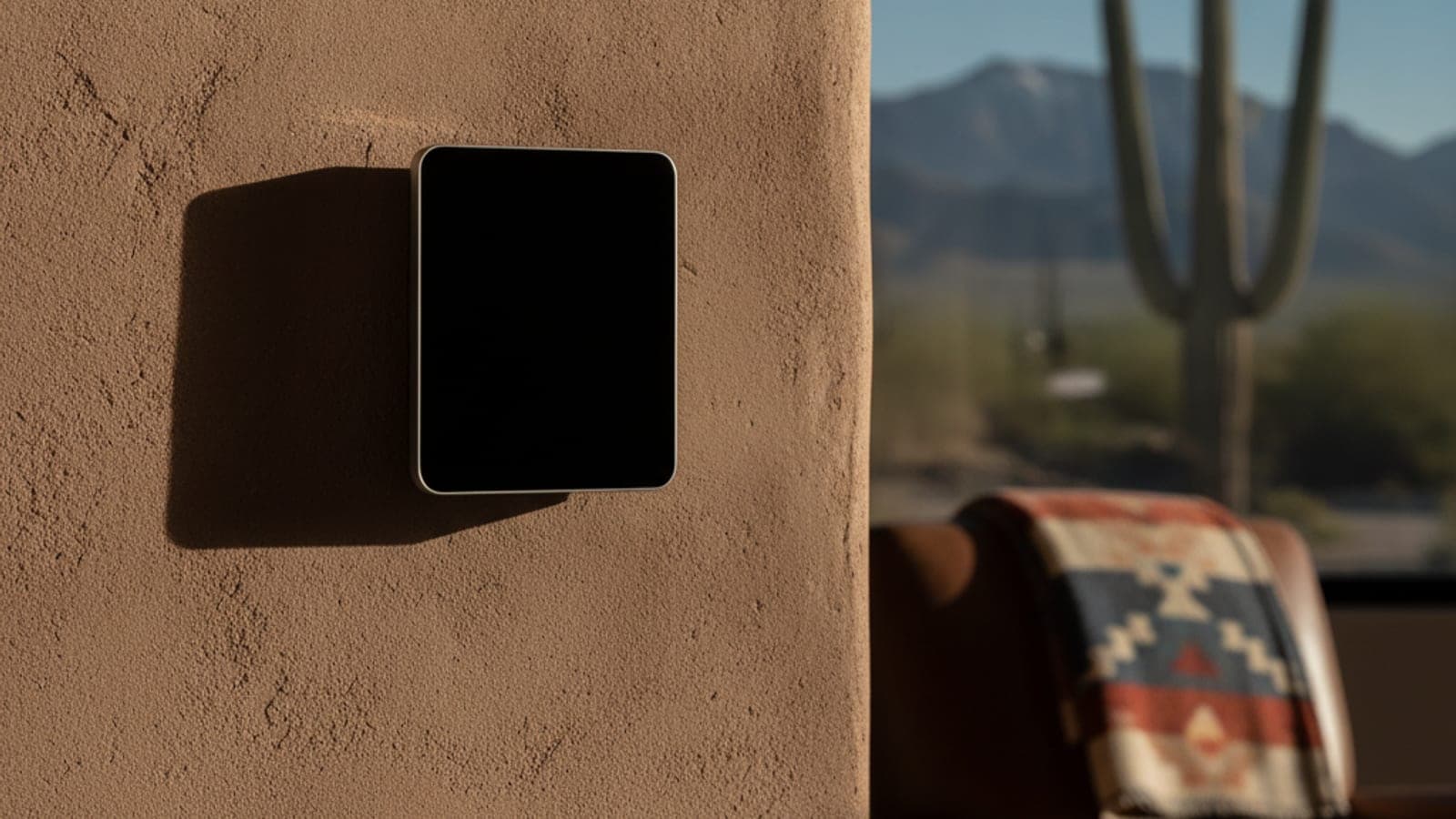
Aux heat is the backup that helps a heat pump on cold mornings. Emergency heat is a manual setting. Here is what triggers each and what to do in Tucson.
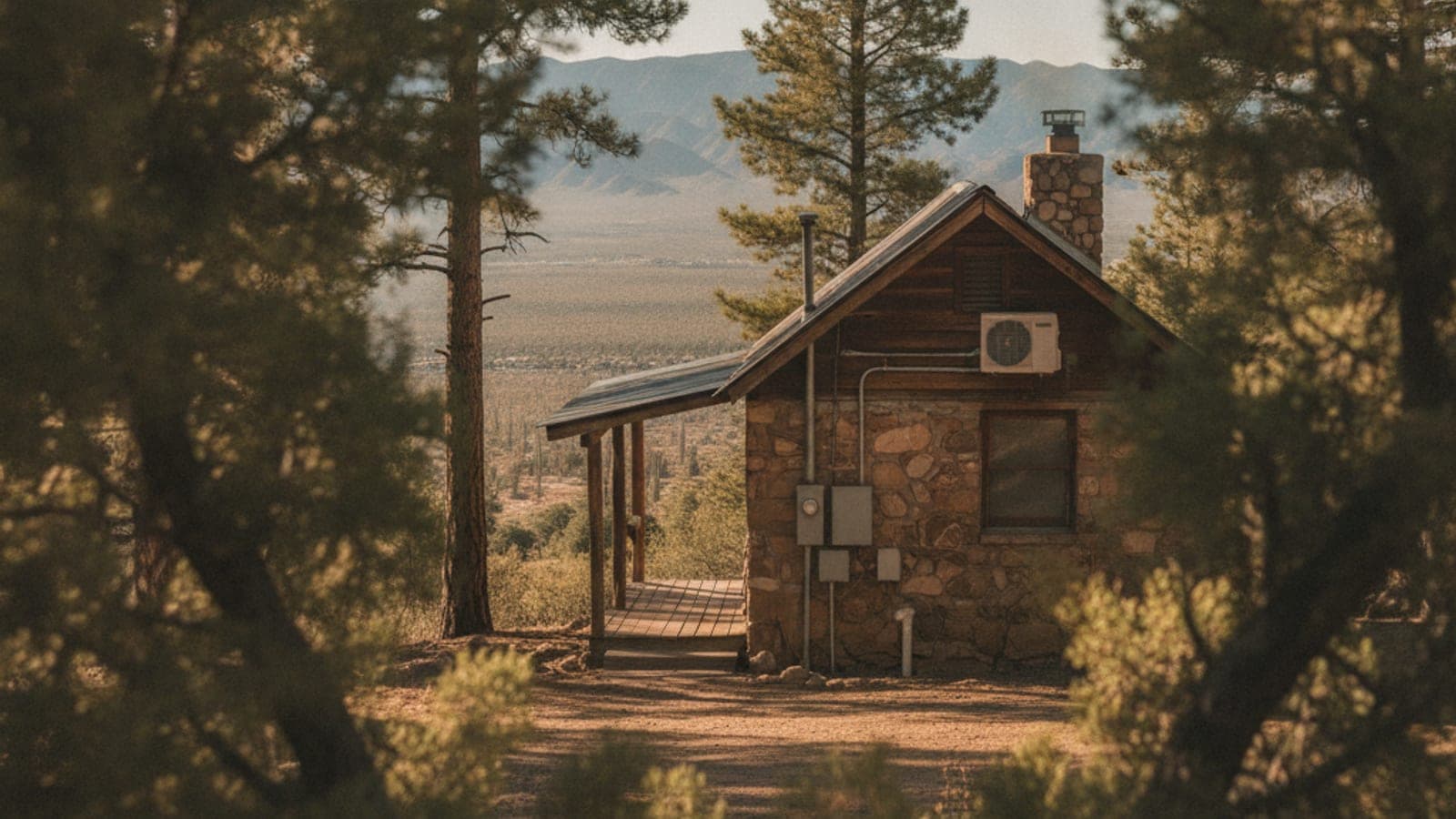
Heating a Mount Lemmon cabin means real winter: freeze protection, propane or electric, cold-climate heat pump limits and service access. Plan before the cold.
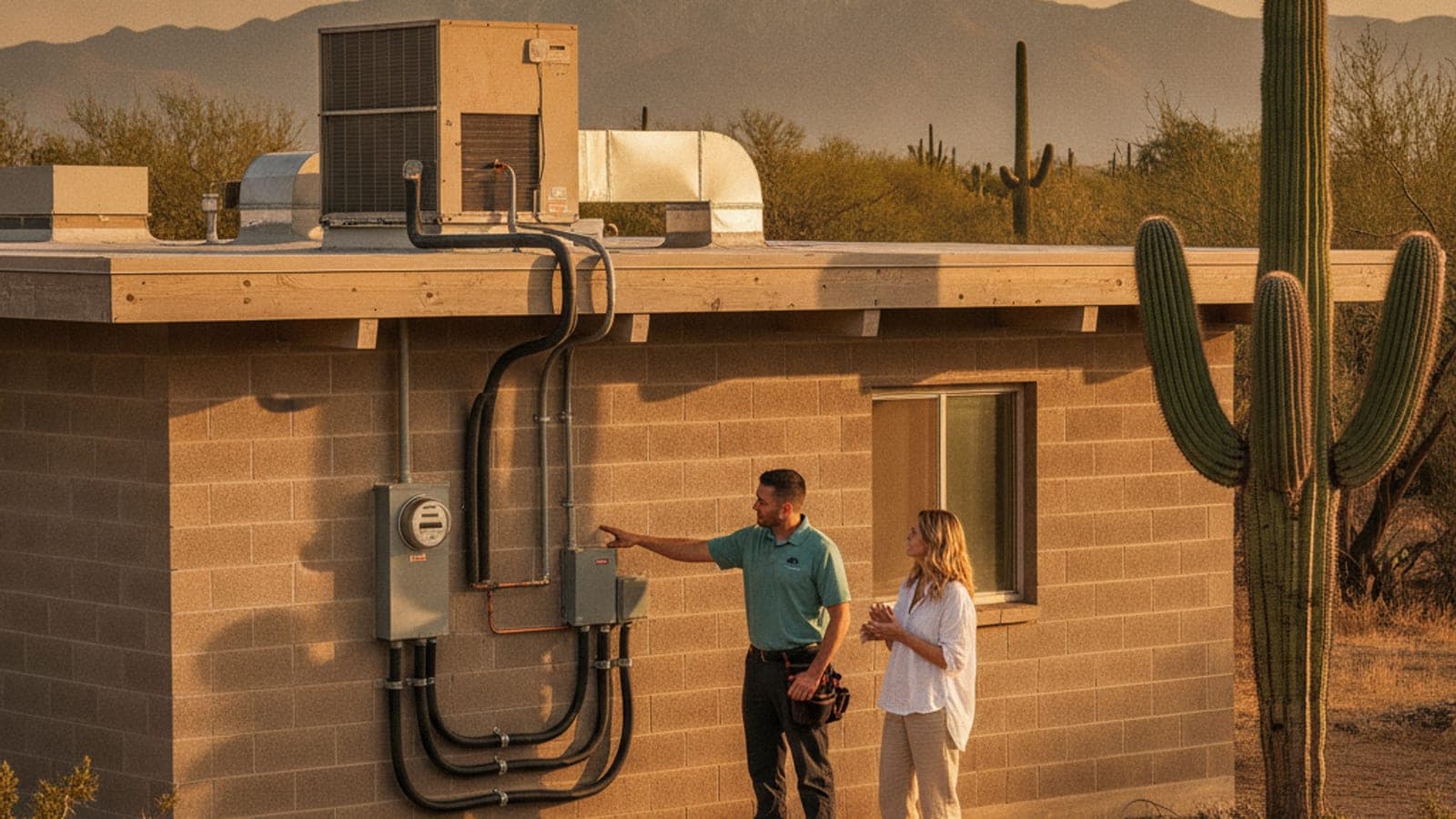
Heavy block and adobe walls store afternoon heat and release it after dark. How that changes AC sizing, thermostat settings and insulation in Tucson.
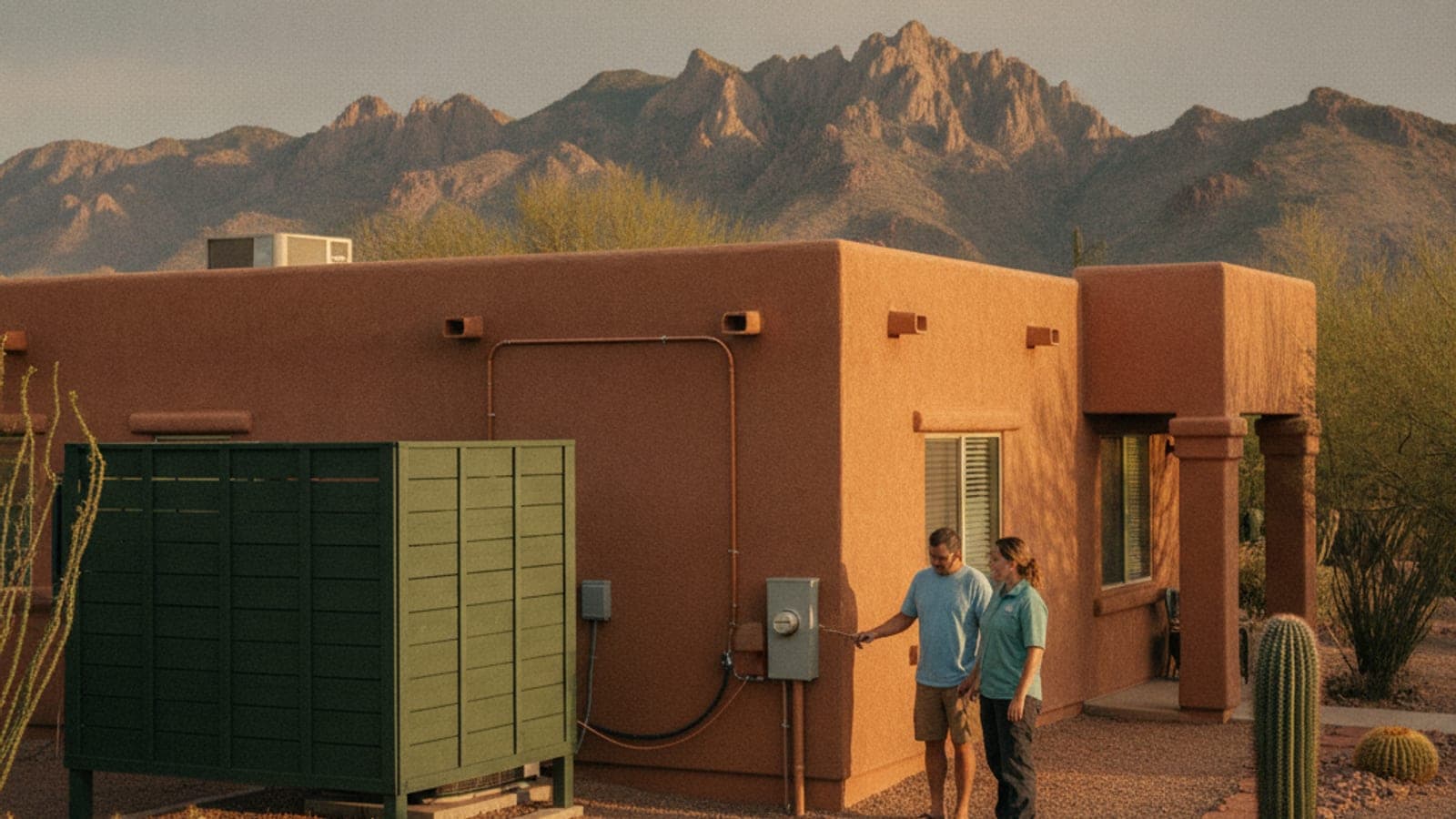
Replacing an AC in Green Valley or Sahuarita with an HOA? What published screening rules say, what to ask, and how approval timing works.
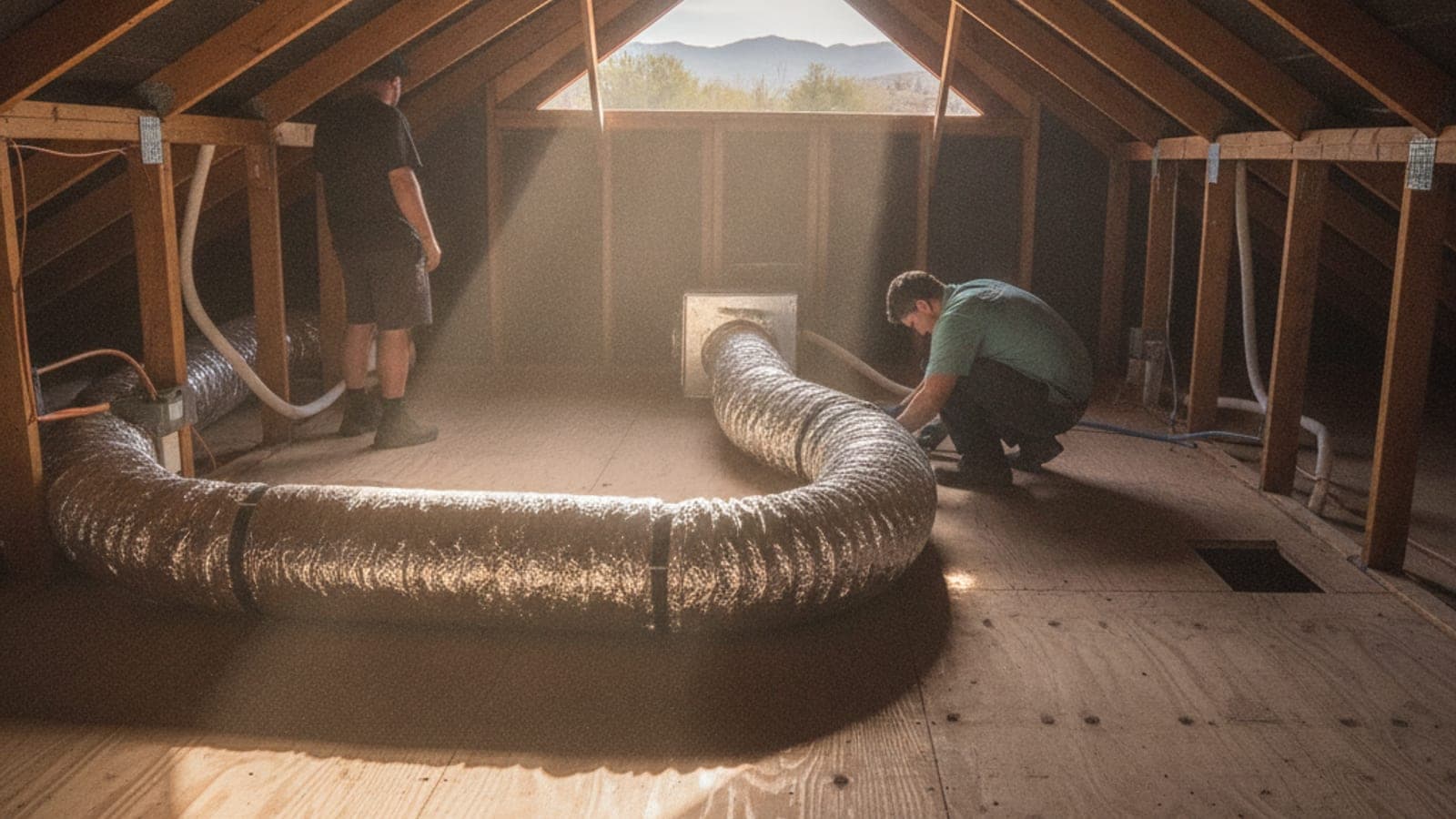
Ducts in a Tucson attic lose cooled air to the heat around them. Learn the signs of leaks, how sealing differs from repair, and where roof-unit curbs fit in.
Call us and we'll match you with a licensed local pro.