How does a mini split work?
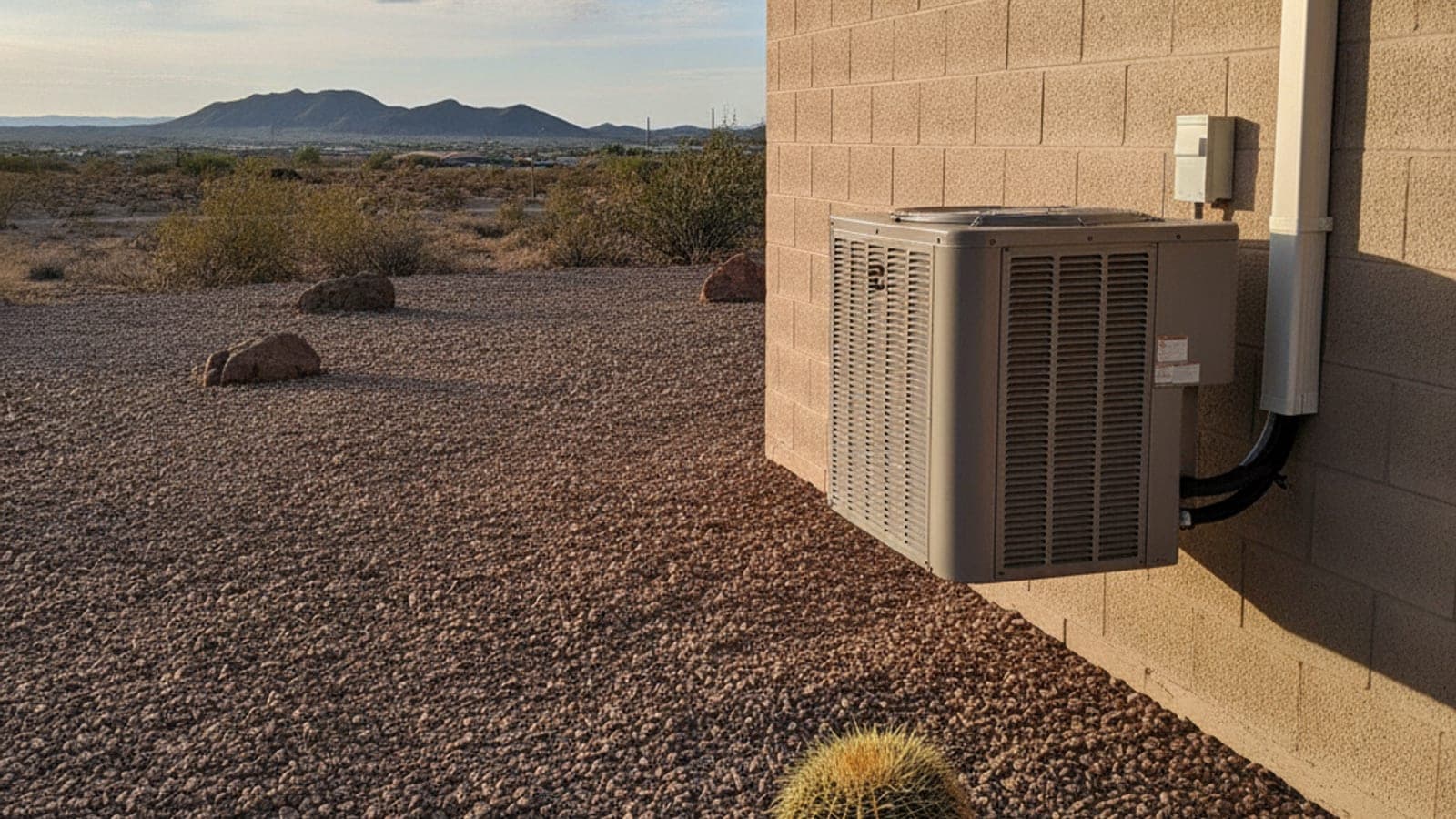
A mini split moves heat. Refrigerant runs in a loop between an indoor head and an outdoor unit. Inside, it absorbs heat from the room air. Outside, it releases that heat. No ducts carry the air. A small line set carries refrigerant, power and a drain between the two units. In Tucson, where cooling demand runs about 2.6 times heating demand, that loop spends most of the year pushing heat outside. Climate Pros Tucson matches you with a licensed pro to size and install one.
What are the main parts?
- The outdoor unit holds the compressor and a coil with a fan.
- The indoor head holds a coil and a blower. It mounts on a wall, in a ceiling cassette, or hides in a ceiling as a ducted unit.
- The line set carries refrigerant between them, with a condensate drain.
- The remote or thermostat controls each head.
How does the cooling cycle work?
The compressor pushes refrigerant to the outdoor coil, where it releases heat and turns to liquid. The liquid flows indoors, expands and gets cold, and absorbs heat from the room across the indoor coil. Warm air from the room passes over that cold coil, comes out cool, and the cycle repeats.
How does a heat pump mini split heat?
In a heat pump mini split, a reversing valve flips the flow, so the outdoor coil absorbs heat from the outside air and the indoor coil releases it into the room. Tucson’s heating duty is mild. The airport averages 1,333 heating degree days a year against 3,424 cooling degree days. The same unit that cools through the summer can heat through a normal Tucson winter.
Mount Lemmon and Summerhaven are different. The Mount Lemmon weather station, at about 7,000 feet, averages around 53 freezing nights a year, so heating there is a question for the pro. See do heat pumps work in Tucson winter.
What is the difference between single-zone and multi-zone?
A single-zone system pairs one outdoor unit with one head. A multi-zone system connects several heads to one outdoor unit, each with its own control. Zoning lets you cool the rooms you use and skip the ones you don’t. Read multi-zone mini splits in Tucson.
What does an inverter compressor do?
An inverter compressor adjusts its speed rather than switching fully on and off. That allows steadier temperatures and less stop-and-start wear. Ask the pro what the model does and what its rating is.
What head types exist?
Wall-mounted heads sit high on a wall. Ceiling cassettes sit flush in the ceiling. Concealed ducted units hide above the ceiling and push air through short ducts. See ceiling cassette vs wall-mounted mini split and concealed ducted mini splits.
How do mini splits compare with central AC?
They skip duct losses, which helps in a hot attic or on a roof. But each head shows in the room, and a whole-house install adds up. Our ductless vs central AC guide has a side-by-side comparison.
What about permits and rebates?
The City of Tucson requires a permit for new and replacement heat pumps and air conditioners, and the contractor pulls it. TEP’s Efficient Home Program listed up to $100 per ton for a mini split heat pump or AC as of October 2026, through participating contractors. Confirm current terms with TEP.
What happens during maintenance?
Filters need cleaning, and the coil and drain need attention. See mini split maintenance in Tucson. For installation details, see mini split installation and heat pump service. The Tucson HVAC hub shows where we match pros.
When to call us
If you’re considering a mini split for a room, a casita or the whole house, a licensed pro should size it to your home. Call (520) 353-2520 and we’ll match you with a licensed local pro.