If you smell gas or your carbon monoxide alarm is sounding, leave the house first and call 911 from outside. Everything else on this page can wait until you are safe. If the furnace is simply not heating, the checks below take a few minutes, and a licensed pro handles anything past them. Climate Pros Tucson matches you with that pro.
When is a no-heat night a real emergency in Tucson?
A gas smell or a carbon monoxide alarm is always an emergency. Get everyone out, don’t flip switches, don’t relight anything, and call 911 from outside. Then call your gas utility. Southwest Gas is the natural gas utility in the area.
A dead furnace without those signs is uncomfortable but usually not dangerous for a healthy adult. Tucson winters are mild by national standards. The 1991-2020 normals at Tucson International Airport show fewer than 12 nights a year at or below 32F, and no normal day stays below freezing. The city’s winter design temperature is 35F. A cold snap still happens, so a home with an infant, an older adult or someone with a heart or lung condition should not ride out a no-heat night. Plan on a space heater only if it is rated for the room and kept clear of bedding and curtains, and never run a gas oven for warmth.
What can you check before you call?
None of these involve opening the gas line or touching wiring.
- Thermostat. Set it to Heat and raise the target a few degrees above the room. A blank screen usually means dead batteries.
- Furnace switch. A wall-style switch sits on or near the furnace. Make sure it is on.
- Breaker. If the furnace breaker tripped, reset it once. If it trips again, stop and leave it off.
- Filter. A packed filter can make a furnace shut itself down on a safety limit. Swap it if it looks gray and clogged.
- Access panel. Many furnaces won’t run unless the front panel is seated. Push it in until it clicks.
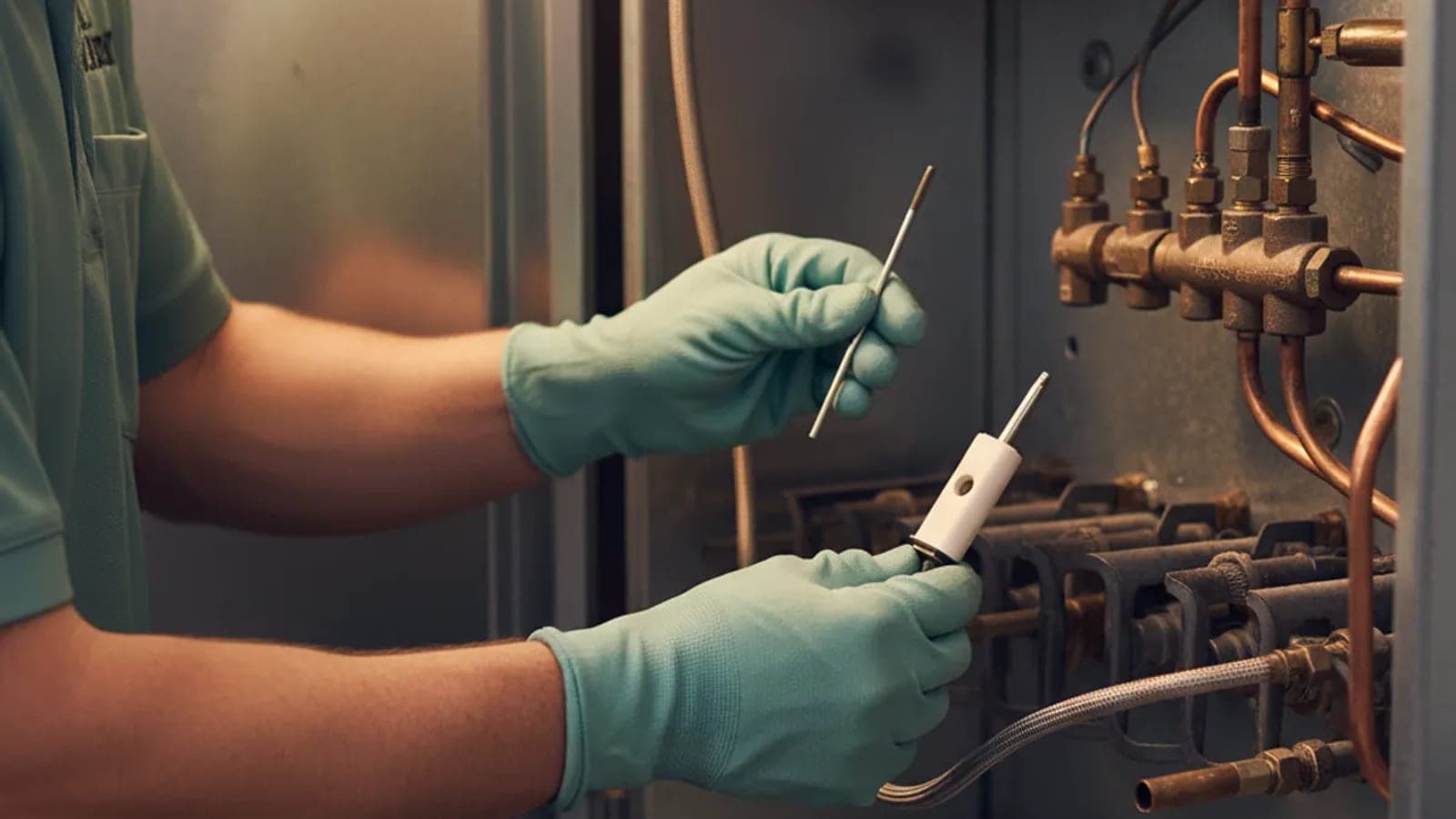
If all five check out, you likely have a failed part such as an igniter, flame sensor, blower motor or control board. Those are not DIY jobs on a gas appliance. See why a furnace won’t ignite for what the pro is looking at, or furnace blowing cold air if it runs but doesn’t warm.
Does a heat pump change the checklist?
Yes. Some Tucson homes heat with a heat pump, and it can look like a failure when it isn’t. An outdoor unit that steams or shows frost can be in a normal defrost cycle. Some systems also switch on backup electric heat in colder weather. If the thermostat says Heat and nothing comes out of the vents, the same breaker and filter checks apply. Our heat pump not heating guide goes further.
What should an after-hours quote spell out?
After-hours pricing is each company’s decision, and Climate Pros Tucson doesn’t set it. Before anyone starts work, ask for:
| Ask for | Why it matters |
|---|---|
| Whether a tech is available tonight, yes or no | You learn quickly whether to keep calling |
| The after-hours fee as a dollar figure | It often differs from a daytime visit |
| Whether that fee applies toward the repair | Each company sets its own policy |
| The failed part, named | An igniter is a different job than a control board |
| Permit and second-visit notes | Parts that must be ordered mean another visit |
| Warranty terms in writing | Parts and labor are often separate |
Furnace replacement in the City of Tucson needs a permit, and the contractor pulls it. If the furnace is old and the repair quote is high, weigh it against signs your furnace is going out before approving anything. A furnace repair pro can also tell you whether a heat pump makes more sense, and the emergency HVAC page explains how matching works. Carbon monoxide questions go to carbon monoxide in a home.
When to call us
When the checks don’t restore heat, or you want a licensed Arizona pro to look at it, call (520) 353-2520 and we’ll match you with a licensed local pro. You can also start from the Tucson HVAC hub. Check any contractor’s license at roc.az.gov before you agree to work.