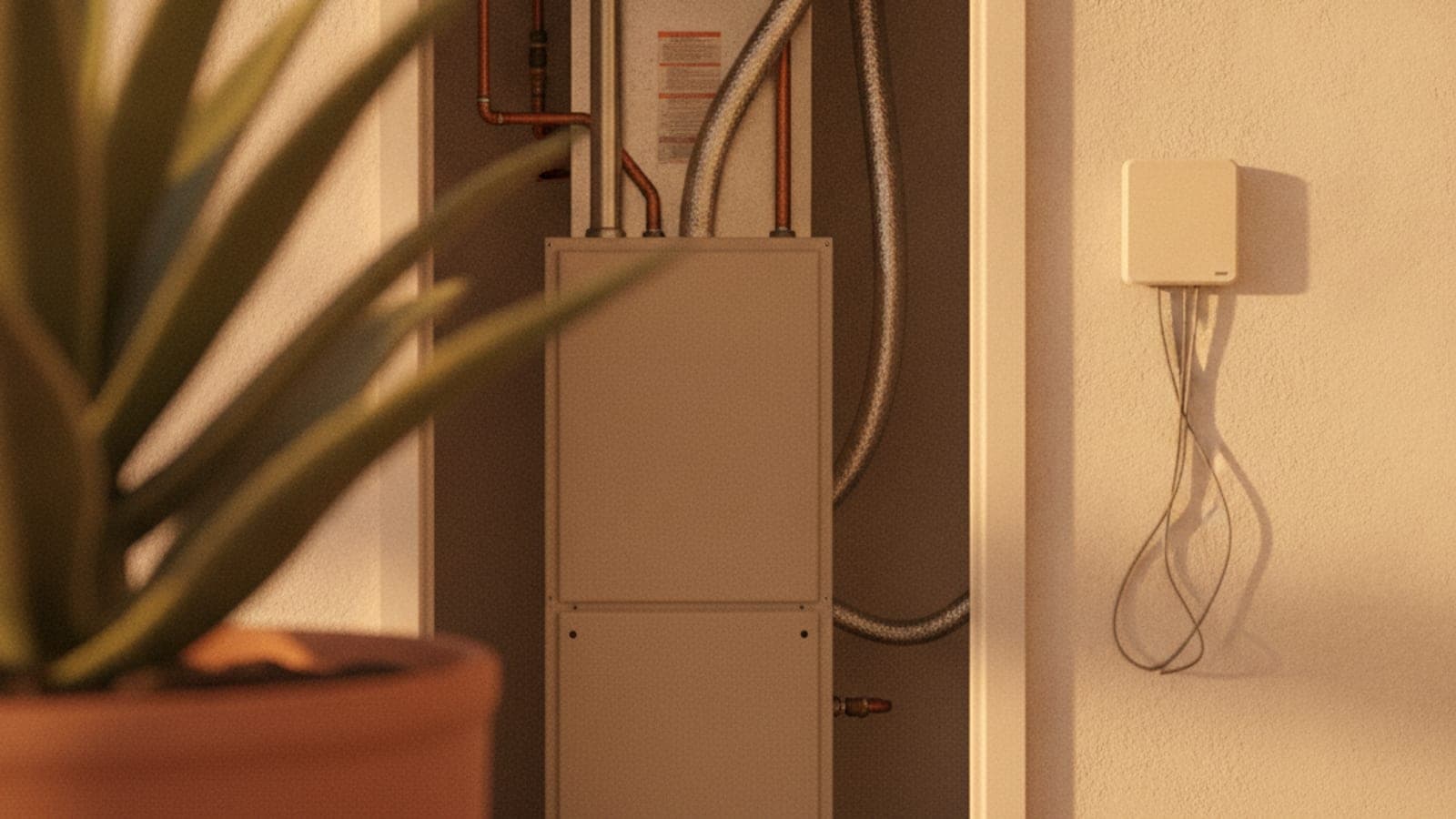
How do you know a furnace is going out?
You’ll usually see it before it quits: cold air from the vents, short cycles, odd noises, a yellow flame, uneven rooms, a rising gas bill or an old unit. In Tucson there’s a twist. Winters are mild, so a furnace may sit idle for months, and the problem shows up on the first cold night. Climate Pros Tucson matches you with a licensed pro when one of these signs shows up.
Tucson averages fewer than 12 nights a year at or below 32F (1991-2020 normals), and about 1,333 heating degree days. A furnace here runs less than in colder places, but it still has to work when you need it.
What if there’s a carbon monoxide risk?
Start with safety. If a carbon monoxide alarm sounds, get everyone outside and call 911. If you smell gas, leave the house and call 911 or your gas utility. Southwest Gas serves natural gas in the area. Don’t flip switches or use a phone inside. A cracked heat exchanger or a blocked flue can produce carbon monoxide, so a pro should check any furnace with a doubtful flame. See carbon monoxide in a Tucson home.
1. Does the furnace run but blow cold air?
A furnace that runs without heating could have a dirty filter, a failed igniter, a gas supply issue or a limit switch. Check the filter and the thermostat setting first. If the air stays cold, call a pro. See furnace blowing cold air.
2. Does it short cycle?
If the furnace turns on and off every few minutes, it may overheat, hit a limit switch or have a blocked flue. A clogged filter is the cheap fix to try. Beyond that, it needs a diagnosis.
3. Do you hear strange noises?
Banging, squealing or rattling at startup can mean a worn blower motor, a loose part or ignition trouble. Our guide to furnace blower motor repair covers one common cause.
4. Is the flame yellow or orange?
A healthy gas flame is mostly blue. A yellow or orange flame can point to incomplete combustion. Treat that as a safety issue and have a pro look at it before you keep running the furnace.
5. Is the gas bill climbing?
If your bill rises without a change in use, the furnace may be working harder than it should. Many things move a bill, so don’t diagnose from the number alone.
6. Are some rooms warm and others cold?
Uneven heat can come from leaky ducts, blocked registers, or a blower that’s wearing out. Ducts in a roof or attic lose heat on the way, and ENERGY STAR notes that a typical forced-air house can lose about 20% to 30% of its duct air to leaks. That’s a national figure, not a Tucson measurement.
7. Is the furnace old?
Age alone doesn’t mean replace. It does mean you should ask about the unit’s condition before the first cold night. See furnace repair cost in Tucson and furnace replacement cost.
Should you repair or replace?
That depends on the repair, the age and your plans. Some Tucson homeowners compare a new furnace with a heat pump, since heating duty is mild. Read heat pump vs gas furnace in Tucson. Statewide, about 55% of Arizona homes use a central furnace as main heat and 25% use a central heat pump (EIA, 2020). Those are Arizona figures, not Tucson ones.
Also read winter HVAC checklist for Tucson. More on service: furnace repair and the Tucson HVAC hub.
When to call us
If your furnace shows any of these signs, a licensed pro should inspect it before the next cold night. Call (520) 353-2520 and we’ll match you with a licensed local pro.