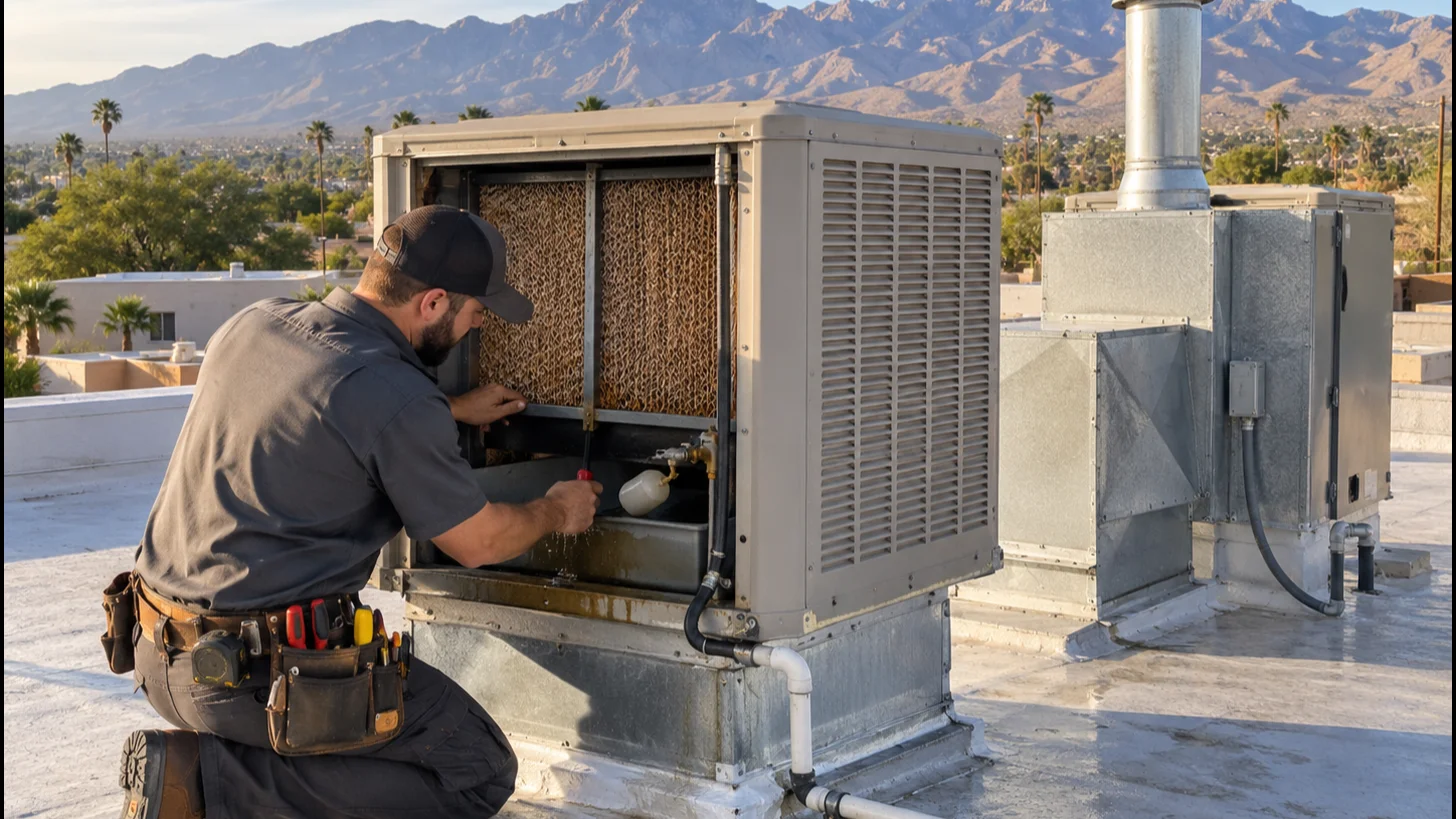
Heated air should not enter the cooler
Heat going into a swamp cooler in Tucson usually points to an open damper, a loose cover, or an unsealed duct connection. Heated air is escaping outdoors instead of reaching your rooms. Climate Pros Tucson can match you with a licensed local pro who can trace the air path.
Some Tucson homes have both an evaporative cooler and a furnace or heat pump connected to shared ducts. That arrangement needs a working seasonal barrier. When the heating system starts, the cooler branch should be closed.
If that path stays open, warm air can move toward the roof cooler. You may notice heat at the cooler cabinet while rooms remain cool. The furnace or heat pump may also run longer than expected.
Don’t assume the heating equipment itself has failed. The problem may sit between the supply duct and the cooler. A licensed pro needs to inspect the complete path before recommending a repair.
Our Tucson HVAC service area includes help with heating, cooling, and shared-duct problems.
Dampers, roof jacks and a skipped winterize
The seasonal damper is the first component to check. It separates the evaporative cooler from the heating system’s duct path.
The barrier may be a removable panel, a sliding damper, or another fitted closure. Its exact design depends on the home’s duct layout. Some closures are reached near the cooler. Others sit lower in the duct connection.
A roof jack connects roof-mounted equipment with the duct below. Gaps around that transition can let heated air escape. Loose sheet metal or a failed seal can create another unwanted path.
A missed or incomplete winterization can leave the cooler branch open. The separate swamp cooler winterization guide covers the seasonal process. That guide addresses the cooler itself, while this problem concerns heated air reaching it.
Tucson’s heating season can begin with warm afternoons and cold nights. The first furnace cycle may reveal a damper problem that wasn’t noticeable during cooling season. Confirm current conditions and first-freeze timing with the National Weather Service Tucson.
Use the fall HVAC checklist for Tucson before switching between systems. It can help you catch an open cooler path before regular heating begins.
Signs: hot cooler, cold rooms, long furnace runtime
A warm cooler cabinet is one clue, but it isn’t a complete diagnosis. Look for several symptoms occurring together.
- Warm air can be felt near the cooler opening.
- The cooler cabinet becomes warm while the heater runs.
- Some rooms receive less heated air than expected.
- Airflow sounds different after switching to heat.
- The heating system runs without bringing rooms to the thermostat setting.
- Dust or outdoor air seems to enter through the cooler path.
A cool room can have other causes. Closed registers, duct damage, thermostat trouble, and heating equipment faults can produce similar symptoms. That makes the cooler damper a checkpoint, not a final answer.
Start with observations you can make indoors. Confirm that the thermostat is in heating mode. Check whether supply registers are open. Note which rooms stay cold and whether the cooler becomes warm during the same cycle.
Don’t force an unfamiliar damper or remove fixed ductwork. Roof access adds another layer of risk. Give the contractor a clear description of what you noticed and where.
The furnace tune-up before Tucson’s first freeze explains other heating checks. If the system won’t heat at all, start with furnace repair instead.
What a licensed pro closes, seals or replaces
A licensed pro should identify the exact escape path before changing parts. The inspection may include the cooler branch, damper, roof jack, transition, and accessible duct connections.
Possible corrections depend on what the pro finds:
- Seat or secure a removable seasonal damper.
- Adjust a damper that doesn’t close fully.
- Replace a damaged closure with a properly fitted part.
- Reconnect loose sheet-metal sections.
- Seal an accessible gap at the duct transition.
- Repair damaged ductwork serving the shared system.
- Confirm that heated air reaches the intended supply registers.
These aren’t interchangeable fixes. Sealing the wrong opening can interfere with the system’s intended airflow. A contractor should first confirm how the furnace, heat pump, cooler, and ducts connect.
Ask the pro to show you the open or damaged path. The written scope should name the part being adjusted, sealed, or replaced. It should also state whether the repair affects the cooler, heating ducts, or both.
Every pro Climate Pros Tucson sends is licensed. You can also check an HVAC contractor through the Arizona Registrar of Contractors. Residential heating, cooling, and evaporative-cooling work falls under R-39 or the applicable R-39R subclass.
If you’re deciding whether to keep both cooling systems, compare swamp coolers and air conditioning in Tucson. Evaporative cooling depends on dry air. At Tucson International Airport, average dew points sit in the 20s for most of the year, then rise into the high 50s during July and August. That seasonal change is why evaporative coolers struggle during Tucson’s monsoon months.
How this visit ties to a furnace tune-up
A damper inspection fits naturally into seasonal HVAC maintenance. The pro can examine the heating equipment while checking where its supply air travels.
Ask for these items in the visit scope:
- Confirm the thermostat starts and stops the heating system.
- Check airflow at the supply registers.
- Inspect accessible heating ducts and connections.
- Identify the evaporative-cooler branch.
- Confirm the seasonal closure blocks that branch.
- Explain any needed repair before work begins.
A tune-up and a duct repair aren’t automatically the same service. Ask what the maintenance visit includes. If the pro finds a failed damper or damaged transition, request a separate written description of that work.
Regular HVAC maintenance can catch seasonal setup problems before they become harder to trace. It also gives the pro a chance to compare thermostat operation, heating output, and airflow during one visit.
When to call us
Call when heated air reaches the cooler, rooms stay cold, or the shared duct path can’t be confirmed safely. Call (520) 353-2520 and we’ll match you with a licensed local pro.