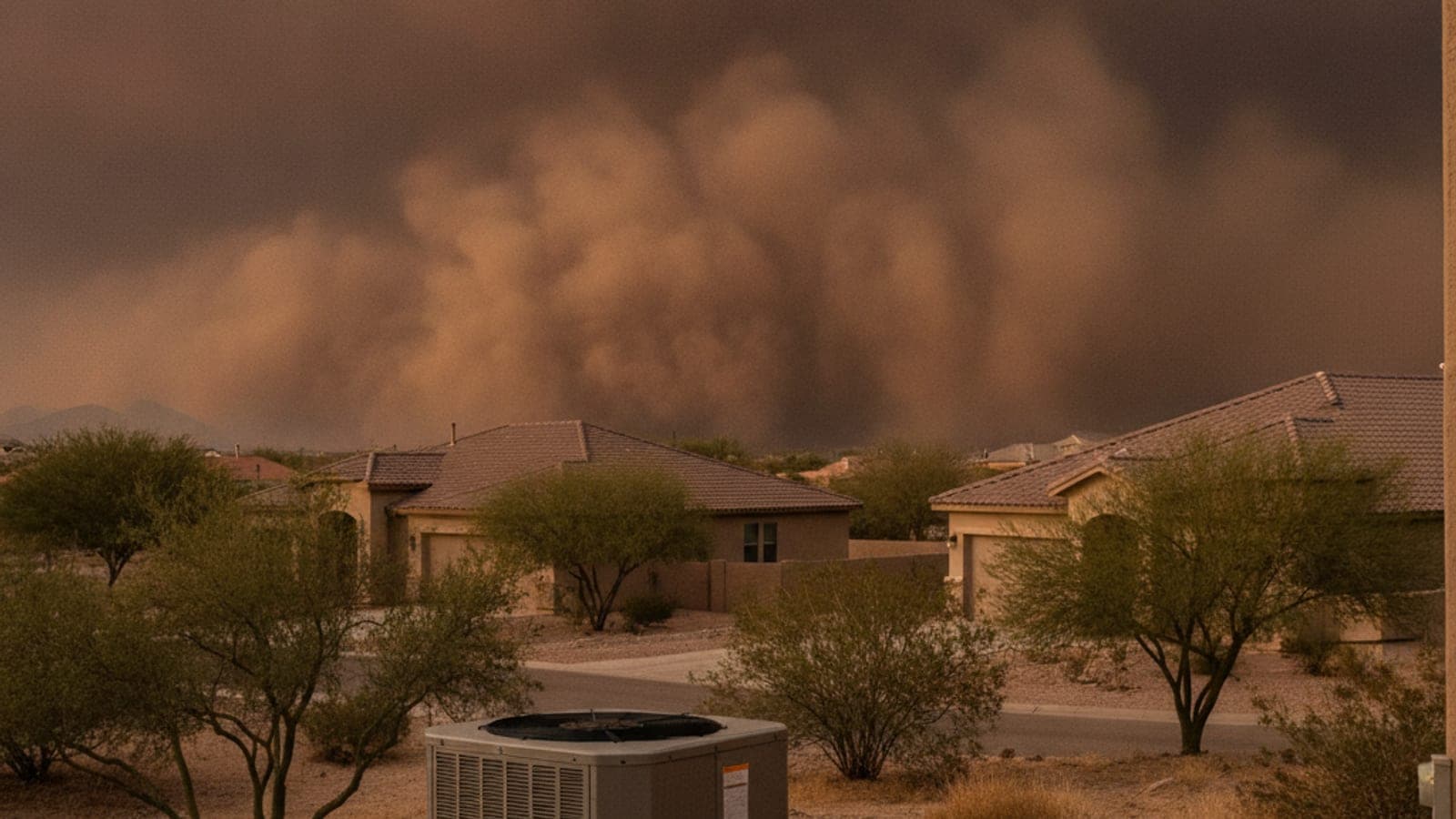
Check your filter after a dust storm and swap it if it’s gray, caked or sagging. A filter that looks fine from the front can still be loaded with fine dust, so hold it up to the light. A choked filter cuts airflow, and your system works harder to cool the house.
Climate Pros Tucson matches you with licensed local pros, so use this as a quick post-storm checklist before deciding whether you need one.
Should you check the filter after every dust storm?
Yes, after any storm that left dust inside the house or coated the cars and patio. Dust storms happen in Arizona during the monsoon, which the National Weather Service fixes as June 15 through September 30, so expect to check more than once a summer. Pulling out the filter takes a minute. The monthly routine lives in the filter guide; this page is the after-the-storm check.
How do you tell if the filter is clogged?
- Hold it up to a window. If you can’t see light through it, it’s loaded.
- Look for a gray or tan mat of dust across the whole face, not just the edges.
- Feel for a sagging or collapsed filter.
- Notice weak airflow at the vents or a system that runs longer than usual.
If a filter is dirty, replace it with the same size. Don’t squeeze a smaller one in, since gaps let dust past into the coil and blower.
Does MERV matter after a dust storm?
Not much, and a storm is the wrong time to change it. A higher MERV catches finer dust but also resists airflow more, and a filter too tight for the system can starve the coil and lead to icing (AC freezing up). Put back the same rating your system already uses. If you want to move up, ask a pro what your blower and ducts can handle, especially on a heat pump. The Tucson filter guide covers ratings in full.
Should you shut off the AC during a dust storm?
Check your equipment manual, since makers differ, and ask a pro if it’s silent. For the house itself, keep doors and windows shut while the dust blows, and an evaporative cooler is worth switching off because it pulls outdoor air straight in. If the power flickers, wait a few minutes before restarting the system. If you’re caught on the road, ADOT’s “Pull Aside, Stay Alive” advice is to pull fully off, turn your lights off and keep your foot off the brake (ADOT).
What else should you check after a storm?
- Return grille and vents: wipe off dust so air can get in.
- Outdoor unit: clear leaves, debris and a dust blanket from around and on top of the unit. Don’t spray the coil hard, since fins bend. Our coil cleaning guide covers it.
- Roof package units: a roof unit takes the full blast. Leave roof work to a pro.
- Drain line: dust and debris can feed a clog. See our drain line guide.
When should you call a pro?
Call if the filter clogs again within days, the system ices up, airflow stays weak with a clean filter, or the coil looks matted with mud after a wet storm. Ask the contractor what a coil cleaning would involve before you agree to it. HVAC maintenance and AC repair are the services that cover this across the Tucson area.
After the dust settles
If a dust storm leaves your AC struggling and a new filter doesn’t help, call (520) 353-2520 and we’ll match you with a licensed local pro.