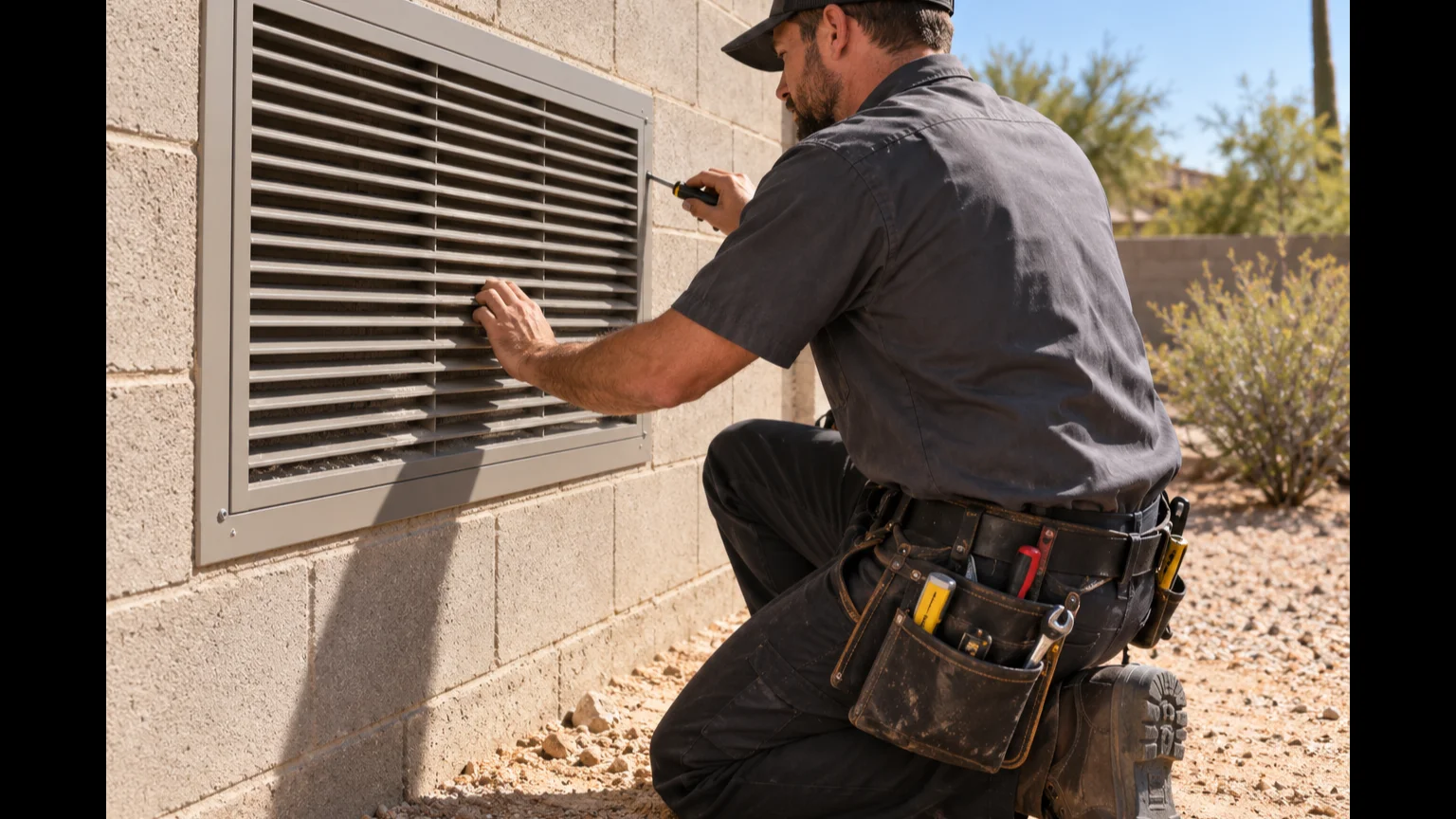
1-inch filters vs a media cabinet in Tucson dust
A whole-home media filter is often the better upgrade when the cabinet fits and testing confirms acceptable airflow. A 1-inch filter remains sensible when space is tight or the existing system can’t support the proposed filter.
Climate Pros Tucson can match you with a licensed local pro. That pro can inspect the return duct, measure system pressure, and check the equipment specifications.
Tucson gives this decision extra weight. The area averages about 68 days each year at or above 100F, based on 1991-2020 normals at Tucson International Airport. Dust storms also occur during the June 15 through September 30 monsoon window. Your cooling system may move air for long stretches when outdoor dust is present.
A media cabinet replaces or supplements the existing filter location, depending on the system design. It holds a deeper filter with more folded material than a standard 1-inch filter. More filter area may support particle capture without creating excessive resistance, but depth alone doesn’t prove compatibility.
| Decision point | 1-inch filter | Whole-home media filter |
|---|---|---|
| Cabinet space | Fits many existing slots | Needs room for a deeper cabinet |
| Filter area | Less folded material | More folded material |
| Installation | Often uses the existing slot | Usually needs cabinet and duct changes |
| Airflow check | Still matters | Must be checked before and after installation |
| Replacement choice | Match the approved size and rating | Match the cabinet and equipment specifications |
| Best fit | Limited space or a suitable existing setup | Compatible ductwork with confirmed airflow |
The correct choice depends on the whole return-air path. That includes the grille, duct size, cabinet, blower, and filter. A filter that fits physically can still be a poor match.
For help with replacement intervals and filter labels, use our Tucson HVAC filter guide. This page focuses on whether the cabinet upgrade itself makes sense.
What a media filter can and cannot catch
A media filter catches particles carried into the return-air system. Its actual performance depends on the filter, cabinet seal, airflow, and installation.
Ask the pro to identify the exact filter model and rating. Then compare that information with the air handler, heat pump, or furnace specifications. Don’t accept a recommendation based only on filter thickness.
A media filter can help with airborne particles reaching the return. It can’t remove settled dust from floors, shelves, or leaky areas by itself. It also doesn’t correct a loose return connection or an unsealed cabinet door.
A media filter isn’t automatically an air purifier. Some whole-home purifiers use additional technology or a different filter arrangement. Our guide to whole-home air purifiers in Tucson explains that separate decision.
Start by defining the problem you want to address:
- Visible dust near supply registers
- Dust entering around the filter slot
- A filter that bends or doesn’t seal
- Household sensitivity to airborne particles
- A return grille or cabinet that makes filter changes difficult
- A proposed HVAC replacement with room for a new cabinet
The broader Tucson indoor air quality guide covers dust, smoke, and pollen concerns. For asthma or allergy concerns, use the HVAC information as one part of the discussion. Our guide to HVAC choices for asthma and allergies also explains what to ask, but medical guidance should come from a qualified clinician.
Static pressure, furnace strain and when bigger hurts
A thicker filter isn’t automatically easier or harder on the blower. The installed pressure drop matters more than the filter’s appearance.
Static pressure is resistance within the duct system. The filter contributes to that resistance, along with the return duct, coil, supply duct, and registers. The allowed limit comes from the equipment documentation, not a universal Tucson number.
Ask the licensed pro to record measurements before and after the proposed change. The quote should identify where measurements will be taken and how they’ll be compared with the manufacturer’s specifications.
Excessive restriction may reduce airflow. That can affect comfort and system operation. A larger cabinet may help when it adds filter area, but a poor transition or undersized return can cancel that benefit.
Watch for these weak proposals:
- A cabinet recommendation without inspecting the return duct
- A filter rating chosen without checking equipment documentation
- No plan to measure pressure after installation
- A sharp or cramped duct transition around the cabinet
- A cabinet placed where the filter can’t be removed easily
- Promises about dust or health without testing the actual system
A dirty filter also changes system resistance. Ask how to inspect the media between replacements and what signs mean it needs attention. The answer should follow the filter maker’s instructions and measured system conditions, not a fixed rule for every Tucson home.
Routine HVAC maintenance can include checking the filter fit, cabinet seal, and airflow. Ask what’s included before scheduling because each independent company sets its own scope.
How it fits a heat pump or a gas furnace
The cabinet decision depends more on the return system than the heating type. Both heat pumps and gas furnaces can use a compatible media cabinet.
A split heat pump or furnace may have an indoor cabinet with a nearby return plenum. A package unit may place the filter elsewhere. The pro should trace the actual airflow path before proposing a location.
For a heat pump, the indoor blower moves conditioned air during heating and cooling. For a gas furnace paired with central air conditioning, the same return and filter may serve both seasons. In either case, the proposed filter must match the equipment and duct design.
The City of Tucson is in climate zone 2B, with a summer design dry bulb of 105F. That makes cooling airflow an important part of the decision. A filter upgrade shouldn’t be treated as a cosmetic add-on during an equipment changeout.
If you’re replacing equipment, ask whether the media cabinet is included in the load, sizing, and airflow plan. City of Tucson permits are required for new or replacement furnaces, heat pumps, and air conditioners. The matched licensed contractor pulls the permit, never Climate Pros Tucson.
Homes outside the City of Tucson may fall under another permitting authority. Confirm the authority with the contractor before work begins. You can also check the contractor’s license through the Arizona Registrar of Contractors.
Climate Pros Tucson covers homeowners through the Tucson HVAC service area. Homes in Oro Valley, Marana, Vail, Sahuarita, and the Tucson basin can have different equipment layouts. The cabinet still has to be evaluated at the house.
Questions to put on an indoor-air quote
A useful quote names the equipment, cabinet, filter, duct changes, and testing. It should give you enough detail to compare proposals without guessing.
Ask the contractor to answer these questions in writing:
- Where will the media cabinet go?
- Will the old 1-inch slot remain, be sealed, or be removed?
- What exact cabinet and replacement filter does the quote include?
- What filter rating does the equipment manufacturer allow?
- Will the return duct or transition need modification?
- How will the cabinet door seal against air bypass?
- What pressure readings will be taken before and after installation?
- What limit appears in the equipment specifications?
- How much clearance is needed to remove the filter?
- Who supplies future replacement filters?
- What inspection method determines when replacement is needed?
- Does the work affect access to the blower or indoor coil?
- Is any permit required for the proposed scope?
- What labor, materials, and testing appear as separate quote items?
We couldn’t confirm a Tucson market price for a media-cabinet upgrade. Each independent contractor sets its own price. The written quote from the pro is the number that counts for your home.
For a broader system review, ask about indoor air quality service. Climate Pros Tucson can connect you with a licensed pro, but you’ll contract with and pay that company directly.
When to call us
Call when you need cabinet sizing, duct inspection, or pressure testing from a licensed HVAC pro. Call (520) 353-2520 and we’ll match you with a licensed local pro.