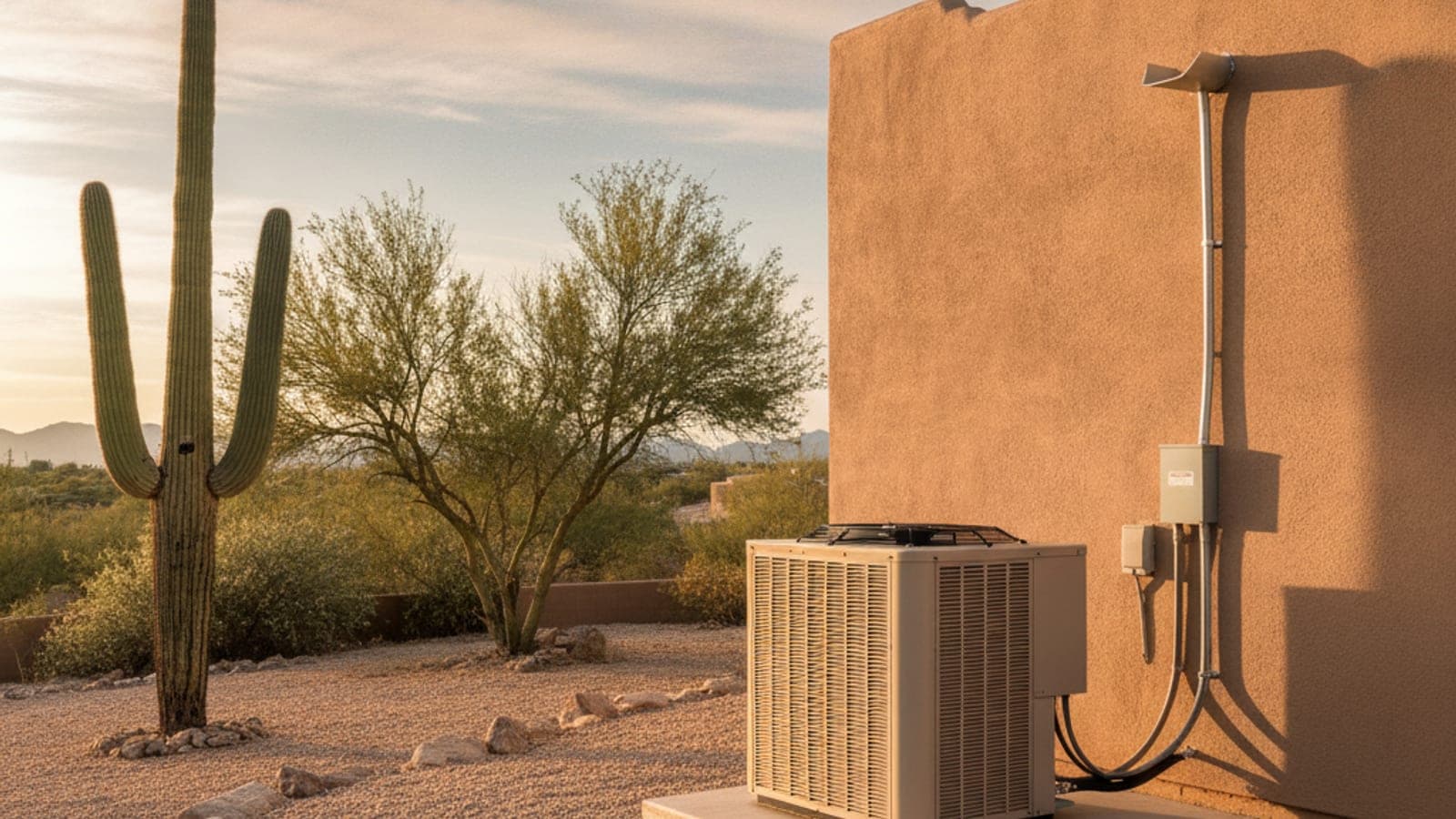
Moving an AC from the roof to the ground usually means replacing a package unit with a split system, and that touches the ducts, the roof and the permit. It’s worth pricing when the roof keeps leaking around the unit, or the package unit is due for replacement anyway. Climate Pros Tucson matches you with licensed pros who can quote both paths side by side.
What does the change involve?
A rooftop package unit holds the cooling and heating parts in one box. A split system separates them: an outdoor condenser on the ground and an indoor air handler or furnace inside. Moving down means a new outdoor pad, a refrigerant line set between the two, a new indoor unit, and changes to the duct connections that used to come off the roof. Split system vs rooftop package unit in Tucson lays out the difference.
Why do people make the move?
- Roof leaks. The curb and duct openings around a package unit have to stay sealed through every monsoon, which runs June 15 through September 30. Removing the unit lets the roofer close those openings for good.
- Access. A ground unit is easier to reach for service and filter work.
- Noise. Placement changes what you hear indoors. Where the condenser sits in the yard matters.
- Roof wear. No more service visits walking a flat roof, and no heavy unit sitting on it.
Whether any of those apply to your home is a question for the pro after a look at the roof, the ducts and the yard.
What does the yard need?
A condenser needs clear space for airflow, shade where possible, and a level pad. The AC condenser placement guide covers clearances. In Tucson, the spot matters: the City’s summer design temperature is 105F, and a condenser boxed into a west-facing corner against a block wall breathes its own hot air back in. Keep the line set run short, too, since a long run from the yard to an indoor unit adds cost and can trim capacity.
What happens to the ducts?
A roof unit pushes air down into ducts at the roof or in the attic. A ground split often needs new duct connections to an indoor unit, and old ducts may need testing and sealing. In a hot attic, ducts lose cooling to the surrounding heat, which is why attic duct leaks in Tucson heat matters here. The new indoor unit also needs a home: a closet, a garage corner or the attic. If there’s no room for it, the conversion may not be practical.
Do permits or HOA rules apply?
In the City of Tucson, new or replacement air conditioners and heat pumps need a permit, with load and sizing calculations. The matched licensed contractor pulls it, not us. Outside the City, ask the pro which office applies to your address. If you live in an HOA, ask whether moving equipment to a new spot needs approval, and get the answer in writing before you sign. See HOA rules when replacing an AC.
Is it worth it?
It’s worth a quote when the roof leaks around the unit, the package unit is due for replacement anyway, and the house has room for an indoor unit. It’s a weak trade for a package unit that’s working and sealed, or a house with no indoor space. If you stay on the roof, replacing a rooftop package unit covers what that quote should list. Heat pump or AC with a furnace is a separate choice, covered in heat pump vs AC in Tucson. For the work, see AC installation and heat pump service. The hub at HVAC service in Tucson lists where we cover.
Getting conversion quotes
Call when you want quotes on a roof-to-ground conversion, and ask each pro to explain the ducts, the roof closure and the permit. Check licenses at roc.az.gov. Call (520) 353-2520 and we’ll match you with a licensed local pro.