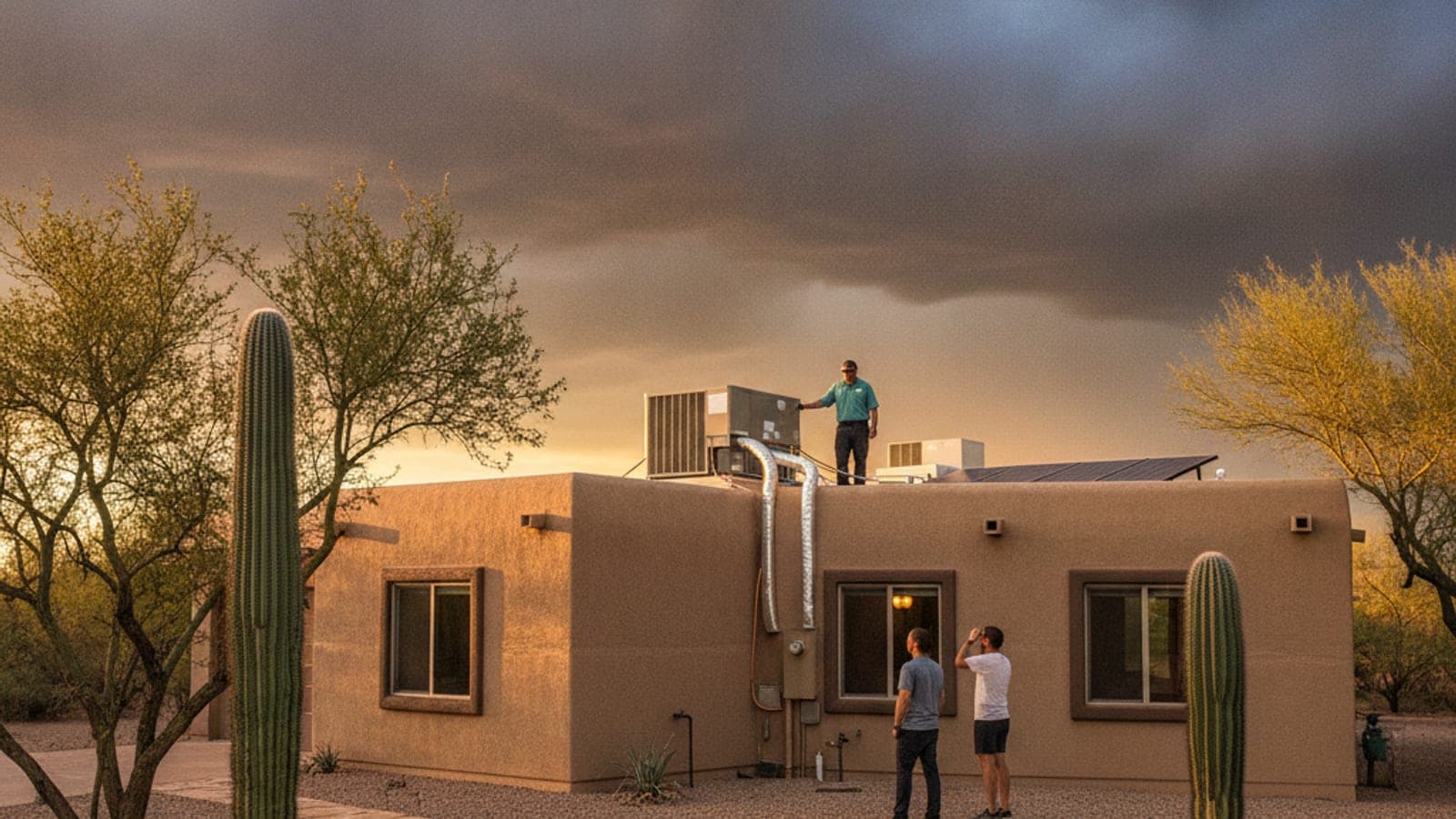
Monsoon humidity changes how every kind of cooling works in Tucson, and swamp coolers feel it first. The National Weather Service counts the monsoon season from June 15 through September 30. At Tucson’s airport, average dew points sit in the 20s for most of the year and jump into the high 50s in July and August.
That jump hits a swamp cooler, an air conditioner and the parts that drip in different ways. Climate Pros Tucson matches you with a licensed local pro for any of it.
Why does a swamp cooler fade in July and August?
An evaporative cooler works only when the air is dry enough to take on water. When dew points climb in the monsoon, the air holds less of that extra moisture, so the cooler delivers less cooling and the house feels sticky. How much cooling you lose depends on the day and the house. Some homes keep an evaporative cooler for the dry months and lean on AC once the monsoon arrives. Our swamp cooler vs AC comparison covers the trade-offs.
Tucson Water also notes that hard water builds calcium deposits in evaporative coolers. It advises changing pads regularly and adding an in-line filter. A scaled-up cooler struggles harder once the air turns humid.
What does humid air do to an air conditioner?
An air conditioner cools the air and pulls water out of it at the same time. The indoor coil sheds that water into a drain line. When the air outside is wetter, the coil sheds more, and the drain line carries more. That is why a marginal drain line that was fine in May can back up in August.
Watch for these signs:
- Water near the indoor unit, or a drain pan that is full.
- A system that runs long and still leaves the house clammy.
- Ice on the indoor coil or the refrigerant line. See AC freezing up.
- A float switch that shuts the system off. See clogged AC drain lines.
Turn the system off if water is leaking onto a ceiling or floor, then call a pro. A maintenance visit before the monsoon is the usual way to catch a weak drain.
Why do my vents sweat in the monsoon?
Cold supply registers and ducts drop below the dew point of the surrounding air, so moisture condenses on them. It shows up where cold air meets warm, wet air, such as attic ducts or a register in a humid room. Leaky or poorly insulated ducts make it worse, and so can a system that is oversized and cycles off before it dries the air. A pro can check duct insulation and sealing, and whether the fan speed and runtime suit the house.
When is a dehumidifier worth asking about?
Ask when the house stays damp even though the AC runs normally, and when you see musty smells or condensation on windows. Options a pro may discuss include adjusting the fan setting, a dedicated whole-home dehumidifier, or a variable-speed system that runs longer at low output. Each fits different houses, and the pro should explain why before you buy. Our AC running constantly page covers the related question of runtime.
What else comes with the monsoon?
The NWS ties the monsoon window to extreme heat, strong winds, dust storms, flash flooding, lightning and wildfire. Dust clogs filters and outdoor coils, so check the filter after a dust storm. After a lightning strike or a power outage, wait a few minutes before restarting the AC, and call a pro if it won’t run. For dust storms on the road, ADOT’s advice is “Pull Aside, Stay Alive”: pull fully off the road, lights off, foot off the brake.
When to call us
If your AC leaks, ices up or can’t keep up in humid weather, a licensed pro should look at it. Browse AC repair or the Tucson HVAC hub. Call (520) 353-2520 and we’ll match you with a licensed local pro.