Heat pump defrost: what is normal on a cold morning
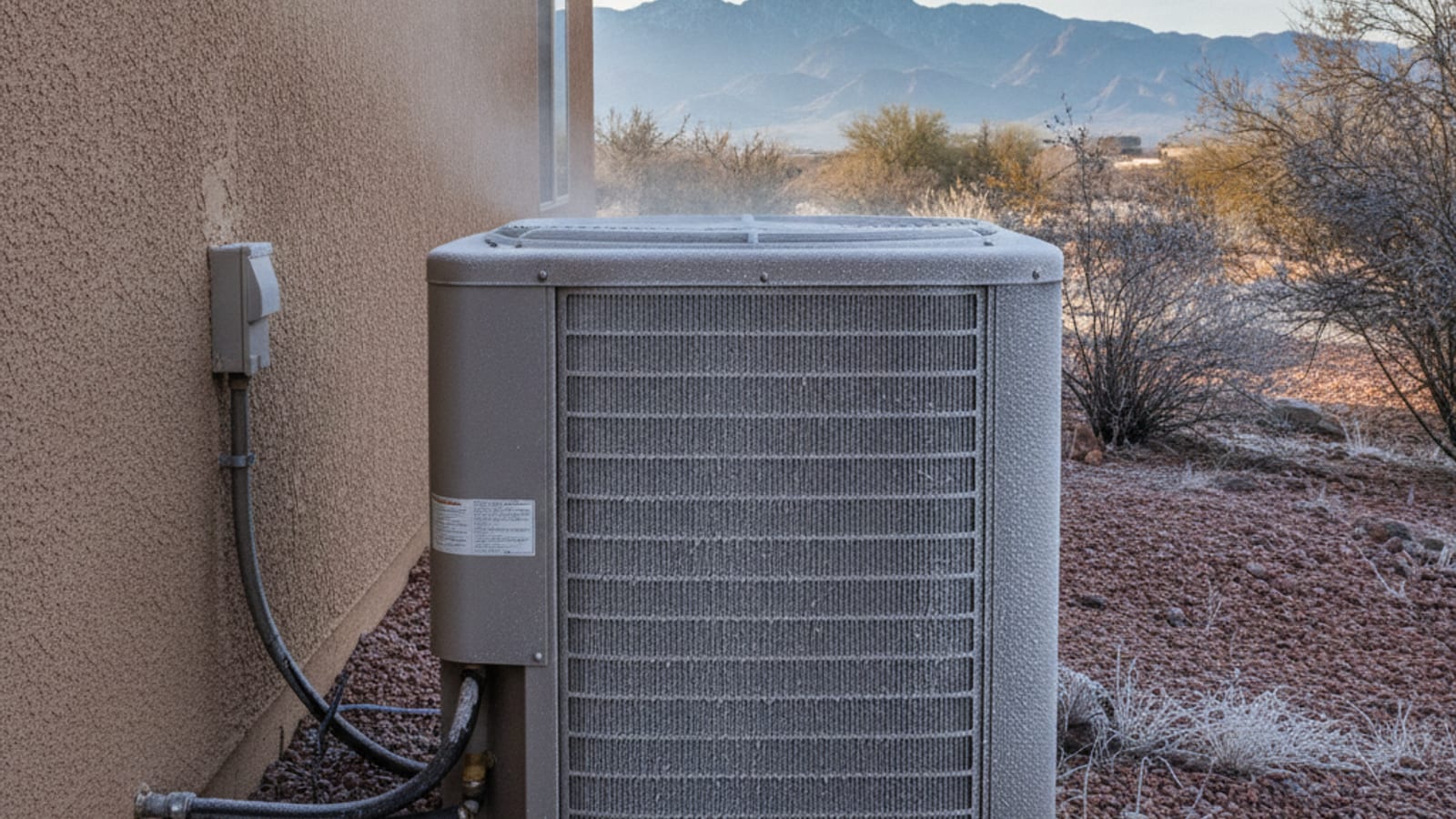
Steam rising off the outdoor unit on a cold morning looks alarming. Usually it is the heat pump clearing its own frost, right on schedule.
What to watch for: The homeowner part is the first few minutes: normal frost versus a solid block, and when to switch to emergency heat. The gauges and refrigerant work later in the video are a technician’s job.
Why does this matter in Tucson?
In heating mode, the outdoor coil runs colder than the outside air so it can pull heat from it. On a cold, damp morning that coil can frost over. The heat pump then runs a defrost cycle: the outdoor fan stops, the system reverses briefly, and the frost melts off as water and steam. Backup heat may come on indoors so you don’t get a blast of cool air.
In the Tucson basin this is a light-duty job. The airport averages fewer than 12 nights a year at or below 32°F, and the City's code winter design temperature is 35°F. Up at Mount Lemmon's Willow Canyon station it's about 53 freezing nights a year, so defrost there is routine and backup heat is a question for the pro.
What you'll learn
- Why a heat pump grows frost on its outdoor coil in heating mode
- What a normal defrost cycle looks and sounds like
- The difference between a light frost and a block of ice
- Why Mount Lemmon homes see far more of this than the basin
How do you do it, step by step?
- Look, don’t touch. A thin, even frost on the coil that clears within a defrost cycle is normal.
- Expect the outdoor fan to stop and the unit to whoosh or hiss for a few minutes, then restart. Steam is melting frost, not smoke.
- Keep the area around the unit clear of leaves and anything that blocks the meltwater from draining away.
- Never chip, scrape or pry ice off the coil. The fins and tubing are easy to puncture.
- If the coil stays covered in thick ice for hours, switch the thermostat to Emergency Heat if it has that setting, and call.
- Note when it happens (time, temperature, how long). That helps the pro find a sensor or control problem faster.
When should you stop and call a pro?
- A solid block of ice that doesn’t clear, or ice building on the top grille or fan.
- The unit never seems to defrost, or defrosts constantly.
- Real smoke, a burning smell, or loud grinding.
- Ice on an AC in summer. That is a different problem: turn it off, check the filter and call.
Read next
Rather have a pro handle it?
Climate Pros Tucson matches homeowners with licensed local HVAC pros across the Tucson area. You talk to us, then to the pro, and the pro quotes the job before any work starts.
What else can you check yourself?
Monsoon prep for your AC: storms, surges and dust
The monsoon brings the heat and the humidity together, then adds dust, lightning and power flickers. A little prep keeps the AC out of the storm’s way.

Swamp cooler spring start-up and pad change
An evaporative cooler sat dry all winter. Fresh pads, a clean pan and clear water lines get it ready for the dry heat of spring.

Winterize a swamp cooler before the first freeze
Freezing nights are rare in the basin, but a cooler full of water and an open duct all winter cost you either way. Drain it, shut it off and seal it up.